- I. Professional Definition of Oxford Fabric
- II. Core Advantages and Performance Characteristics of Oxford Fabric for Bags
- III. Common Oxford Fabric Specifications for Bags: 210D/420D/600D Differences and Applications
- IV. Fabric Comparison: Oxford vs. Canvas, Nylon, and Other Polyester Fabrics
- V. Mainstream Applications of Oxford Fabric in the Bag Industry
- VI. Key Points for Oxford Fabric Bag OEM/ODM Customization
- VII. Frequently Asked Questions (FAQ)
- VIII. Conclusion
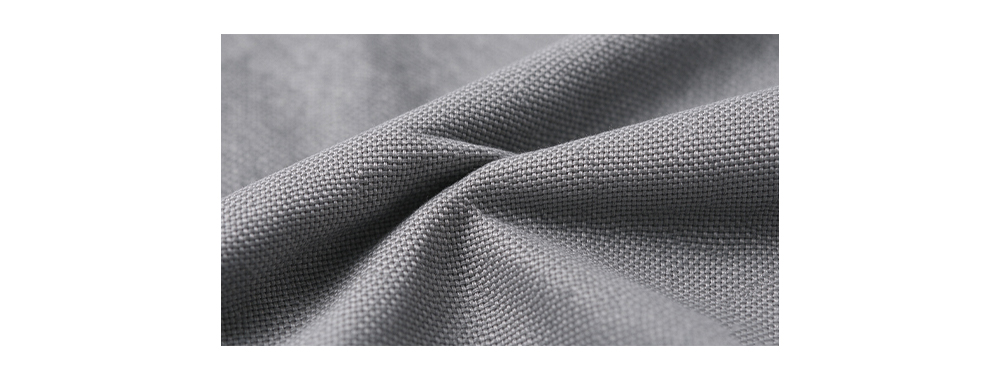
Oxford fabric is a woven fabric produced using a modified plain weave structure, commonly in a basket weave or weft rib weave. It originated as a traditional cotton shirting fabric, but after industrial refinement, modern Oxford fabric used in the bag and luggage industry is primarily made from polyester.
With its combination of abrasion resistance, tear strength, water repellency, lightweight properties, and shape retention, Oxford fabric has become one of the most versatile and cost-effective core materials in bags, outdoor gear, and travel luggage.
As a bag OEM/ODM manufacturer with decades of industry experience, and drawing on hands-on expertise in fabric selection, sampling, and bulk production, this article provides a systematic analysis of Oxford fabric’s material definition, core performance, common specifications, fabric comparisons, and practical applications—helping bag buyers and product designers select materials efficiently and build more competitive products.
I. Professional Definition of Oxford Fabric
Many clients share a common misconception: assuming Oxford fabric is cotton. In fact, while traditional Oxford fabric originated from cotton weaving, modern Oxford fabric used in the bag industry is primarily made from polyester, with nylon Oxford fabric also used in specific waterproof applications.
From a weaving structure perspective, Oxford fabric uses a modified plain weave, typically a basket weave or weft rib weave, distinguishing it from standard plain-weave and twill fabrics. This structure gives the fabric a uniform surface texture, higher density, and more stable tension—retaining a moderate softness while offering good body and resilience, so it resists sagging and deformation.
In bag manufacturing, Oxford fabric is classified as a high-strength synthetic woven fabric. The industry universally uses D (Denier) as the fiber thickness standard. The higher the D number, the thicker the fiber, and the greater the fabric’s thickness, abrasion resistance, and load-bearing capacity—making it suitable for more specialized functional bag applications.
II. Core Advantages and Performance Characteristics of Oxford Fabric for Bags
Oxford fabric’s long-standing dominance as a mainstream bag material lies in its highly balanced performance—with no obvious weaknesses—while being capable of functional upgrades through finishing processes, making it perfectly suited for daily commuting, outdoor sports, travel storage, and virtually all types of bag applications.
1. Abrasion and Tear Resistance for Longer Service Life
Polyester Oxford fabric has a tight fiber structure and strong overall tension. Compared to ordinary polyester fabric, it offers significantly improved friction and tensile resistance. It resists pilling, cracking, and yarn slippage under daily loads, outdoor impacts, and prolonged repeated use—effectively reducing after-sales defect rates and making it ideal for functional bags.
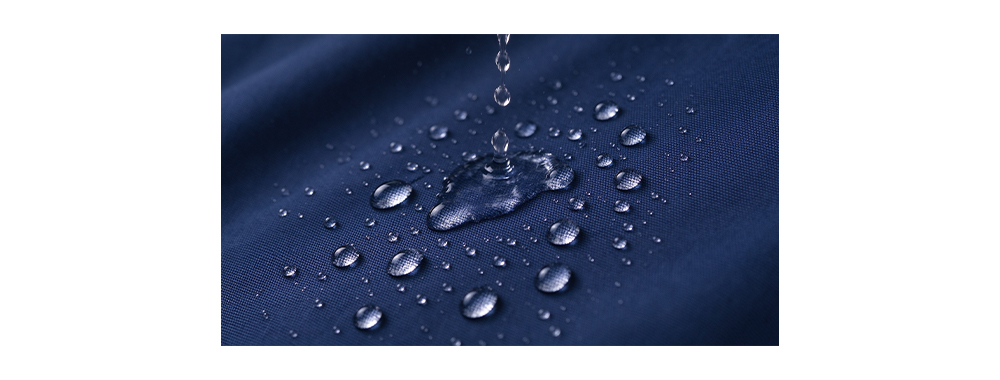
2. Customizable Waterproofing for Splash and Moisture Protection
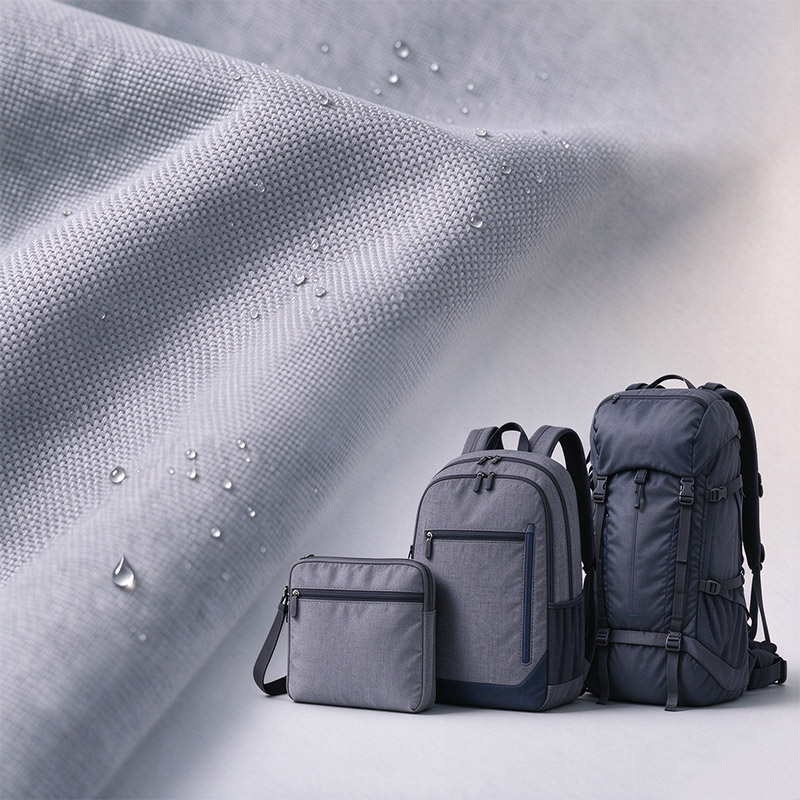
Virgin Oxford fabric can achieve waterproof functionality through coating or water-repellent treatment. Factories can perform secondary functional processing based on product positioning: PU coating, PVC coating, water-repellent finishing, and other processes can deliver daily splash resistance, moderate rain protection, and moisture/mold resistance—effectively protecting electronics, clothing, and personal items inside from wet weather.
3. Lightweight with Excellent Shape Retention
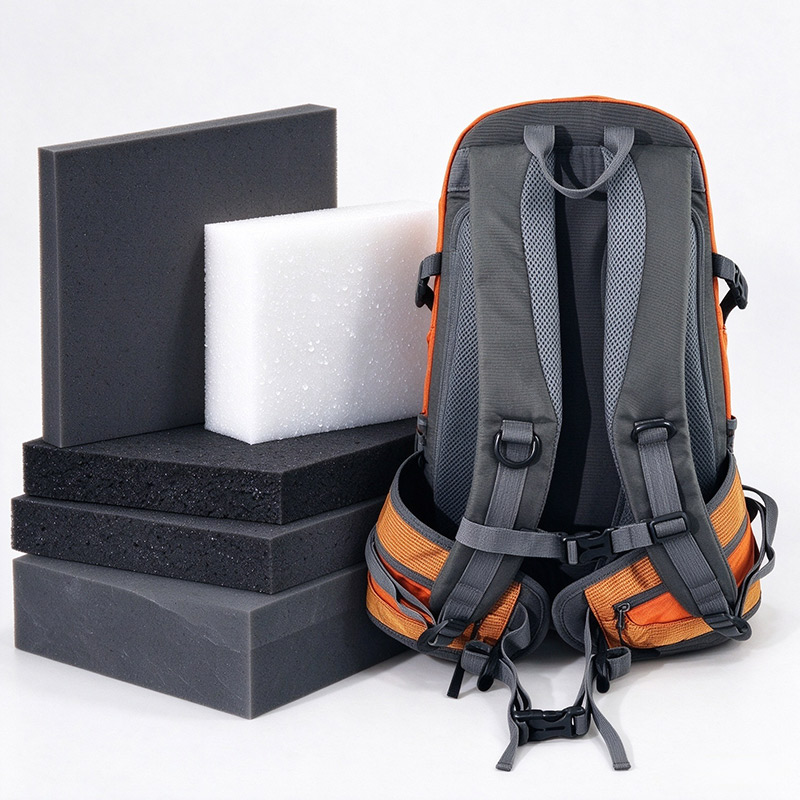
At equivalent abrasion resistance levels, Oxford fabric is lighter than canvas and denim, placing no weight burden on users. Meanwhile, the fabric has inherent body, maintaining a structured, well-defined bag shape even when loaded—resisting sagging, deformation, and wrinkling over time for a more premium finished product.
4. High Process Compatibility for Brand Customization
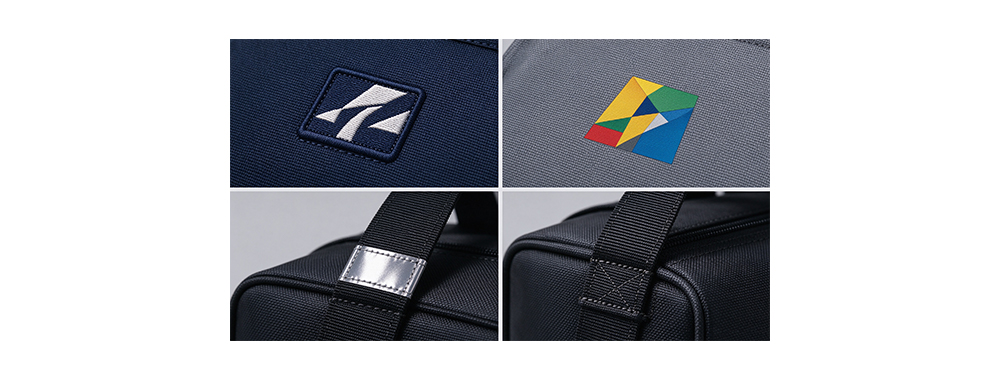
Oxford fabric is an excellent material for ODM original development, compatible with virtually all bag finishing processes: digital printing, screen printing, logo embroidery, heat transfer, reflective taping, foam lamination, seam sealing, and more. Whether it’s a minimalist solid-color design, custom brand graphics, or reinforced functional structures, it can be perfectly executed to meet differentiated brand design needs.
5. Stable Colorfastness and Aging Resistance
Standard bag-grade Oxford fabric undergoes controlled dyeing and finishing processes, meeting colorfastness standards. It resists fading, whitening, and discoloration under prolonged sunlight, washing, and outdoor exposure. With excellent aging resistance, it adapts to multi-climate markets and delivers strong product durability.
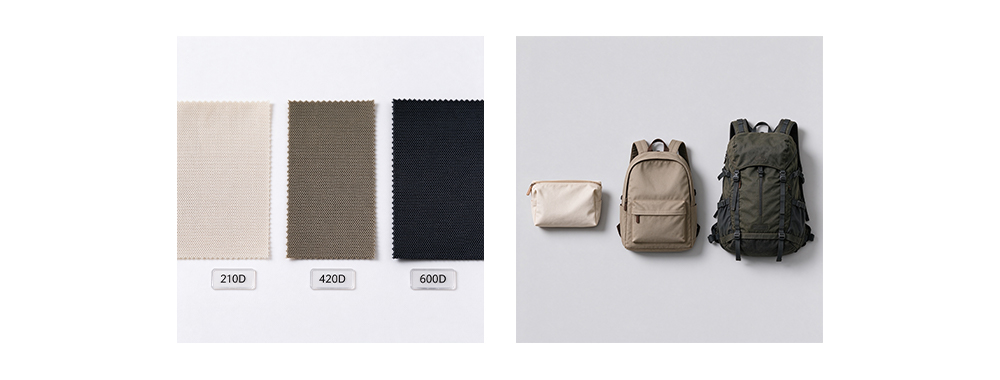
III. Common Oxford Fabric Specifications for Bags: 210D/420D/600D Differences and Applications
In bag OEM/ODM production, D number is the most critical specification for clients selecting materials. Different D numbers correspond to completely different thickness, stiffness, abrasion resistance, and cost. Here is a precise breakdown based on actual factory production scenarios:
1. 210D Oxford Fabric (Lightweight)
Lightweight, soft, and flexible with good toughness, low gram weight, and high cost-effectiveness. Mainly used for bag linings, storage pouches, cosmetic bags, lightweight totes, foldable carry bags, and other lightweight products—suitable for low-load, minimalist daily bags.
2. 420D Oxford Fabric (General Purpose)
The most balanced “all-purpose fabric” in the bag industry—moderate thickness, moderate softness, moderate abrasion resistance. Widely used for student backpacks, business laptop bags, commuting backpacks, travel storage bags, and casual crossbody bags—covering the vast majority of daily consumer bags and being the top choice for high-volume brand bestsellers.
3. 600D Oxford Fabric (Heavy-Duty Functional)
The primary fabric for mid-to-high-end functional bags—thick, firm, compression-resistant, abrasion-resistant, and with excellent waterproof performance. Mostly used for outdoor hiking backpacks, sports and fitness bags, large-capacity travel bags, tool bags, tactical storage bags, and other high-load, high-wear scenarios.
IV. Fabric Comparison: Oxford vs. Canvas, Nylon, and Other Polyester Fabrics
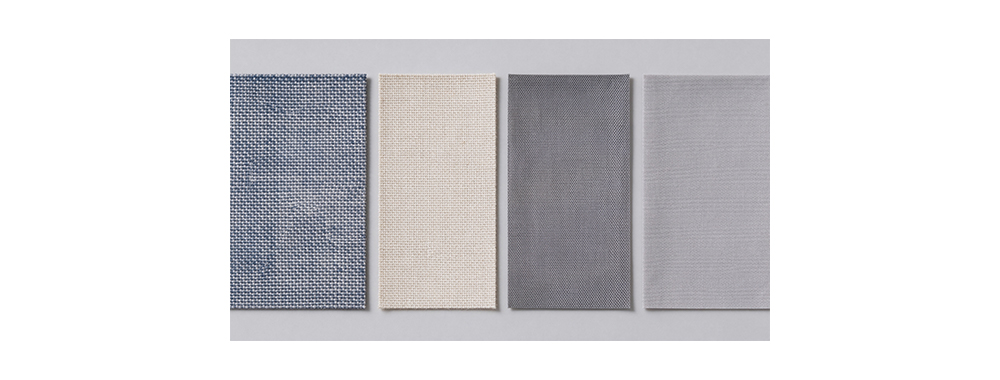
Many brands struggle with fabric selection during the sampling stage. Here is the most practical horizontal comparison from both factory production and end-sales perspectives:
• Oxford fabric: A special woven category within polyester fabrics. Balanced overall performance, high cost-effectiveness, abrasion and water resistance, good shape retention, and rich customization options. Suitable for over 90% of daily and functional bags—a reliable choice for commercial development.
• Canvas: Inherently vintage-textured; standard versions are relatively heavy and stiff, with weak inherent water resistance; now can also achieve lightweight and waterproof properties through finishing. Mostly used for vintage-style and cultural/creative bags.
• Nylon: Lightweight and soft to the touch; drawbacks include weak fabric body, easy wrinkling, and higher procurement cost; better suited for lightweight soft bags. For bags requiring long-term load-bearing and strong three-dimensional structure, careful evaluation is needed during selection.
• Other polyester fabrics (standard plain-weave polyester): Procurement prices vary widely; low-gram-weight plain-weave polyester has low density and is prone to tearing and fading, mostly used for simple storage products; high-spec plain-weave polyester can also be used for quality bags, though abrasion resistance and shape retention typically fall short of Oxford fabric.
V. Mainstream Applications of Oxford Fabric in the Bag Industry
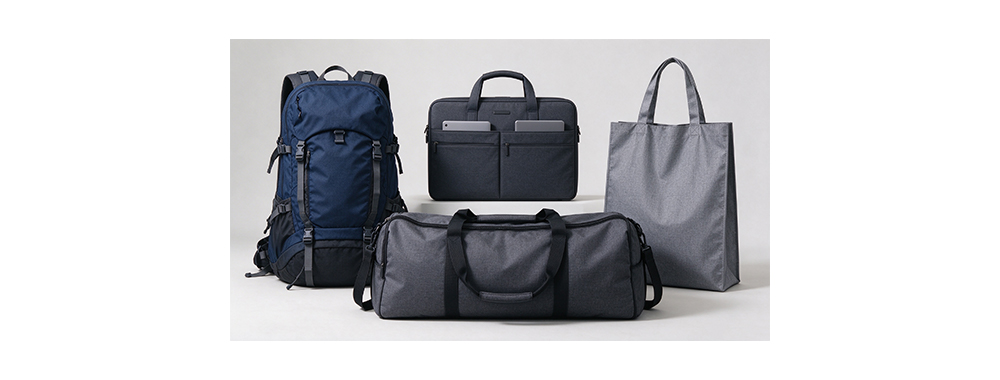
With comprehensive performance advantages and flexible customization properties, Oxford fabric covers virtually all mainstream bag categories:
• Outdoor functional bags: Hiking backpacks, camping storage bags, waterproof waist bags, sports and fitness bags, trekking functional bags
• Daily commuting bags: Student backpacks, business laptop bags, casual totes, commuting backpacks, crossbody bags
• Travel storage bags: Large-capacity travel bags, luggage organizers, toiletry bags, foldable travel sets
• Business custom bags: Corporate gift bags, brand promotional custom bags, business briefcases, trade show giveaway bags
VI. Key Points for Oxford Fabric Bag OEM/ODM Customization
As a source bag manufacturing factory, we have summarized the key details for brand customization of Oxford fabric bags—helping clients precisely position products and avoid sampling and mass production risks:
1. Precise D Number Matching
Use 210D for lightweight storage and lining applications; 420D is the top choice for daily commuting bestseller bags; 600D is standard for outdoor, sports, and heavy-load functional bags. Special functional fabrics such as UV-resistant, anti-mold, eco-friendly low-toxicity, and high-waterproof versions can also be customized based on market demand.
2. Full-Process Personalized Customization
We support brand logo embroidery, high-definition digital printing, screen printing, heat transfer, reflective processes, foam lamination reinforcement, waterproof seam sealing, three-dimensional cutting, and other full-process techniques. Differentiated appearance and functional structures can be created based on brand tone to enhance product added value.
3. Factory-Standard Quality Control
All incoming Oxford fabric undergoes abrasion testing, tensile testing, waterproof testing, and colorfastness testing. Production strictly controls color deviation, yarn breakage, stains, density inconsistency, and other defects to ensure bulk order quality consistency.
4. Flexible Order Service Models
We support ODM original sampling, small-batch trial orders, and large-scale OEM mass production—providing one-stop customization services from fabric selection, structural design, sample confirmation, and bulk production to delivery.
VII. Frequently Asked Questions (FAQ)
Q1: What material is Oxford fabric? Is it suitable for bags?
A: Bag-specific Oxford fabric is primarily made of polyester. It is one of the most reliable materials for commercial bag production—abrasion-resistant, waterproof, lightweight, and highly moldable—making it highly suitable for all types of consumer and functional bags.
Q2: Is Oxford fabric waterproof? Is it durable?
A: Oxford fabric treated with coating and water-repellent finishing offers good waterproof and moisture-proof performance. Its high-density woven structure provides tear and friction resistance, and its durability under normal use far exceeds ordinary synthetic fabrics.
Q3: How do I choose between 420D and 600D Oxford fabric?
A: 420D is soft, lightweight, and cost-effective—suitable for daily commuting bags, student bags, and storage bags. 600D is thick, firm, and offers stronger abrasion and compression resistance—ideal for outdoor functional, sports, and heavy-load travel bags.
Q4: Can Oxford fabric bags be customized with logos and original designs?
A: Yes. Oxford fabric is compatible with virtually all bag customization processes and can perfectly execute brand logos, exclusive graphics, special structures, and functional designs—making it an excellent material for ODM original development.
Q5: Which is better for bags—Oxford fabric or nylon?
A: For commercial bags, Oxford fabric is preferred—better shape stability, less deformation, superior abrasion resistance, and higher cost-effectiveness. Nylon only has advantages in ultra-lightweight single items, but its weak body and easy wrinkling require careful evaluation for shape-critical bags, and the cost is higher.
VIII. Conclusion
With stable physical performance, diverse specification options, customizable functional processes, and high cost-effectiveness, Oxford fabric has become a core mainstream material in the global bag manufacturing industry. Selecting the right D number specification and finishing process is key to producing high-quality, highly competitive bag products.
If you need professional Oxford fabric selection advice, original bag sampling, or bulk OEM/ODM customization, please feel free to contact our team—we will provide you a one-stop bag customization solution.