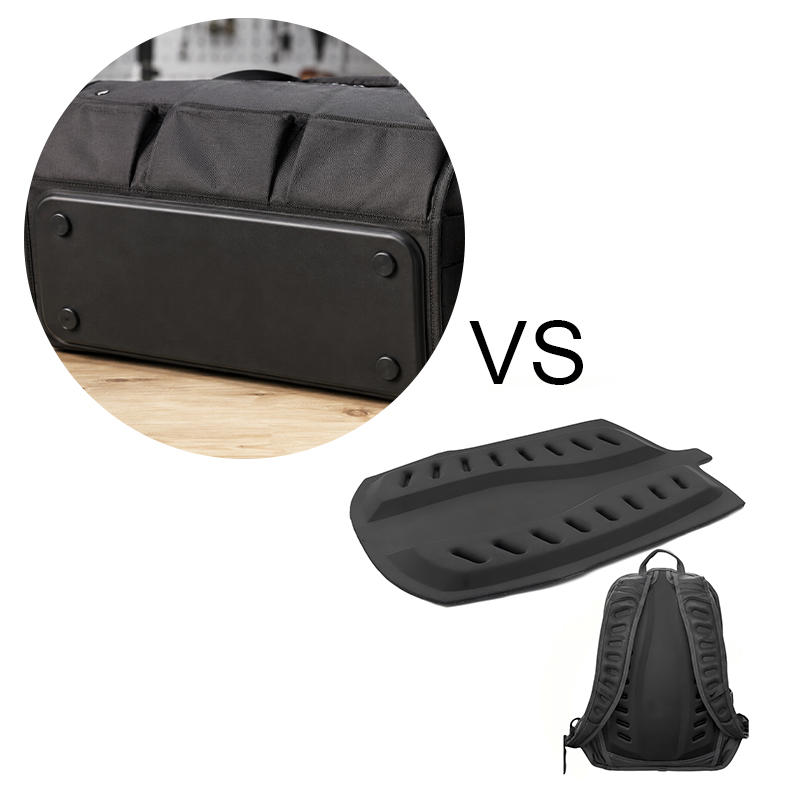
- I. Why Structural Support Matters
- II. PE Support Boards: The Most Common Choice
- III. EVA Support: From Flat Panels to Three-Dimensional Structures
- IV. How to Choose the Right Support Solution for Your Bag
- V. Practical Tips for B2B Custom Bag Projects: Don’t Wait Until Mass Production to Discover Structural Issues
- FAQ
- Conclusion
When you place an empty bag flat on the table, can it stand upright on its own? This seemingly simple detail reveals one of the most overlooked aspects of soft bag design—the interior support and compartment structure.
Many brands focus heavily on fabrics, hardware, and exterior styling during product development. However, when the final production arrives, they often discover unexpected problems: the bag collapses instead of holding its shape, or the internal compartments deform and shift after carrying weight.
In this article, we’ll explore the two most widely used structural support solutions in bag manufacturing—PE support boards and EVA molded construction —to help you understand their differences and make the right choice during the product development stage.
I. Why Structural Support Matters
Let’s first clear up a common misconception: the structured appearance of a soft bag doesn’t rely solely on the outer fabric itself.
Even if you choose heavyweight 16 oz canvas or thick Oxford fabric, a flat piece of fabric will still collapse, wrinkle, and lose its shape once it is subjected to weight or pressure. What truly allows a bag to maintain its three-dimensional form when empty is the hidden framework concealed between the outer fabric and the lining—the support boards and internal compartment structure.
From a functional perspective, the interior structure needs to address three key challenges simultaneously:
- Shape Retention: Maintains the bag’s intended silhouette when it is empty or only partially loaded.
- Load Distribution: Prevents heavy items from concentrating stress on a single point, reducing the risk of fabric tearing or structural deformation.
- Functional Organization: Uses dividers, slip pockets, and cushioning pads to organize belongings while providing proAtection for different items.
If these three issues are not properly addressed during the structural design stage, even the most expensive outer fabric cannot make up for the compromised user experience.
II. PE Support Boards: The Most Common Choice
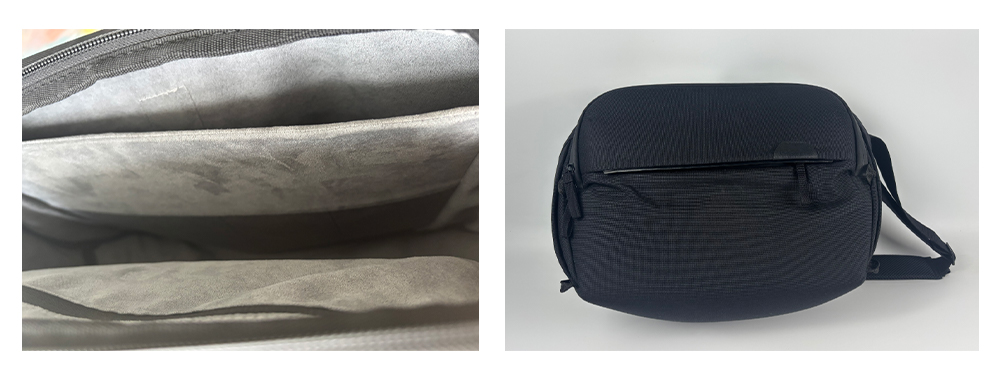
Among the various structural support materials used in soft bags, PE (polyethylene) support boards are the most common—and arguably the most straightforward—solution. They are lightweight plastic sheets that are cut into specific shapes and inserted into areas such as the bottom panel, side panels, or back panel of a bag to provide flat structural support.
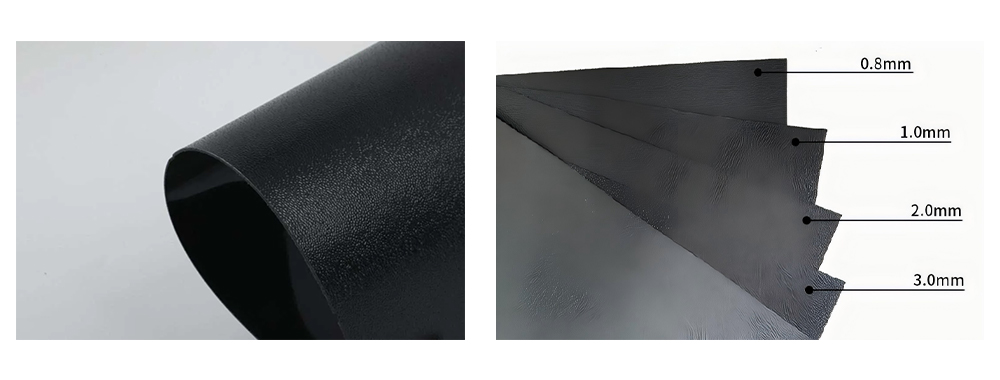
Three Typical Applications of PE Support Boards
1. Bottom Support Board
This is by far the most common application of PE boards. A 2–3 mm thick PE board is sewn into the bottom compartment of the bag, allowing the bag to sit steadily on a flat surface without collapsing or tipping over. For bags with wide openings—such as backpacks, tote bags, and tool bags—a bottom support board is almost a standard feature.
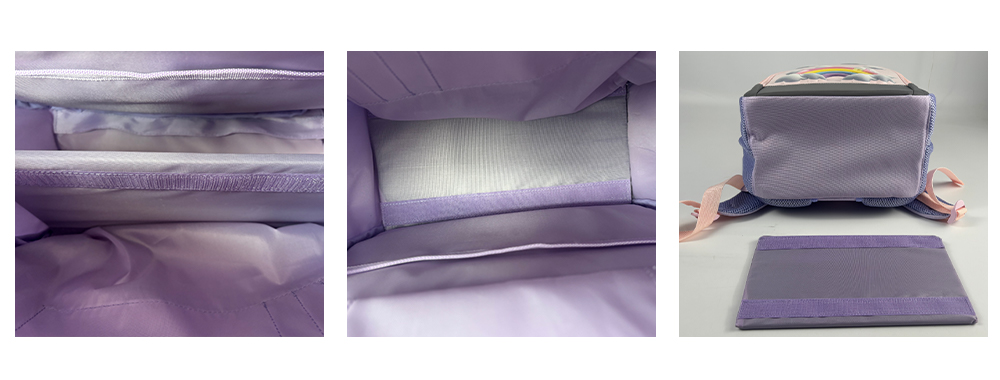
2. Back Panel and Front Panel Reinforcement
In backpacks and laptop bags, PE boards are often used as flat reinforcement layers for the back panel or front panel. While they add very little thickness, they effectively prevent the fabric from developing wavy wrinkles under load, helping the bag maintain a cleaner, more structured appearance.
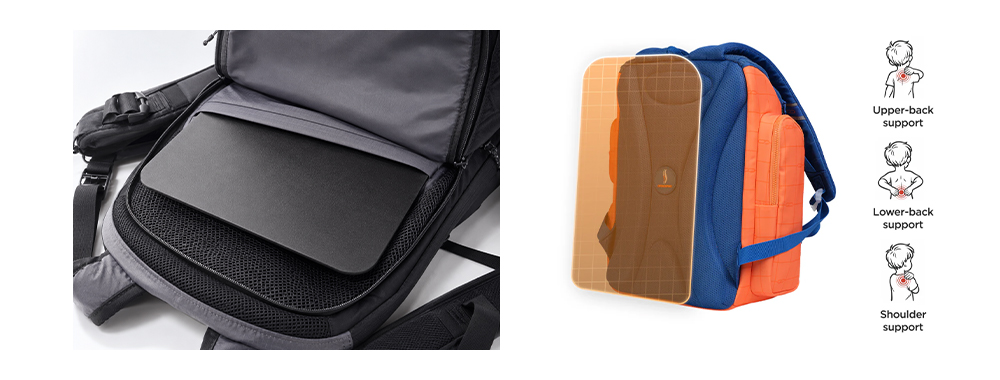
3. Internal Divider Panels
For bags that require rigid compartmentalization—such as camera bags and equipment bags—PE boards can be cut into custom sizes and used as removable divider panels. Combined with hook-and-loop fasteners (Velcro) or webbing, they create an adjustable compartment system that allows users to customize the interior layout.
Advantages and Limitations of PE Support Boards
PE support boards offer several notable advantages: they are cost-effective, lightweight, easy to cut into custom shapes, and provide a good balance of rigidity and flexibility. They are ideal for bag designs that require moderate structural support, where weight is a key consideration, and where the overall construction is based primarily on flat panels.
However, PE boards also have their limitations. They can only provide flat structural support and cannot be molded into three-dimensional curved shapes. They also tend to become more brittle in low-temperature environments, and repeated bending over time may lead to permanent creases or even cracking.
If your design requires smooth, rounded side panels or interior compartments that precisely conform to the shape of specific products, PE support boards are no longer the ideal solution.
III. EVA Support: From Flat Panels to Three-Dimensional Structures
When PE support boards reach their design limitations, EVA (Ethylene-Vinyl Acetate) thermoforming technology becomes the ideal solution.
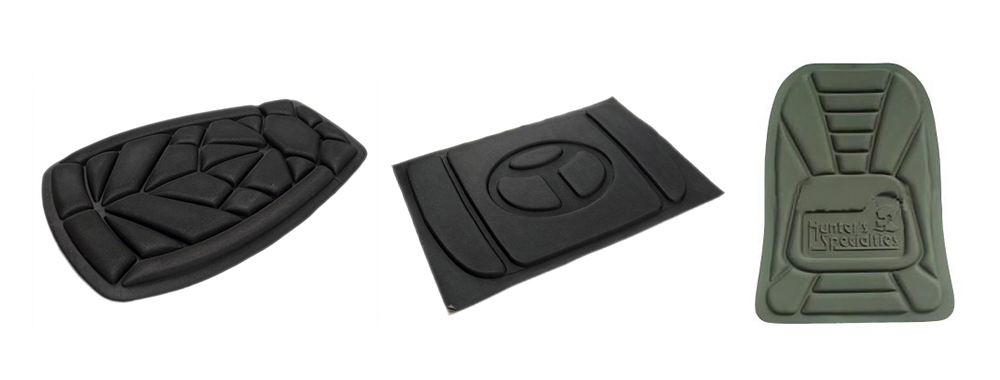
EVA is a soft, resilient foam material with excellent elasticity. When combined with heat-compression molding, it can be formed into a wide variety of three-dimensional shapes—including rounded corners, recessed grooves, curved surfaces, and custom-shaped cavities—before being integrated into the bag as a one-piece molded lining.
The Core Advantages of EVA Molding
1. Three-Dimensional, Custom-Fit Protection
Unlike the flat support provided by PE boards, molded EVA actively conforms to the shape of the items it is designed to protect.
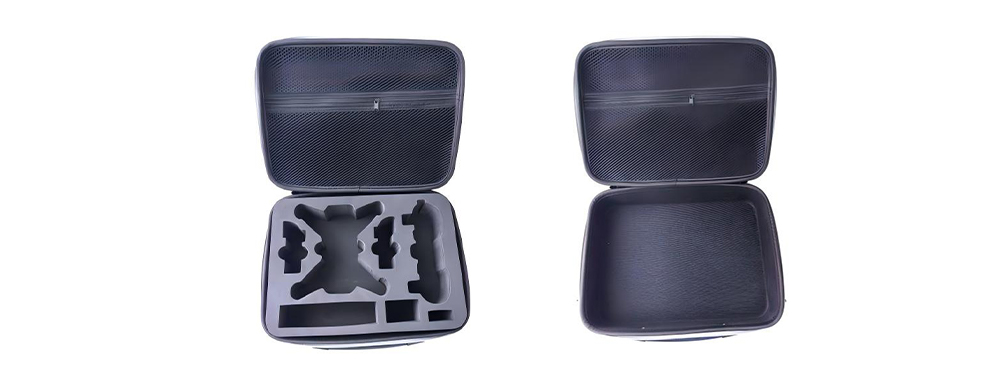
For example, in a custom drone carrying case, the EVA lining can be thermoformed with precisely shaped recesses that perfectly match the drone body, remote controller, and batteries. Once the equipment is placed inside, each component stays securely in position without shifting during transport.
This tailor-made fit is something that flat support boards simply cannot achieve.
2. Integrated Cushioning and Protection
EVA naturally offers excellent shock absorption and impact resistance. When combined with thermoforming, the interior divider is no longer just a thin flat panel—it becomes a three-dimensional protective compartment with carefully engineered wall thickness and curved surfaces.
For transporting electronic devices, precision instruments, glassware, and other fragile products, molded EVA inserts have become the industry-standard solution for protective packaging and carrying cases.
3. The Ideal Balance Between Lightweight Design and Structural Strength
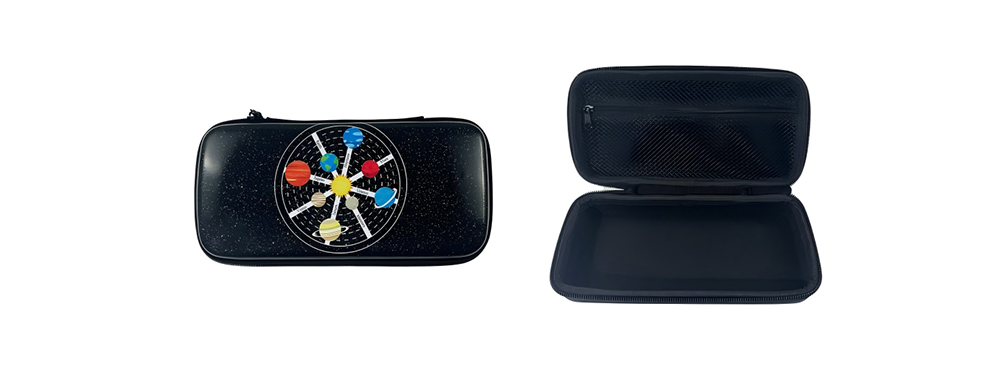
High-density molded EVA components deliver excellent compression and bending resistance while remaining remarkably lightweight.
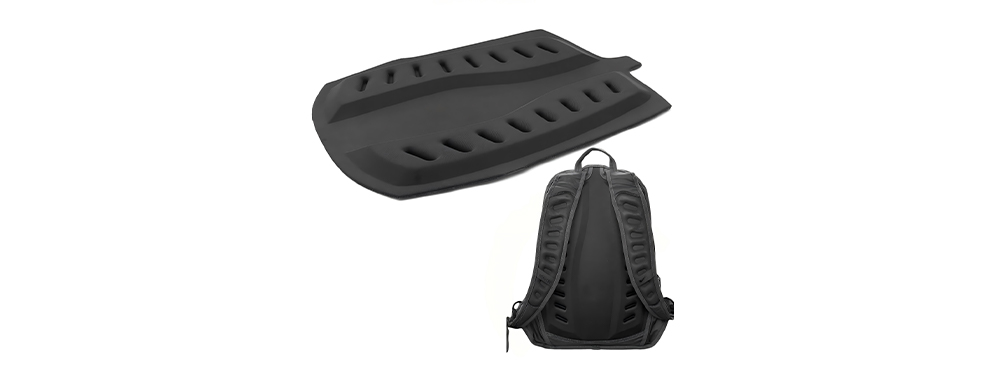
For example, in a business backpack featuring a molded EVA back panel, the back support can be shaped into an ergonomically contoured three-dimensional profile. This not only helps the bag maintain its intended structure but also significantly improves carrying comfort during extended use.
From PE to EVA: It’s Not Simply a Material Upgrade
Many brands assume that “EVA is simply a more advanced version of PE support boards.” In reality, this is a common misconception.
A more accurate way to understand the difference is this:
- PE support boards solve the problem of making a bag hold its shape.
- Molded EVA solves the problem of what shape the bag should hold.
The distinction is not about one material being superior to the other. Rather, it comes down to different design objectives and functional requirements.
IV. How to Choose the Right Support Solution for Your Bag
Now that we’ve explored the characteristics of both support systems, the next step is making the right choice during the product development stage.
Based on our years of prototyping and manufacturing experience, we’ve developed the following decision framework to help brands select the most suitable structural support solution.
| Evaluation Criteria | PE Support Boards | Molded EVA Construction |
| Bag Design Requirements | Flat bottom support, simple back panels, straight divider panels | Three-dimensional curves, custom-shaped cavities, ergonomic contours |
| Protection Level | Basic shape retention and light cushioning | Precision cushioning, impact resistance, and crush protection |
| Weight Considerations | Ultra-lightweight (ideal for large-capacity bags where overall weight matters) | Lightweight to moderate (depending on EVA density and wall thickness) |
| Cost Considerations | Low (material, cutting, and sewing costs) | Medium to high (requires mold development, thermoforming, and lamination processes) |
| Design Flexibility | High (panel dimensions can be modified easily during development) | Moderate (design changes become more expensive once molds are produced) |
| Typical Applications | Tote bags, everyday backpacks, basic laptop bags, tool bags | Drone cases, camera bags, outdoor gear bags, premium business backpacks, school backpacks |
A Practical Rule of Thumb
If your bag design is primarily based on flat pattern pieces, with straight-edged rectangular compartments and basic protection requirements, PE support boards are usually more than sufficient. They provide reliable structural support while helping keep production costs under control.
If your design features three-dimensional compartments, requires products to be securely fitted in custom-shaped cavities, or is intended to carry valuable items such as laptops, cameras, drones, or precision instruments, then molded EVA construction is well worth considering. In this case, mold design should be incorporated during the prototyping stage, rather than postponed until production.
V. Practical Tips for B2B Custom Bag Projects: Don’t Wait Until Mass Production to Discover Structural Issues
As a bag manufacturer, we’ve seen countless structural problems only become apparent once mass production has begun. The following three practices can help identify potential issues much earlier in the procurement process.
1. Evaluate the Bag’s Shape Before Loading It
Many buyers inspect pre-production samples only after filling the bag with items. However, it’s equally important to evaluate the bag when it is empty.
Check the bag in three different conditions:
- Lying flat on a table
- Hanging naturally
- Under light compression
This is when issues such as incorrectly sized PE support panels or poor bonding between molded EVA inserts and the outer fabric are most likely to become visible.
2. Clearly Distinguish Between “Structural Support” and “Protective Cushioning”
When communicating your requirements to the manufacturer, describe structural support (maintaining the bag’s shape) and protective cushioning (protecting the contents) as two separate functions.
In many projects, the optimal solution combines PE support boards for structural rigidity with independent foam padding for impact protection. Treating these two requirements as the same can easily lead to inappropriate material selection.
3. Clarify EVA Mold Modification Costs in Advance
Once an EVA molding tool has been manufactured, changing the shape is significantly more expensive than simply modifying the cutting pattern for a PE support board.
To avoid disputes later in the project, it’s advisable to define the following points in the contract before mold production begins:
- Mold ownership
- The number of permitted design revisions
- How modification costs will be allocated between both parties
Addressing these details upfront can save considerable time, cost, and unnecessary disagreements if design adjustments become necessary later in the development process.
FAQ
Q1: What’s the difference between PE boards and PP boards? Which one is more commonly used in soft bags?
A: PE (Polyethylene) boards are more flexible, tougher, and offer better resilience, making them the preferred choice for bottom support panels and internal dividers in soft bags. PP (Polypropylene) boards are stiffer but also more brittle, making them better suited for hard-shell luggage or applications requiring exceptionally high rigidity. In the soft bag industry, over 90% of support boards are made from PE.
Q2: Can molded EVA inserts be made removable?
A: Yes, but this needs to be planned during the design stage. A common approach is to secure the molded EVA insert inside the bag using hook-and-loop fasteners (Velcro), snap buttons, or webbing, allowing users to remove or reinstall it as needed.
Keep in mind that removable designs add complexity to both the bag structure and the manufacturing process, so it’s important to confirm feasibility with your factory before prototyping begins.
Q3: How do I choose the right PE board thickness? Is there a significant difference between 2 mm and 3 mm?
A: For standard-sized tote bags and backpacks, a 2 mm PE board typically provides sufficient bottom support. A 3 mm PE board is better suited for larger bags that are expected to carry heavier loads, such as tool bags or picnic bags.
Choosing a board that is too thick can make sewing more difficult and may cause the bag bottom to become overly rigid, reducing its ability to fold flat for storage.
Q4: Is EVA molding environmentally friendly? Are low-odor options available?
A: Standard EVA may release a slight odor during the thermoforming process, but this typically dissipates after proper ventilation.
If your brand has strict environmental or odor requirements, you can specify eco-friendly EVA materials, such as low-formamide, phthalate-free, or bio-based EVA. These materials are available but generally come at a higher cost, so they should be specified during the quotation stage.
Q5: My bag design requires both a PE bottom support board and molded EVA dividers. Are these two processes compatible?
A: Absolutely. In fact, this is a very common structural solution.
The PE support board provides overall rigidity and shape retention for the bag’s base, while the molded EVA insert delivers three-dimensional cushioning and protection for the upper compartments.
As long as the interior construction drawings clearly specify the layer sequence and attachment methods for each material, the factory can integrate both components without any manufacturing issues.
Conclusion
What makes a great bag truly stand out is often what users never see.Neither PE support boards nor molded EVA inserts are likely to become headline features on a product page, yet they determine whether a bag maintains its shape on the first day of use—and whether it can still stand upright years later.
If you’re developing a custom soft bag and have questions about interior construction, or if you’d like to evaluate the manufacturability of your design, our prototyping team is always happy to help.
When it comes to structural design, making the right decisions early is far more cost-effective than making changes after production has begun. It saves not only money, but also valuable development time.
Learn more about our company and manufacturing capabilities here:
One response to “Bag Interior & Compartment Structure: From PE Support Boards to EVA Molded Construction”
[…] Further Reading: “How to Choose the Right Support Board for Brand Bags: PE Support Board or EVA Support Board?” […]