When sourcing materials for backpacks and bags, most buyers focus on the outer shell. But experienced product teams know the real differentiator often lies inside — in the padding, the back panel, the shoulder straps. That’s where the material choice quietly determines whether a bag feels premium or falls apart after a season.
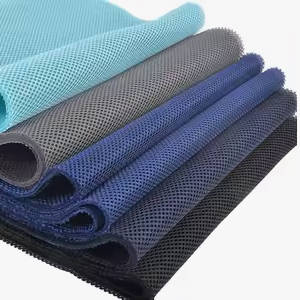
Sandwich mesh fabric has become one of the most widely used materials in bag manufacturing, and for good reason. This guide breaks down what it is, why it matters, and what to look for when sourcing it at scale.
What Is Sandwich Mesh Fabric?
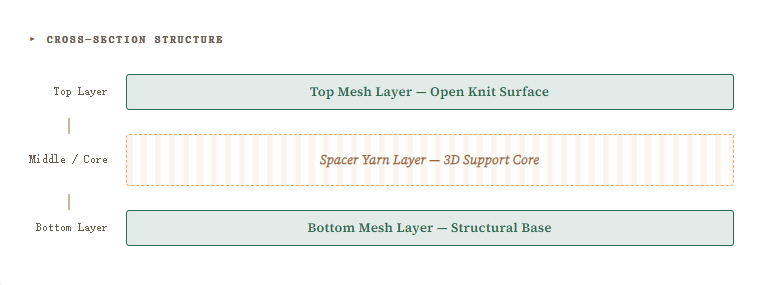
Sandwich mesh — also called 3D mesh or spacer fabric — is a knitted textile made up of three distinct layers:
- Top mesh layer: An open-knit surface that faces the user or the bag’s interior. The hole density here controls breathability and tactile feel.
- Spacer yarn layer: The core of the material. Monofilament polyester yarns are knitted vertically between the two face layers, creating an air gap that provides cushioning, loft, and rebound.
- Bottom mesh layer: A denser structural base that bonds to foam, lining fabric, or bag shell panels.
Key Advantages of Sandwich Mesh in Bags
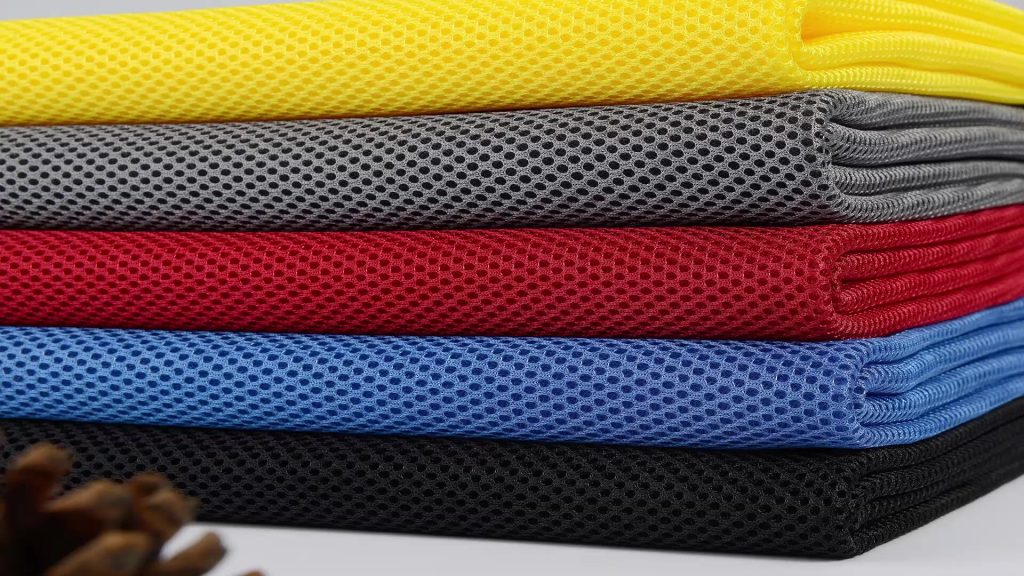
Unlike flat foam or standard padding, sandwich mesh holds its structure through the yarn itself — no adhesives, no lamination required at the core level. This makes it inherently more durable and breathable than conventional padding options.
Breathability
The open-cell structure allows air to circulate between the bag and the wearer’s back. For school bags, hiking packs, and any product worn for extended periods, this directly reduces heat buildup and sweat accumulation — a selling point that’s easy to communicate to end consumers.
Cushioning and Shock Absorption
The spacer yarn acts as a buffer layer. In laptop compartments, it reduces vibration and minor impact. In shoulder straps, it distributes load more evenly across the shoulder. This is one of the harder performance advantages to replicate with flat foam at the same weight.
Lightweight Construction
Despite its three-layer structure, sandwich mesh is notably lighter than foam-padded alternatives. For brands targeting weight-conscious markets — ultralight hiking gear, children’s school bags — this matters.
Moisture Management
Polyester spacer yarn wicks and disperses moisture efficiently. Back panels using sandwich mesh stay considerably drier during extended wear compared to foam-backed fabrics. For sports and outdoor applications, this is a meaningful functional advantage.
Durability and Shape Recovery
Quality sandwich mesh rebounds to its original loft after compression. Shoulder straps and back panels retain their cushioning even after years of daily use. This is where cheaper alternatives typically fail — they flatten and stay flat.
Common Applications in Bag Manufacturing
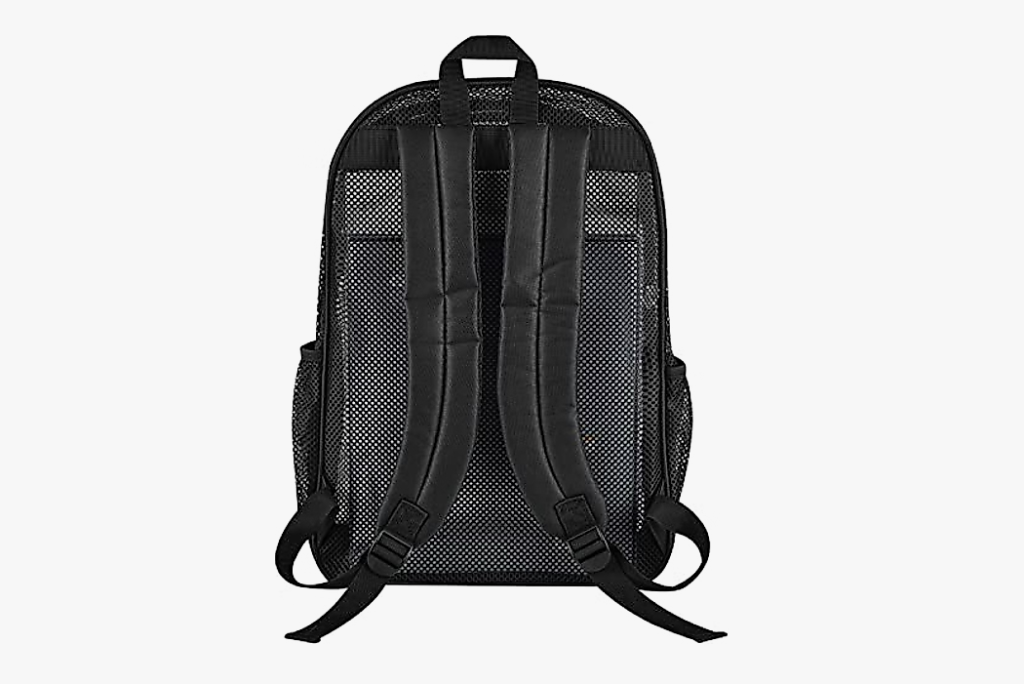
School backpacks — Sandwich mesh is widely used in back panels and shoulder straps where all-day comfort is the priority. Reducing back sweat and fatigue is a key purchase driver for parents.
Outdoor and hiking backpacks — In larger packs, the full back system, hip belt, and harness often use sandwich mesh. Maximum ventilation and load distribution over rough terrain are the main performance requirements here.
Laptop backpacks — The laptop sleeve and shoulder straps benefit from sandwich mesh’s shock-absorbing properties. Device protection and shoulder comfort both improve, which are strong selling points in the corporate gifting and commuter bag markets.
Sports and gym bags — Carry handles and back contact surfaces in sports bags use sandwich mesh for its moisture-wicking properties and lightweight structure. The material holds up well to frequent washing, which matters in this category.
Tactical and travel bags — MOLLE panel backing and waist straps in tactical bags require a material that can handle heavy loads without deforming. Sandwich mesh provides the structural integrity needed here.
Thickness, Density, and Customization Options
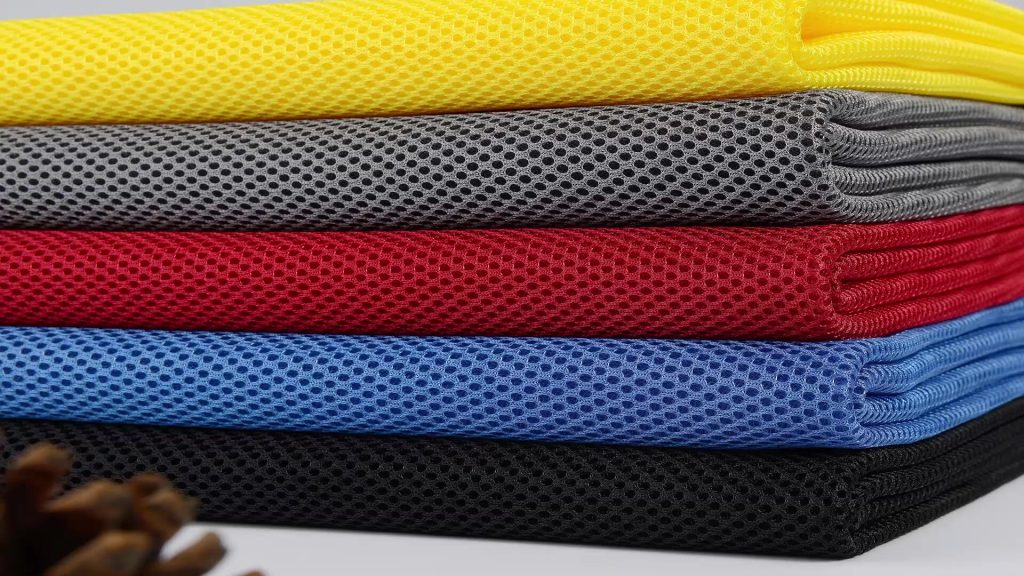
One of the strongest practical advantages of sandwich mesh for buyers is the range of specifications available at volume.
Thickness typically ranges from 3mm to 10mm. Thinner versions (3–5mm) work well for laptop sleeves, lining panels, and handle wraps. Thicker versions (8–10mm) are suited to back panels and shoulder straps where cushioning is the primary function.
Mesh density varies from fine to coarse knits. Finer knits feel softer against skin and suit close-contact applications. Coarser knits allow more airflow and are preferred for ventilated back systems.
GSM (grams per square meter) typically runs between 200 and 500 GSM depending on thickness and density. Heavier GSM means more material and generally more cushioning, but also more weight.
Functional treatments available for bulk orders include flame retardancy, anti-mold and anti-bacterial finishes, and recycled polyester yarn for brands with sustainability requirements. Pantone color matching is available for branded product lines.
All of these specifications can be customized for orders. The key is being precise in your brief — vague specs lead to wide-ranging quotes and surprises at production.