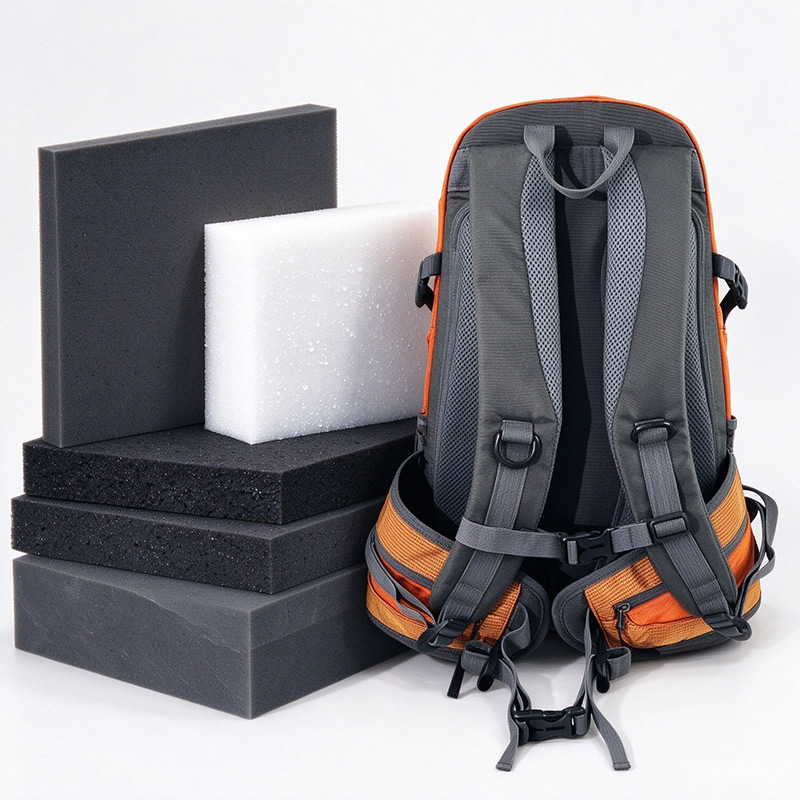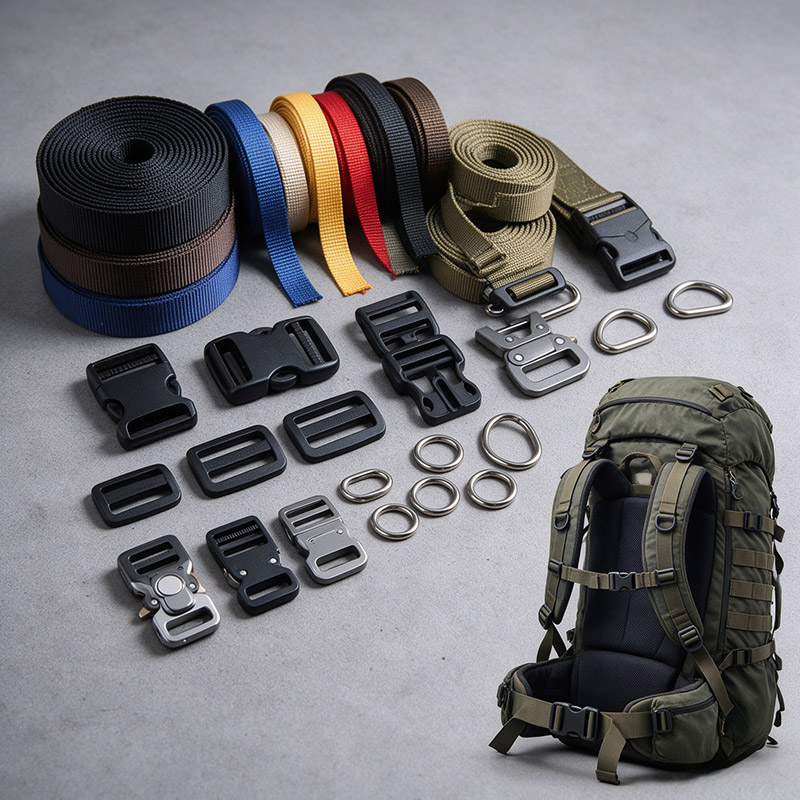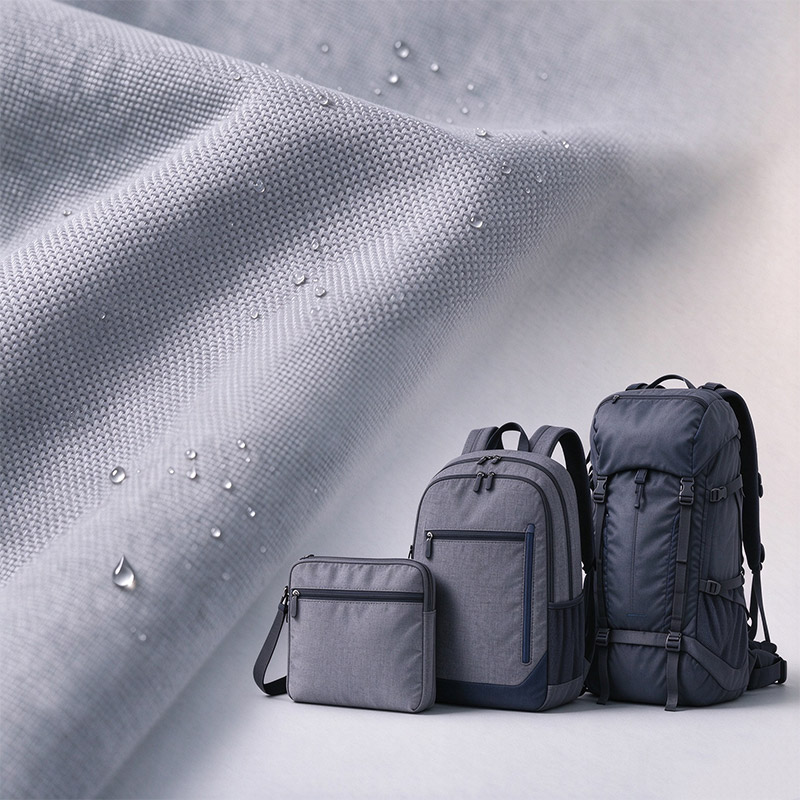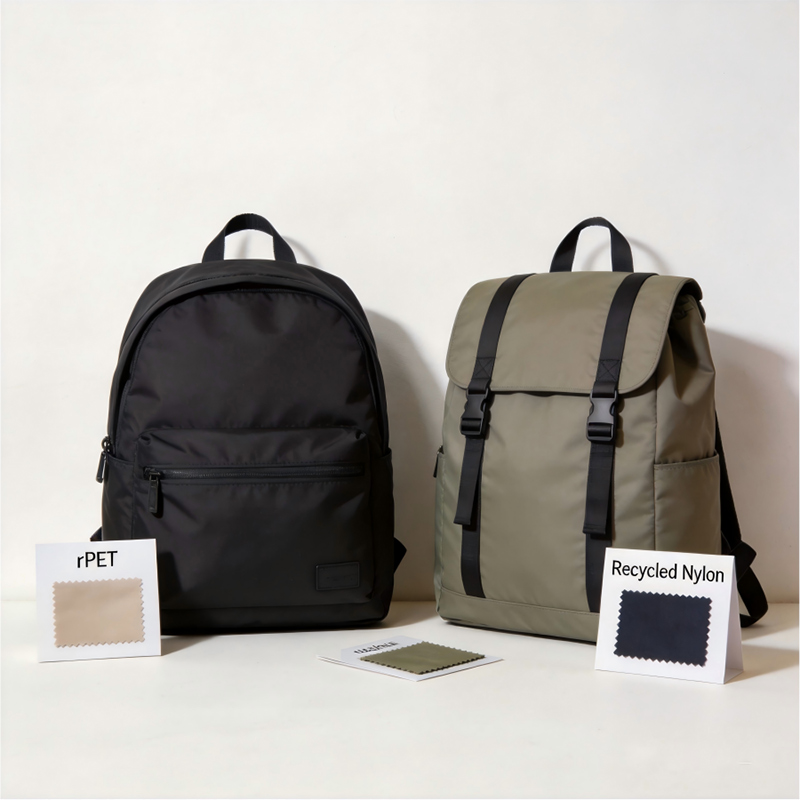
In the bag manufacturing industry, rPET (recycled polyester) and Recycled Nylon have become two widely discussed alternative synthetic fiber solutions. The former is mainly sourced from recycled plastic bottles, while the latter is derived from discarded fishing nets, industrial waste materials, and other nylon waste.
For OEM backpack production buyers, determining whether these two materials are suitable for their own product lines requires a systematic evaluation based on their fundamental differences, certification systems, and application scenarios.
As a bag manufacturer, we are frequently asked this question by customers during the sampling and mass production processes. Today, based on our practical manufacturing experience, we will provide a comprehensive overview of the key points, including material differences, composition verification, and real-world applications.
1. Differences Between rPET and Recycled Nylon
The core differences between rPET and Recycled Nylon are first reflected in their chemical properties and raw material sources.
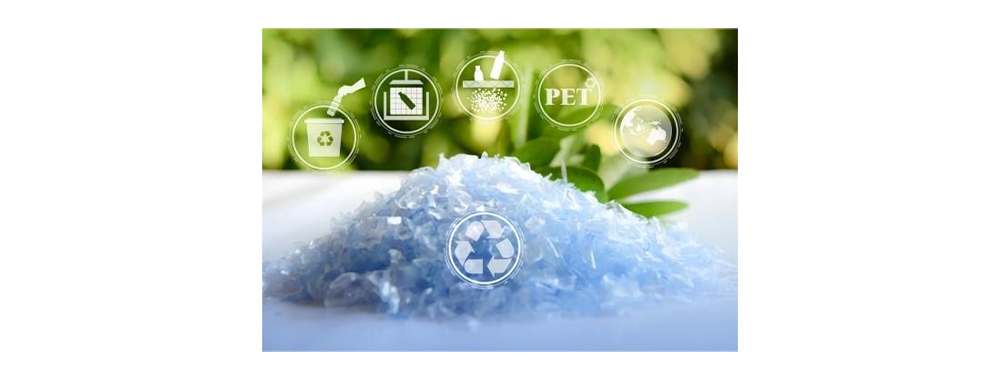
- rPET (Recycled Polyethylene Terephthalate) :rPET is a recycled polyester fiber. Its raw materials mainly come from post-consumer PET plastic bottles and plastic packaging. Through processes such as cleaning, crushing, melting, re-pelletizing, and spinning, its chemical structure remains identical to that of virgin polyester.
- Recycled Nylon :Recycled Nylon represented by materials such as ECONYL®, is made from sources including discarded fishing nets, carpet fibers, and industrial pre-consumer waste. Through chemical depolymerization and repolymerization processes, it can be restored to a molecular chain structure close to that of virgin nylon.

The performance differences between the two materials are also significant:
| Dimension | rPET | Recycled Nylon |
| Abrasion Resistance & Tear Strength | Moderate, suitable for daily commuting scenarios | High, close to or equivalent to virgin nylon |
| Dyeing & Printing | Stable color fastness, suitable for digital heat sublimation printing | Requires more advanced dyeing processes, and additional control is needed for batch-to-batch consistency |
| Raw Material Availability | Mature supply chain with abundant sources of recycled bottles | Depends on recycling networks for fishing nets and industrial waste materials, with relatively limited production capacity |
In short, rPET is the “eco-friendly version of polyester,” while Recycled Nylon is the “eco-friendly version of nylon.” The two materials each have their own advantages in terms of mechanical performance, cost structure, and supply chain maturity. There is no absolute superiority or one-size-fits-all replacement between them.
As a backpack OEM factory with extensive manufacturing experience, when recommending materials to customers, we typically evaluate and make decisions based on the end-use scenario and cost budget.
2. How to Verify the Recycled Content of rPET and Recycled Nylon?
Against the backdrop of increasingly stringent regulations, including the EU Green Claims Directive and anti-greenwashing laws in various countries, brands that wish to label their products as containing “recycled materials” on product hangtags or in marketing communications must provide third-party verified and traceable certification documents.
Currently, the most widely recognized verification system in the industry is GRS (Global Recycled Standard).
2.1 What is GRS?
GRS stands for Global Recycled Standard, an internationally recognized standard developed by Textile Exchange. The purpose of GRS certification is to track and verify the recycled material content in finished products while ensuring that environmental and social responsibility requirements are met throughout the production process.
It applies to recycled materials such as rPET, recycled nylon, and recycled cotton.
The key principles of this standard include:
- Recycled Material Verification: Ensures that the recycled materials claimed in products (such as recycled polyester and recycled nylon) are authentic and reliable, and that they are verified throughout the entire supply chain.
- Environmental Protection: Requires companies to reduce the use of hazardous chemicals during production, conserve water resources, and improve energy efficiency.
- Social Responsibility: Ensures that production processes comply with labor rights standards, such as prohibiting forced labor and protecting workers’ health and safety.
- Traceability: Establishes a complete traceability system from raw materials to finished products to prevent false environmental claims or greenwashing.
2.2 Two Essential Documents Required for Brands
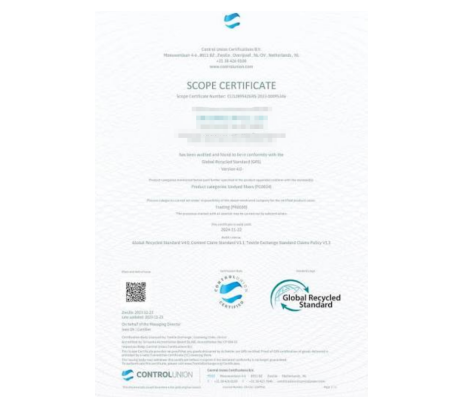
- GRS: Also known as the SC Certificate (Scope Certificate), it proves that a factory is qualified to process certified recycled materials. It specifies the categories of certified products the factory can produce and the percentage of recycled content they are approved to handle. However, this certificate does not apply to specific orders.
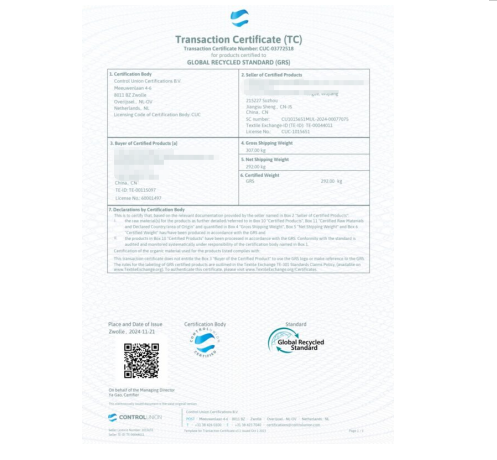
- TC ( Transaction Certificate): Issued for a specific batch order, it records the exact recycled content percentage, weight, and supply chain transfer details of that shipment. This is the key supporting document for brands when making environmental claims about their products.
2.3 Common Blind Spots in the Verification Process
- Risk of Supply Chain Disruption: GRS requires every stage of the supply chain, from recyclers, spinning mills, and weaving factories to finished product manufacturers, to hold valid certification. If any one link in the supply chain is not certified, the finished product cannot legally be labeled as GRS certified.
- Misconception That Either GRS or TC Alone Is Sufficient: This is one of the most common misunderstandings during brand verification. In reality, the GRS Scope Certificate only proves a factory’s certification qualification, while the TC (Transaction Certificate) is the valid compliance document corresponding to a specific production batch. Both documents are essential and cannot replace each other.
Only when the factory holds a valid GRS Scope Certificate and the corresponding production batch has been issued a compliant TC Transaction Certificate can a brand support its environmental claims regarding recycled content. Holding only either one of these documents alone does not meet compliance requirements.
3. Applications of rPET and Recycled Nylon in the Bag Industry
Application Scenarios
| Material | Suitable Bag Types | Unsuitable Applications |
| rPET | Everyday tote bags, eco-friendly shopping bags, foldable bags, cosmetic bags, lining fabrics, lightweight commuter backpacks | High-load outdoor bags, applications requiring ballistic nylon-level abrasion resistance |
| Recycled Nylon | Premium travel backpacks, outdoor gear, swim bags, and functional bags requiring frequent use and high durability | Cost-sensitive large-scale promotional products |
The mature supply chain and controllable cost structure of rPET have enabled it to achieve higher penetration in mass-market consumer bags. Recycled Nylon, on the other hand, retains the high toughness and abrasion resistance characteristics of the nylon family, making it more suitable for performance-oriented bags that require higher durability.
4. Other Sustainable and Eco-Friendly Materials
In addition to rPET and Recycled Nylon, there are many other innovative sustainable materials in the bag industry that are gradually achieving commercial application.
The following materials can be considered as supplementary eco-friendly solutions during material evaluation.
| Material | Source | Core Characteristics | Main Limitations |
| Organic Cotton | Cotton grown without the use of pesticides | Biodegradable, soft texture, suitable for premium tote bags and high-end gift bags | Lower abrasion resistance than high-denier synthetic fibers; high moisture absorption makes it more prone to mold |
| Hemp | Natural plant fiber | Short growth cycle, requires little to no pesticides, high fiber strength | Relatively stiff hand feel; usually needs to be blended with other fibers to improve softness |
| Linen | Fibers from the stems of flax plants | Excellent breathability, low water consumption, biodegradable | Wrinkles easily; wrinkle-resistant finishing may involve chemical treatments |
| Cork | Bark of cork oak trees | Renewable, lightweight, and water-resistant | Limited flexibility; mainly used for decorative elements or small accessories |
| Piñatex | Pineapple leaf fibers | Plant-based leather alternative with a unique textured appearance | Limited mass production capacity |
| Recycled Cotton | Factory scraps or recycled old textiles | Reduces textile waste and has a lower carbon footprint | Shortened fiber length results in reduced strength; usually needs to be blended with virgin cotton |
| Plant-Based Synthetic Fibers | Produced through polymerization and fermentation of plant-based raw materials | Reduces dependence on petroleum resources; can be industrially composted; carbon footprint is more than 40% lower than traditional synthetic fibers | Poor heat resistance and insufficient durability; currently only suitable for short-term bag applications |
Each of these materials has its own advantages and limitations. Brands can select suitable material solutions based on their product positioning and sustainability goals, further expanding the choices available for environmentally responsible product lines.

5. FAQ
Q1: Are rPET and Recycled Nylon more environmentally friendly than virgin materials?
A: From the perspective of energy consumption and carbon emissions, both materials perform better than their corresponding virgin fibers. rPET can reduce energy consumption by approximately 50%–59%, while Recycled Nylon can reduce its carbon footprint by around 80%. However, neither material is biodegradable, and both may contribute to microplastic release. Therefore, they should be considered “harm-reduction solutions” rather than “zero-impact solutions.”
Q2: Can recycled materials without GRS certification be used?
A: Technically, it is possible to purchase and use them. However, if a brand plans to claim “recycled” or “eco-friendly” attributes in its marketing communications, the lack of third-party certification such as GRS may create compliance risks, especially in the EU and North American markets. It is recommended that certification requirements be established as a prerequisite for supplier qualification.
Q3: Can Recycled Nylon completely replace rPET?
A: No. The two materials differ significantly in terms of cost, performance, and supply chain maturity. Recycled Nylon is more suitable for high-abrasion and high-resilience applications, while rPET has greater advantages in cost control and large-scale supply. Material selection should be based on the specific functional requirements and pricing strategy of the product.
Q4: After using recycled materials in bags, are conventional physical performance tests still required?
A: Yes. The recycled nature of the material does not change its physical properties as an industrial material. Standard quality control procedures, including tensile strength testing, tear strength testing, color fastness testing, zipper reciprocating tests, and other routine evaluations, are still required.
Q5: Besides GRS, what other certifications are worth paying attention to?
A: Depending on the target market, brands may also need to consider certifications and regulations such as OEKO-TEX Standard 100 (chemical safety), as well as market-specific regulations including EU REACH and US CPSIA.
6. Conclusion
rPET and Recycled Nylon provide two practical pathways for the bag industry to reduce dependence on petroleum resources and minimize waste generation.
The key advantage of rPET lies in its mature supply chain and controllable cost structure, while Recycled Nylon maintains the mechanical properties of traditional nylon materials, making it suitable for high-performance applications.
For brands, material selection is essentially a matching process. Product positioning, functional requirements, cost structure, target market compliance requirements, and the brand’s own sustainability narrative framework collectively determine whether rPET, Recycled Nylon, or other alternative materials are the most suitable choices.
As a professional OEM/ODM backpack manufacturer, DH BAGS is committed to providing bag manufacturing solutions that align with brands’ sustainability strategies. Based on each customer’s specific requirements, we help organize and evaluate the complete process — from material selection to certification compliance — enabling brands to meet environmental communication goals and market regulatory requirements while ensuring the end product delivers excellent user experience.