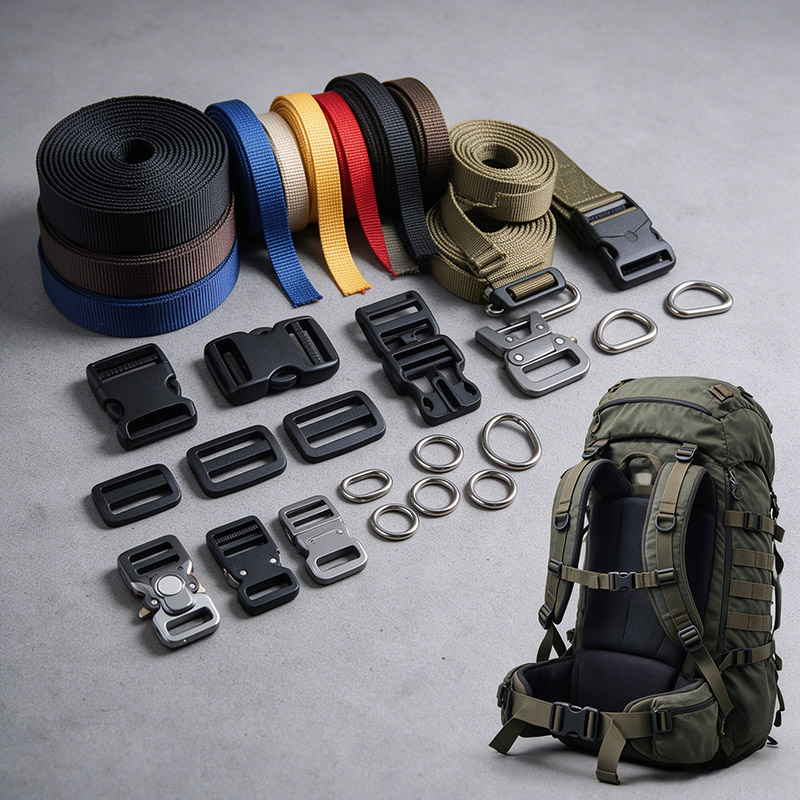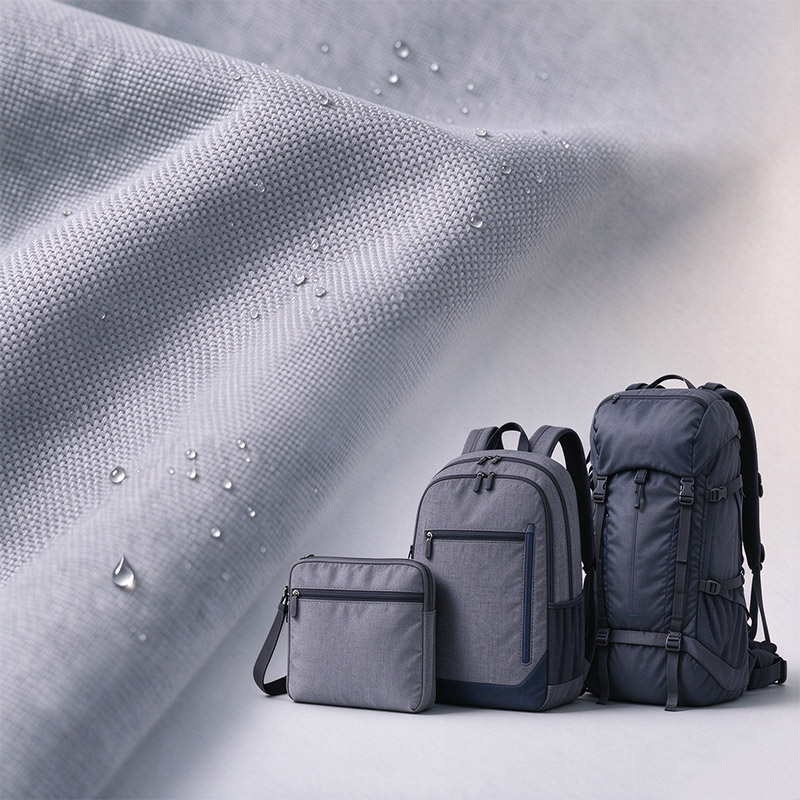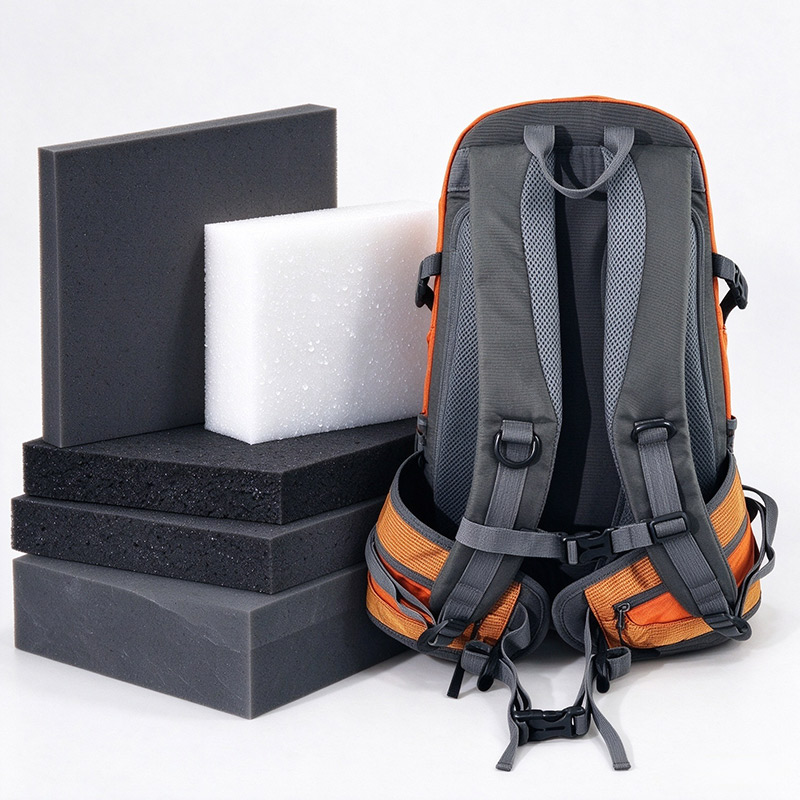
In daily backpack manufacturing, there are typically four types of foam used for back panels: EVA, EPE, PU, and XPE. These four foams each have distinct characteristics in terms of density, resilience, compression stability, water resistance, temperature resistance, processing adaptability, and cost.
• EVA foam offers the best overall performance in resilience, impact durability, and forming adaptability, and is widely used in mid-to-high-end backpack shoulder straps, back panels, and laptop compartments.
• EPE pearl foam is moderately priced, lightweight, and water-resistant, making it suitable for basic filling in high-volume entry-level products.
• XPE foam stands out for its compression stability and environmental compliance, making it ideal for outdoor backpacks and long-service-life products.
• PU foam has an open-cell structure. It is very soft and highly breathable but provides limited support, so it is rarely used alone as a back panel support. Instead, it is usually combined with PE board or EVA to serve as a back-contact comfort layer.
These four foam materials each have their own trade-offs in structural characteristics, processing methods, and application scenarios. The following sections will analyze each foam’s performance characteristics, application scope, and sourcing considerations to help you quickly match the right foam solution for your product.
Ⅰ. Core Performance Comparison of Four Foam Materials
| Comparison Dimension | EVA Foam | EPE Pearl Foam | PU Foam | XPE Foam |
| Cell Structure | Closed-cell, relatively fine and smooth surface | Closed-cell, rough surface with slight matte texture | Open-cell, soft, good breathability | Uniform closed-cell, smooth surface |
| Density Tendency | 40–200 (extremely wide adjustable range) | 18–45 (very low) | 10–60 (very low) | 25–120 (medium-high) |
| Hardness Adjustability | 20–80 (widest adjustable range) | 15–30 (moderate, soft but with support) | 5–30 (more suitable for back-contact cushioning) | 15–40 (moderate, soft but with support) |
| Resilience & Recovery | Fast rebound speed; specific resilience determined by density | Moderate rebound speed. Acceptable single-press recovery | Regular PU rebounds quickly; slow-rebound PU recovers extremely slowly | Fast rebound speed |
| Compression Stability | Good | Average | Average | Excellent |
| Water Resistance | Excellent, non-absorbent | Excellent, non-absorbent | Poor, highly absorbent | Excellent, non-absorbent |
| Temperature Resistance | Moderate | Moderate | Good | Excellent |
| Environmental Performance | Good, recyclable | Good, recyclable | Average | Excellent, lower production energy consumption |
| Relative Cost | Medium | Low | Medium-Low | Medium-High |
| Typical Applications | Back panel shaping support frame, back panel support layer, laptop compartment | Back panel support layer, backpack internal dividers | Back-contact cushion layer, shoulder strap padding layer | Outdoor backpack protective panel, side wall cushioning |
In summary, EVA, with its excellent comprehensive mechanical properties and forming capabilities, has become the top choice for mid-to-high-end backpack back panel support. EPE, with its extreme cost advantage, is well-suited for basic filling in high-volume entry-level products. XPE excels in weather resistance and compression stability, making it an ideal upgrade solution for outdoor and long-life products. While PU foam is not suitable as a primary support structure, its exceptional breathability and soft feel make it indispensable in back-contact comfort layer applications.
In actual material selection, there is no absolutely perfect single material—only the optimal combination strategy based on product positioning, usage scenarios, and cost budget.
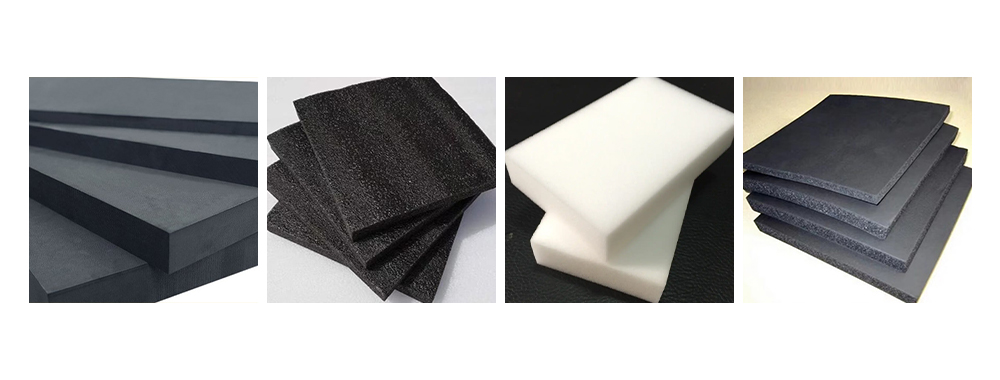
Ⅱ. EVA Foam
1. Material Characteristics and Advantages
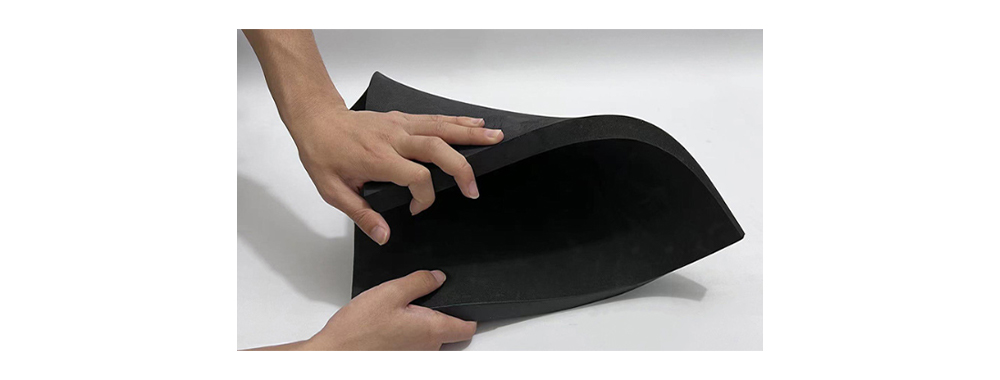
EVA foam is a cushioning material with balanced overall performance in the backpack industry. It is made from ethylene-vinyl acetate copolymer and offers excellent elasticity, resilience recovery, and impact resistance.
• Closed-cell structure; rebounds quickly after repeated compression and resists significant collapse during long-term use
• Density and hardness can be adjusted through formulation to suit various needs from soft shoulder straps to rigid back panels
• Supports hot pressing and cold pressing, suitable for mid-to-high-end products with high pattern precision requirements
• Can be laminated with fabrics such as jersey, mesh, and Lycra to optimize feel, breathability, and appearance
EVA foam density ranges from 30–300 kg/m³, with the common range for backpack cushioning being 80–200 kg/m³. Lower density models offer higher resilience, while higher density models provide greater rigidity. Buyers can select the appropriate density based on the support requirements of shoulder straps, back panels, and compartments. Under normal conditions, closed-cell EVA can keep compression set at a relatively low level.
2. Typical EVA Foam Applications in Backpacks
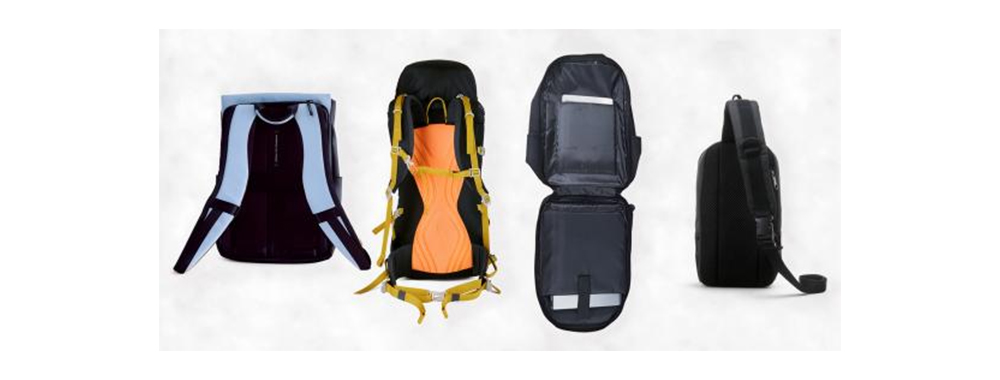
• Shoulder strap filling: Use soft to medium-hard EVA sheets, balancing soft feel with support
• Back panel cushioning: Use hot pressing to form three-dimensional back panels with ergonomic contours
• Laptop compartments: Use higher density EVA for rigid protection and impact resistance
• Waist bag and chest bag body-contact surfaces: Thin EVA sheets for basic cushioning
3. Considerations During Backpack OEM
| Focus Area | Description |
| Density | Determines support, finished product weight, and compression recovery performance |
| Hardness | Affects feel, support, and body fit |
| Thickness | Determines cushioning effect, pattern thickness, and finished product weight |
| Color | Black and white are standard colors; custom colors require color masterbatch |
| Surface Lamination | Laminated fabric/liner to improve feel and breathability |
| Forming Method | Hot pressing or cold pressing, selected based on component structure and pattern |
EVA foam is well-suited to mid-to-high-end backpack product lines, with mature processing and supporting solutions for shoulder straps, back panels, and electronic device compartments.
Ⅲ. EPE Pearl Foam
1. Material Characteristics and Positioning
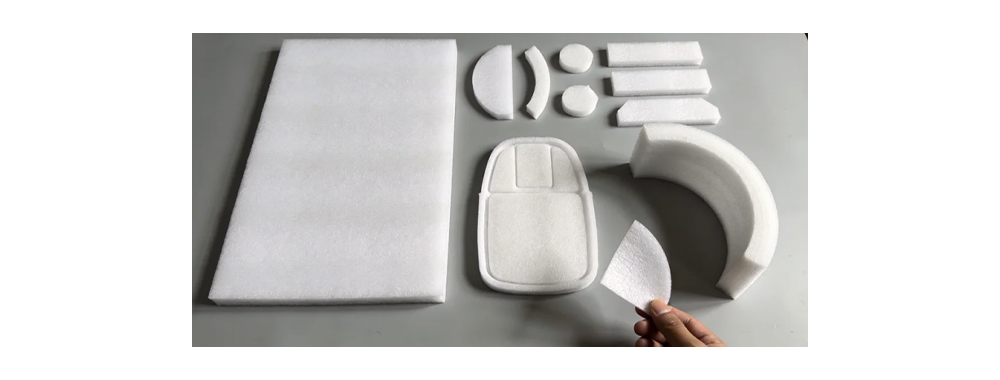
EPE foam is made from low-density polyethylene foam and is a widely used filling material in the backpack industry.
• Lightweight, helping control finished backpack weight
• Excellent water resistance, non-absorbent, suitable for outdoor environments and basic protection
• Easy to cut, bond, and sew, suitable for high-volume assembly line production
• Low unit price, with significant cost advantages in large order scenarios
EPE foam commonly has a density of 25–100 kg/m³. In terms of mechanical properties, EPE rebounds quickly, but its compression set control is average. After prolonged heavy pressure, it is prone to irreversible thickness loss, and its support durability is weaker than EVA and XPE.
2. Limitations of EPE Pearl Foam
• Elasticity weaker than EVA; limited resilience recovery capability
• Prone to permanent deformation under long-term continuous compression
• Moderate temperature resistance; not suitable for high-temperature environments or parts requiring deep hot pressing
• Limited tensile strength; not suitable for structural parts bearing high tensile stress
3. Typical Application Scenarios
• Backpack bottom padding, side wall filling
• Overall cushioning structure for entry-level backpacks
• Promotional bags, gift bags, and other cost-sensitive products
• Composite structure base support, used in combination with EVA surface layers
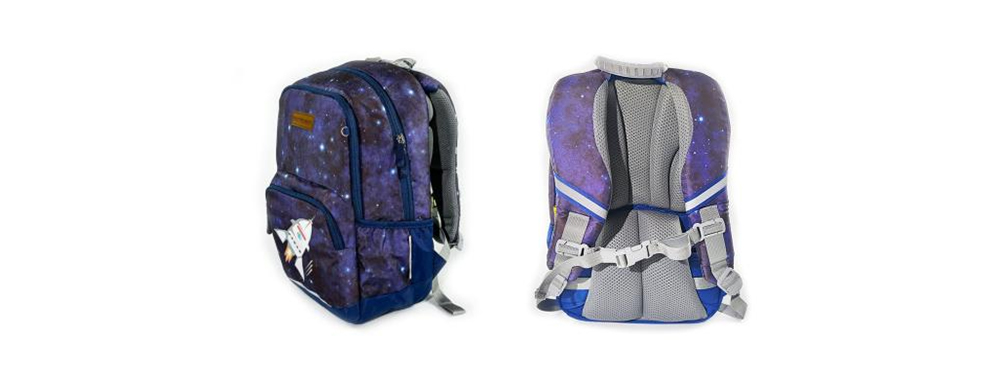
EPE foam is suitable for entry-level products with large order volumes and cost-control priorities. For mid-to-high-end products, EPE can be used in non-critical filling areas, while EVA or XPE should be selected for core cushioning positions such as shoulder straps, back panels, and compartments.
Ⅳ. PU Foam
1. Material Characteristics
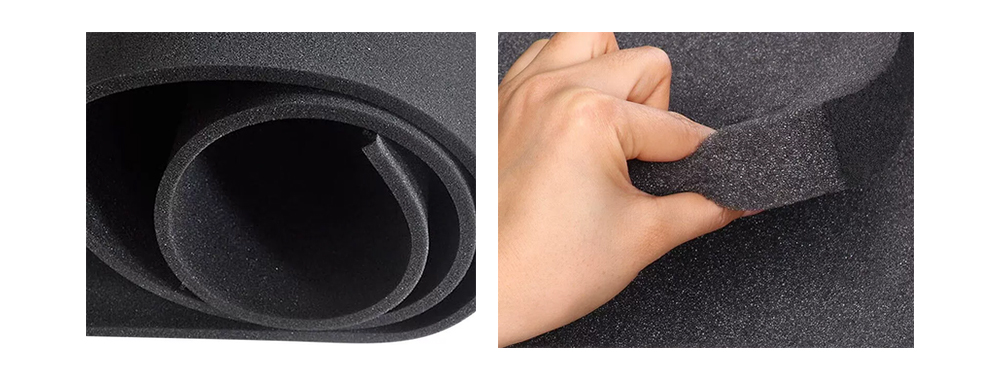
PU foam has limited applications in backpack support structures but is irreplaceable in specific functional scenarios.
• Wide adjustable range of density and hardness
• Good temperature resistance, suitable for some high-temperature processing or special use environments
• Outstanding thermal insulation performance among conventional foams
• Features breathability, shock absorption, thermal insulation, moisture absorption, and anti-static properties
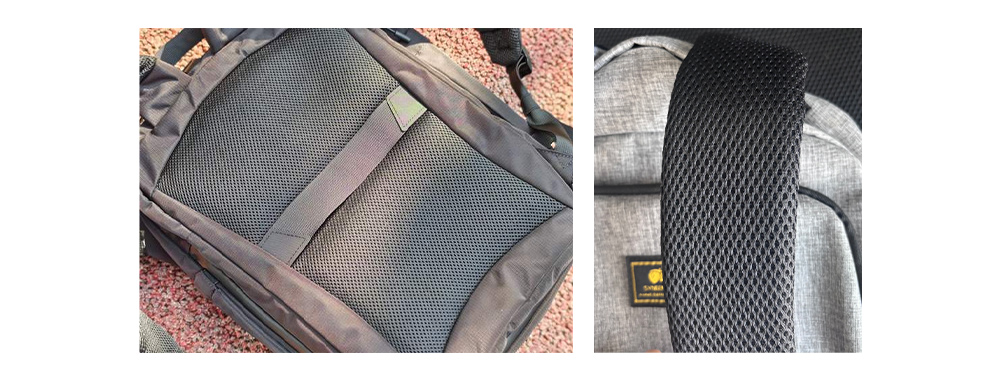
PU foam density spans a wide range, commonly 40–300 kg/m³. Its thermal insulation performance is superior to ordinary foam. Due to its open-cell structure and strong water absorption, in soft backpacks it is mainly used as a back-contact breathable layer and shoulder strap interlayer.
2. Application Limitations in Backpacks
PU foam is rarely used alone as the main support layer of soft backpacks, with core limitations stemming from its material characteristics. PU’s open-cell structure makes it very soft, breathable, and highly moisture-absorbent, resulting in weak support and water resistance. If used for backpack main body support, it tends to collapse under prolonged pressure. Therefore, it is often laminated on the outer layer of EVA/XPE as a back-contact soft cushion layer or used as a breathable layer in ventilation systems.

3. Applicable Scenarios
• Backpack back-contact surface layer, shoulder strap padding layer
• Instrument bag cushioning interlayer, laptop sleeve interlayer
• Waist bag/sports pouch padding
For procurement in insulated cooler backpacks using PU foam, it is recommended to test composite insulation solutions to balance performance and cost.
Ⅴ. XPE Foam
1. Material Characteristics and Core Advantages
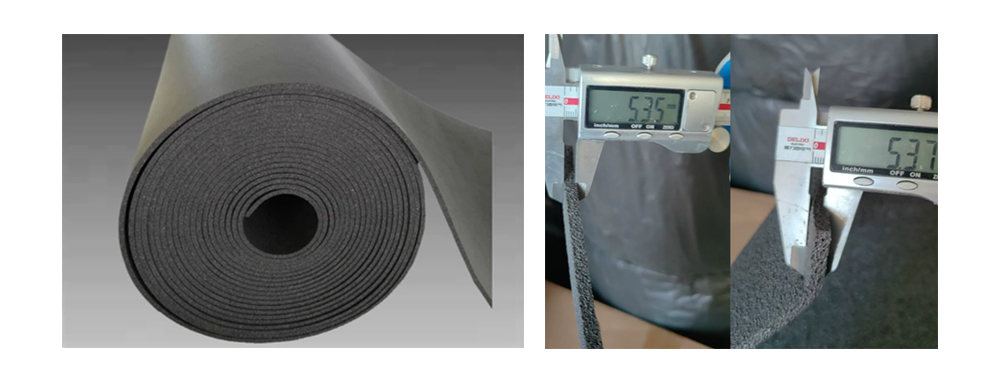
XPE foam is an upgraded version of EPE foam. Through chemical cross-linking, it forms a three-dimensional network molecular structure, significantly improving material performance.
• Compression stability superior to ordinary EPE; resistant to collapse under long-term repeated compression
• Uniform and dense closed-cell structure with smooth surface and excellent water resistance
• Low production energy consumption, recyclable, classified as an environmentally friendly material in many markets
• Excellent weather resistance; withstands outdoor temperature variations and humid environments
XPE foam commonly has a density of 20–170 kg/m³. Laboratory reference data: after 10,000 compression cycles, XPE thickness retention rate is approximately 90%; ordinary EPE foam is approximately 75%.
2. XPE Foam Applications in Backpacks
• Outdoor hiking backpack back panels: excellent compression stability for long-distance hiking
• Backpack side walls and top protective cushioning layers: balancing protection performance and lightweight design
• Sports protective gear, helmet padding; can be processed into complex shaped cushioning parts

3. XPE vs. EVA Selection Comparison
| Comparison Item | XPE Foam | EVA Foam |
| Density Tendency | Medium-High | Medium to Medium-High |
| Water Resistance | Excellent | Excellent |
| Durability | Better resistance to light and aging | Better resistance to repeated impact and compression |
| Environmental Performance | Lower production energy consumption, stronger environmental advantages | Recyclable, but relatively higher production energy consumption |
| Relative Cost | Medium-High | Medium |
| Applicable Scenarios | Long-term outdoor use, humid environments | High resilience requirements, electronic product protection |
For high-end outdoor backpack product lines, XPE is preferred. For business backpacks and electronic product protection scenarios, EVA offers more balanced overall performance.
Ⅵ. Selection Decision Framework
1. Selection by Product Positioning
| Product Positioning | Recommended Foam Solution | Rationale |
| Entry-Level | EPE pearl foam | Cost priority; PE is lightweight and water-resistant, meeting basic needs |
| Mid-Range | EVA primarily, with PU for base structure | Combines support with breathability |
| Mid-to-High-End | EVA and EPE combination solution | Balances resilience and compression stability, enhancing product premium |
| High-End or Professional | XPE or high-density EVA | Performance priority, meeting professional scenario requirements |
2. Selection by Usage Scenario
| Usage Scenario | Key Requirements | Recommended Material |
| Urban Business Backpack | Lightweight, flat appearance, basic cushioning | EPE pearl foam, EVA foam, or other combination solutions |
| Outdoor Hiking/Trekking Backpack | Compression stability, waterproof, weather resistance | EVA foam, XPE foam |
| Laptop Backpack | Impact resistance, rigid protection | High-density EVA compartment |
| Insulated Cooler Backpack | Thermal insulation | PU thin board + EPE composite structure |
| Promotional/Gift Backpack | Rapid mass production | EPE foam |
3. Manufacturing-End Practical Recommendations
• During the sampling stage, it is recommended to test different foam solutions simultaneously and determine the final solution through physical comparison
• For orders targeting European and American markets, confirm material compliance matters at the sampling stage, verifying REACH, phthalates, and other regulatory requirements
Additional note: Foam is not better simply because it has higher density or greater thickness. High density increases bag weight and reduces body-contact comfort; low density tends to collapse. A balance must be found among weight, cushioning, and support.
Ⅶ. Frequently Asked Questions (FAQ)
Q1: How should one choose between EVA foam and XPE foam?
A: EVA foam excels in resilience and resistance to repeated impact, suitable for shoulder straps, back panels, and laptop compartments, providing soft support and cushioning. XPE foam offers stronger compression stability, water resistance, and weather resistance, suitable for outdoor backpack back panels, side walls, and long-life products. For business and electronic protection products, EVA is preferred; for outdoor and long-life products, XPE is preferred.
Q2: How should foam be selected for different parts of a backpack?
A: Shoulder straps generally use soft to medium-hard EPE or PU foam, balancing breathability and support. Back panels can use EPE pearl foam, EVA, or XPE; EVA has stronger forming capability, while XPE has better compression resistance stability. Side wall filling can use PU sponge or EPE pearl foam depending on cost, while bottom filling uses EVA or PE board.
Q3: Can EPE pearl foam be used in mid-to-high-end backpacks?
A: EPE foam can be used in non-critical filling positions of mid-to-high-end backpacks, such as side walls and internal support structures. However, it is not recommended as the core cushioning material for back panels, as its resilience and long-term compression resistance are limited. Core cushioning for mid-to-high-end products should prioritize EVA or XPE.
Q4: Why is PU foam limited in soft backpack applications?
A: PU foam has an open-cell structure with strong water absorption and slow compression recovery, and finished products are mostly soft sponge. These characteristics make it unsuitable as the main support layer of backpacks, and more suitable for back-contact breathable layers.
Q5: How to determine whether foam density and hardness are suitable?
A: Density and hardness directly determine support, hand feel, weight, and compression recovery. Shoulder straps need to be soft, fitting, and resistant to collapse; back panels need support and forming capability; compartments need high-density protection. It is recommended to conduct sampling tests on hand feel, compression recovery, and finished product pattern—do not make conclusions based solely on material parameters.
Q6: What is the purpose of foam fabric lamination?
A: Foam fabric lamination can improve feel, breathability, appearance quality, and durability. Common fabrics include jersey, mesh, Lycra, and nylon. Shoulder straps and back panels laminated with mesh improve breathability; body-contact areas laminated with jersey/Lycra optimize hand feel; outer layers laminated with nylon enhance abrasion resistance. The lamination process needs to match the foam material and forming method.
Q7: How to evaluate foam sample resilience and compression stability?
A: Physical testing methods: repeatedly press to observe rebound speed and thickness changes; simulate long-term compression to check for collapse; assemble into a backpack for load testing to evaluate shoulder strap, back panel, and compartment support performance. Outdoor/long-life products should focus on compression stability and waterproofing; business/laptop bags should focus on resilience and impact resistance.
Ⅷ. Conclusion
Backpack foam selection requires comprehensive judgment based on product positioning, usage scenarios, cost targets, and target market regulatory requirements. EVA foam is suitable for mid-to-high-end backpack shoulder straps, back panels, and electronic compartments; EPE foam is suitable for high-volume entry-level basic filling.
We are a professional backpack OEM/ODM manufacturer with extensive bag foam processing experience and mature supply chain integration capabilities. Based on your product positioning, end-use scenarios, and market regulatory requirements, we can provide one-stop customized services including foam selection recommendations, sample testing, material matching, and mass production delivery. For customized solution quotations, please contact us—our professional technical team will provide support.