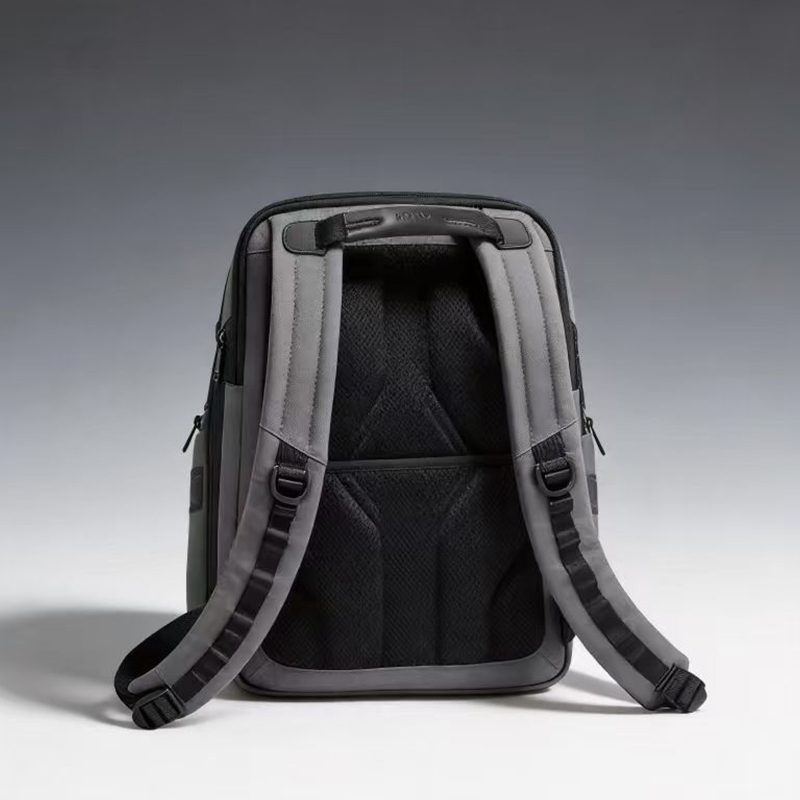
Shoulder straps are the core components that determine a backpack’s load-bearing performance. They carry approximately 90% of the backpack’s weight, and the materials used directly affect their load capacity, comfort, and durability. A shoulder strap is not simply a piece of fabric; it is a complex “sandwich” structure composed of multiple layers of materials working together.
For brands, designers, and sourcing managers, understanding the internal construction of these shoulder straps is essential. In this guide, we will analyze different types and structures of backpack shoulder straps from a manufacturing perspective, explain the technical differences between various materials, and explore how these differences impact the performance and importance of your next bag project.
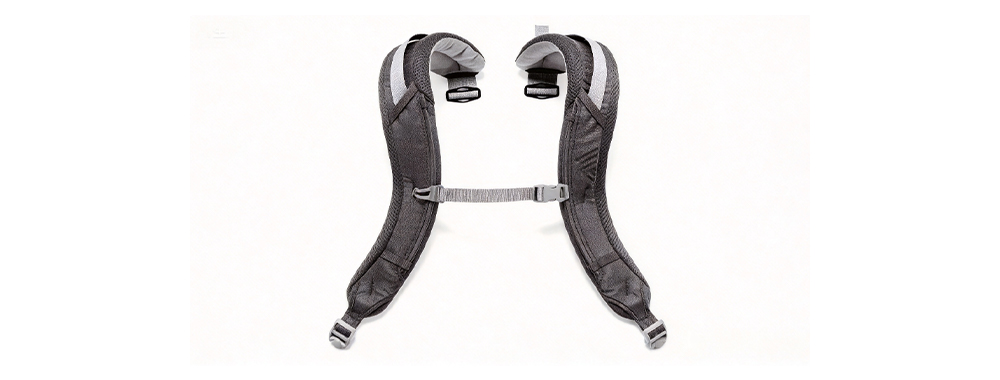
Table of Contents:
- Types of Backpack Shoulder Straps
1.1 Drawstring Backpack Shoulder Straps
1.2 Single-Shoulder Backpack Straps
1.3 Double-Shoulder Backpack Straps
1.4 Double-Shoulder Backpack Straps + Chest Strap + Waist Belt - Structural Components of Double-Shoulder Backpack Straps
2.1 Outer Layer (Fabric)
2.2 Middle Layer (Padding Material)
2.3 Inner Lining (3D Mesh Fabric)
2.4 Auxiliary Materials (Webbing and Plastic Accessories) - How to Match the Right Shoulder Straps for Your Backpack?
- FAQ
1. Types of Backpack Shoulder Straps
There are many different types of backpack shoulder straps. The following are the four most common types:
1.1 Drawstring Backpack Shoulder Straps
Drawstring backpack shoulder straps are mainly used for drawstring bags. These shoulder straps are lightweight and are only suitable for backpacks with a lighter load capacity.

1.2 Single-Shoulder Backpack Straps
Single-shoulder backpack straps are mainly used for cycling backpacks, travel backpacks, and some other types of sports backpacks. This type of shoulder strap allows users to carry their backpacks in a relaxed and comfortable way, providing greater freedom of movement without feeling restricted.
However, the disadvantages of single-shoulder backpacks are also obvious. Since there is only one shoulder strap, the entire weight of the backpack is concentrated on a single strap. To support the weight of the backpack, the trapezius muscle needs to continuously exert upward force for an extended period, which can more easily lead to fatigue and soreness.
If your daily load is relatively light, you can choose a single-shoulder backpack; otherwise, it is recommended to choose a double-shoulder backpack.

1.3 Double-Shoulder Backpack Straps
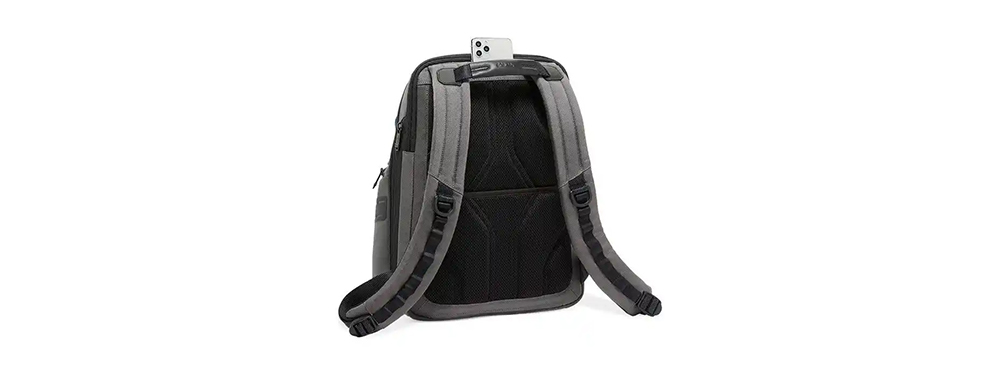
Double-shoulder backpack straps are currently the most commonly used type of backpack shoulder straps. Student backpacks, commuter backpacks, laptop backpacks, and diaper bags all adopt this design. They help distribute the backpack’s weight evenly across both shoulders, thereby reducing the risk of shoulder and back muscle strain or injury.
1.4 Double-Shoulder Backpack Straps + Chest Strap + Waist Belt
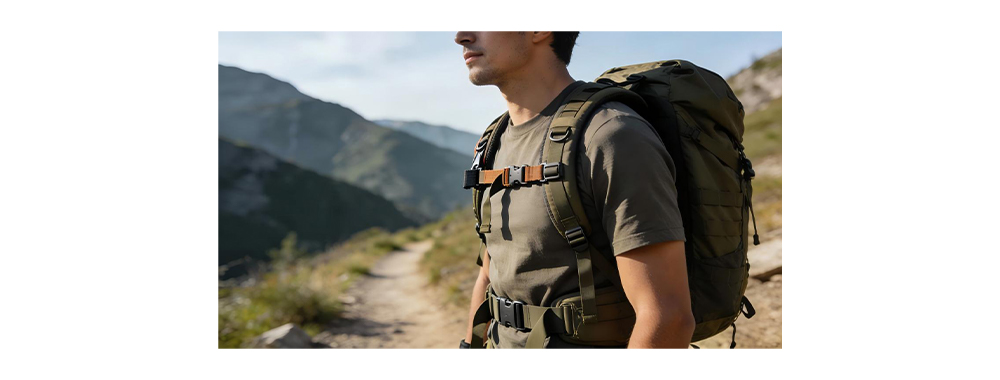
Double-shoulder straps, chest straps, and waist belt systems are mainly used for hiking backpacks and trekking backpacks. Since hiking or trekking often requires carrying a large amount of gear and supplies, the requirements for the strap system are also much higher.
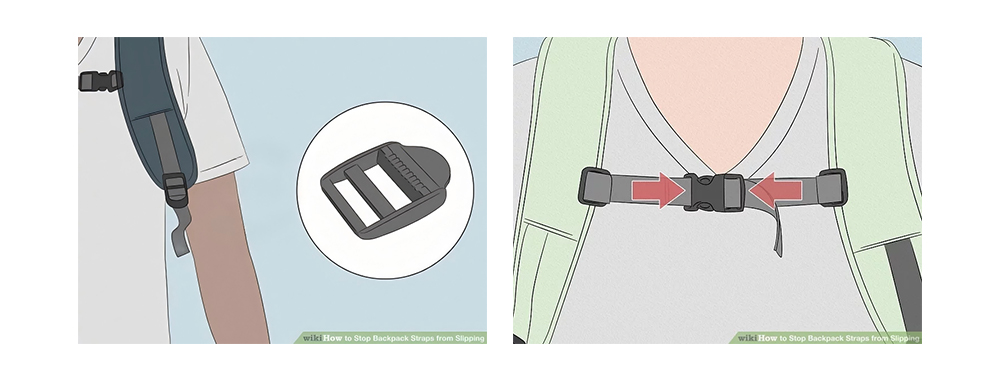
The main function of the chest strap is to adjust the distance between the two shoulder straps, improving the stability of the backpack while also helping with breathing comfort. The waist belt is the main load-bearing component of the backpack system. It usually consists of a waist pad and a waist strap and is designed with an adjustable structure. The waist belt is attached to the bottom of the backpack through nylon hook-and-loop fasteners. After being detached, it can be adjusted up and down to find the most suitable position.
The chest strap and waist belt help move the center of gravity of a fully loaded backpack closer to the wearer’s back, reducing the pressure on the backpack user and making carrying the load easier. They can also prevent the backpack from swaying back and forth during hiking.
2. Structural Components of Double-Shoulder Backpack Straps
High-quality backpack shoulder straps are rarely made from a single material. At DH Bags, we typically stitch three different materials together to achieve the best balance between durability, comfort, and cost.
2.1 Middle Layer: Foam Padding Material
Let’s start with the most important part — the middle layer padding. It is usually made with foam materials, and this layer provides the cushioning performance of the shoulder strap. The density and thickness of the foam directly affect the load-bearing performance and carrying comfort of the shoulder strap.
We commonly use three types of foam materials:
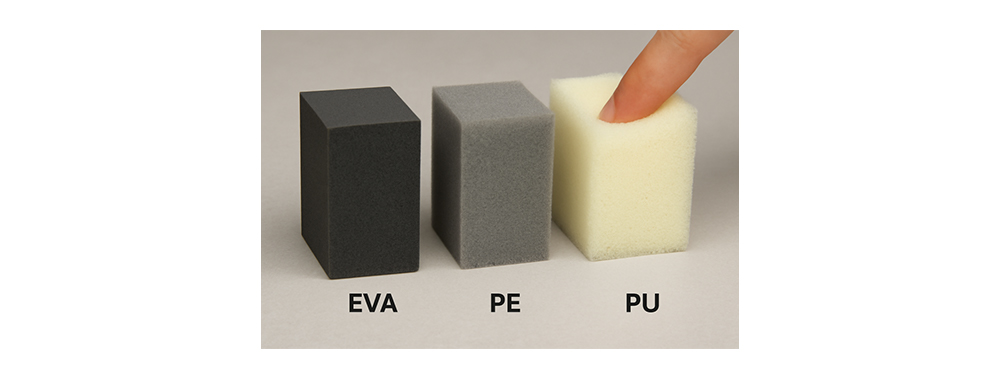
2.1.1 EVA Foam (Ethylene-Vinyl Acetate Copolymer)
- Structural Characteristics: Closed-cell structure with completely sealed internal air chambers. It does not absorb water, has fast rebound performance, and is resistant to collapse under long-term compression.
- Feel and Performance: It quickly returns to its original shape after being pressed, leaves almost no indentation, and provides a clear sense of support.
- Application Scenarios: Suitable for high-end product lines that require long-term load carrying, such as hiking backpacks, camera bags, and business laptop bags.
2.1.2 PE Foam (Polyethylene)
- Structural Characteristics: Semi-closed-cell structure. It is lighter than EVA but has weaker rebound performance, and long-term use may result in a “compression memory” effect.
- Feel and Performance: Recovers slowly after being pressed, feels relatively “soft and fluffy,” and provides less support compared with EVA.
- Application Scenarios: Suitable for student backpacks, promotional gift bags, and fast-moving consumer products with short replacement cycles.
2.1.3 PU Foam (Polyurethane)
- Structural Characteristics: Open-cell structure, similar to sponge. It is extremely soft but will collapse when used for load-bearing independently.
- Feel and Performance: Skin-friendly and soft to the touch, but lacks a supportive framework.
Practical Application: It is rarely used alone. High-end product lines often adopt a dual-density structure — an EVA layer is placed in the middle to provide support, while a thin PU layer is added on the side close to the body to improve comfort. This structure achieves a balance between support and skin-friendly softness.
2.2 Outer Layer Fabric
The outer material refers to the fabric that directly wraps around the foam padding. It determines the shoulder strap’s visual style, abrasion resistance, and hand feel. At the same time, it must work together with the internal foam to maintain the overall shape and structure of the shoulder strap.
In our production process, the following types of fabrics are commonly used:
- Polyester (600D/900D): The most common choice. It offers good UV color fastness. The higher the D (denier) value, the thicker and more durable the fabric. It features bright colors and good shape retention, and is widely used in student backpacks, everyday casual backpacks, and other mass-market products.
- Nylon: Provides higher strength and abrasion resistance than polyester. It is commonly used for outdoor backpacks, hiking backpacks, business laptop backpacks, and other products that require higher durability.
- Ripstop Nylon: Features a grid-like surface texture. Once punctured, it can effectively prevent the tear from spreading further. It is suitable for technical outdoor backpacks.
2.3 Inner Contact Material
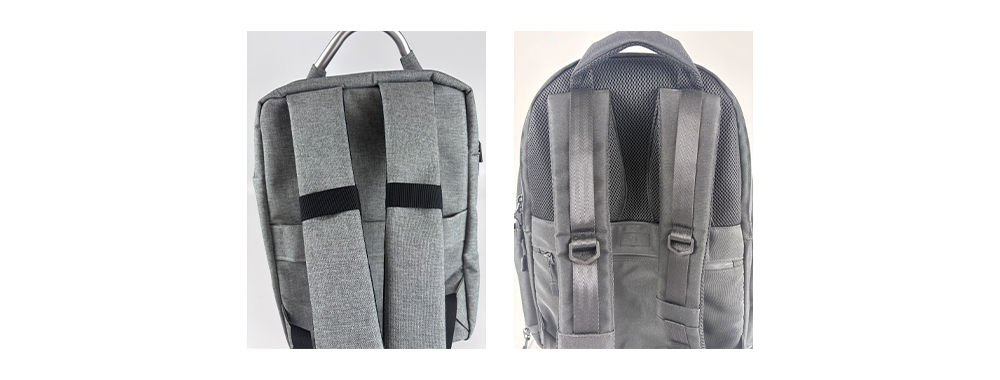
The inner layer is the part that directly contacts the user’s skin or clothing. Its breathability and friction coefficient have a direct impact on the carrying experience.
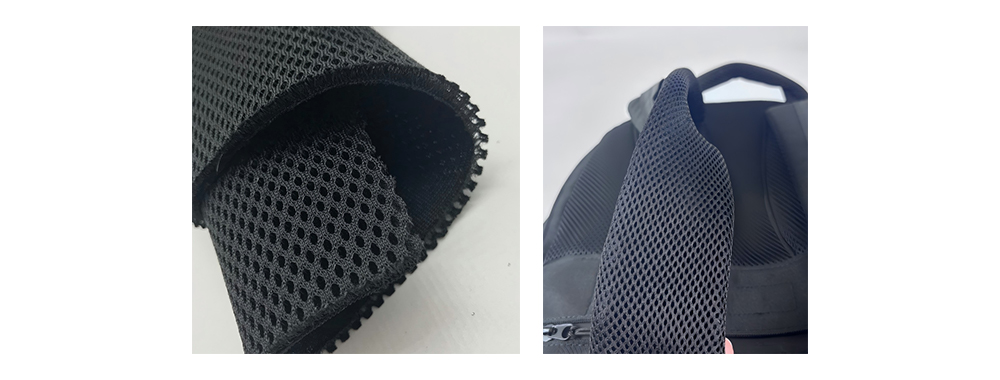
Currently, the most commonly used material in production is 3D breathable mesh fabric. This fabric features a three-dimensional hollow support mesh structure inside, allowing air to circulate quickly through the material. After sweating, it can rapidly release moisture, preventing the shoulder and back area from becoming hot, stuffy, and sticky during long periods of carrying.
- Structure: Three-dimensional honeycomb-like woven structure, usually with a thickness of 3mm–8mm. It creates a physical air layer between the shoulder strap and the body.
- Function: Provides heat dissipation and breathability, preventing sweat from penetrating into the foam padding and causing odors. At the same time, it offers additional cushioning performance.
2.4 Auxiliary Materials (Webbing and Plastic Accessories)
The foam padding and fabric of a backpack provide comfort, while the webbing and hardware components provide safety and structural support. As an OEM bag manufacturer, we often refer to these components as the “weak links” because all the pulling force generated by the shoulder straps is ultimately transferred to these attachment points. Once the strength of the webbing or hardware is insufficient, it can easily result in breakage or seam failure.
2.4.1 Webbing
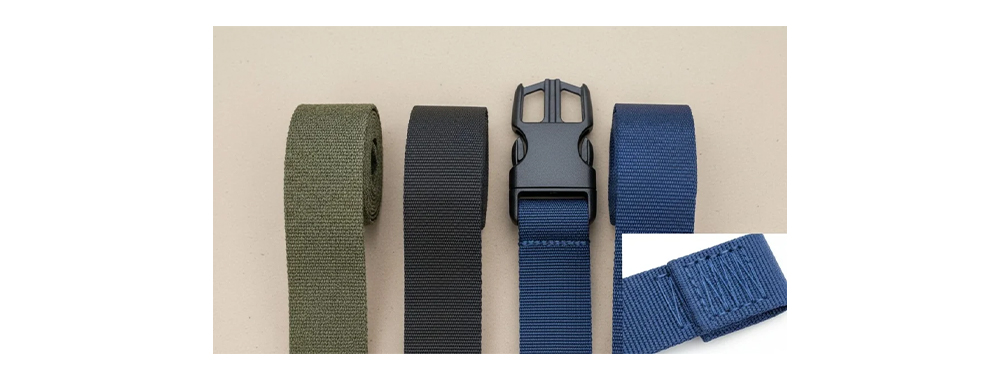
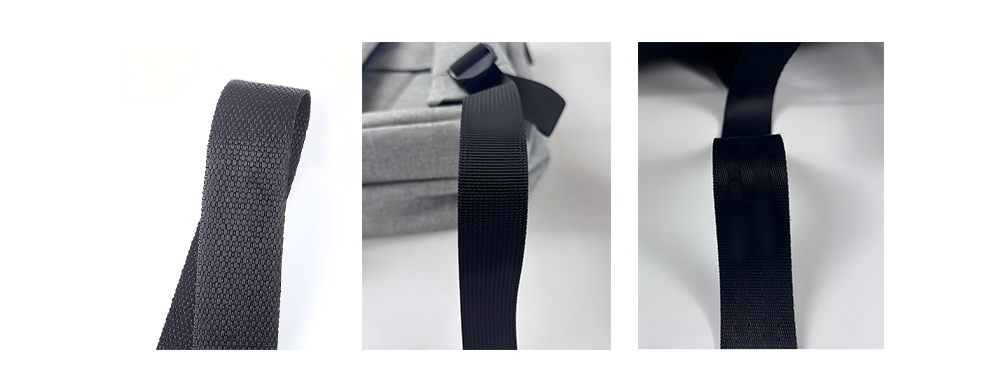
Webbing is used to adjust the length and tightness of the shoulder straps while also bearing the main pulling force between the shoulder straps and the backpack body. Based on material classification, the three main types currently used are as follows:
- Polyester Webbing: Offers the highest cost-effectiveness. Its strength is sufficient to meet the load-bearing requirements of everyday backpacks. It has good dyeing performance and a wide range of color options, making it the most commonly used type for casual backpacks and student backpacks.
- Nylon Webbing: Provides better strength and abrasion resistance than polyester webbing. It has superior load-bearing performance and a smoother hand feel. It is mainly used for outdoor backpacks that require heavy loads, such as hiking backpacks and trekking packs.
- Polypropylene Webbing (PP Webbing): Features a plastic-like surface gloss and a relatively firm feel. It has a lighter specific gravity and excellent resistance to acid and alkali corrosion. It is commonly used in specialized backpacks that require high weather resistance.
2.4.2 Plastic Accessories
The plastic accessories used in shoulder straps mainly serve to secure webbing, adjust shoulder strap length, and connect the shoulder straps to the backpack body. They need to work together with the webbing to complete adjustment and load-bearing functions. The key performance requirements for these components are strength and fatigue resistance. Cracking and buckle breakage are the most common quality issues with these types of accessories.
Currently, the following materials are mainly used in production:
- PP (Polypropylene): Provides sufficient hardness but has relatively poor toughness. It can become brittle and crack easily in low-temperature environments. It is mainly used for low-cost fast-moving consumer bags and gift bags.
- POM (Polyoxymethylene): Offers better toughness and strength than PP, with excellent wear resistance and impact resistance. It can withstand repeated bending without easily cracking or suffering fatigue damage. It provides stable load-bearing performance and is currently the most commonly used plastic accessory material for mid-to-high-end bags. Hiking backpacks, business laptop bags, and large-capacity school backpacks mostly use POM accessories.
- ABS: Features high hardness and excellent molding performance, allowing for more complex and refined appearance designs. It is commonly used in fashion bags that have higher requirements for aesthetics and design details.
3. How to Match the Right Shoulder Straps for Your Backpack?
To help you determine which materials best fit your brand positioning, we have created the following comparison table based on our manufacturing standards.
| Component | Standard / Economy Option | Premium / High-Performance Option | Best Choice |
| Core Padding | Polyethylene Foam (PE Foam) | EVA Foam or Dual-Density Foam | EVA foam is the best choice for carrying heavy loads and maintaining shape over long periods. |
| Outer Fabric | Polyester (600D) | Ripstop Nylon or Cordura Fabric | Nylon offers excellent abrasion resistance and is suitable for harsh environments. |
| Inner Lining | Basic Mesh Fabric | Fine 3D Spacer Mesh | Fine mesh can prevent clothing pilling and improve air circulation. |
| Webbing | Polyester | Nylon (Seat Belt Grade) | Nylon is smoother, stronger, and creates a more premium feel. |
| Plastic Buckles | PP / ABS Plastic | POM (Polyoxymethylene) | POM is less likely to crack under freezing temperatures. |
4. FAQ
Q1: How can EVA and PE foam be quickly distinguished?
A: The compression test is the most direct method: EVA rebounds quickly and leaves almost no indentation after pressing. Its cross-section has fine and closed air cells. PE foam rebounds more slowly and takes longer to return to its original shape after compression.
Q2: Are 3D spacer mesh and sandwich mesh the same thing?
A: Yes. They are simply different names for the same material. Both refer to a three-layer composite mesh fabric with a three-dimensional hollow support structure. They rely on the hollow middle layer to achieve breathability and cushioning effects.
Q3: Does a thicker shoulder strap always provide better carrying comfort?
A: No. Comfort mainly depends on the density of the foam and the material structure. An overly thick shoulder strap will increase the overall weight of the backpack and may also reduce shoulder mobility.
Q4: Can PU foam alone be used as shoulder strap padding?
A: It is not recommended. Pure PU foam has poor support performance and can easily collapse and deform after carrying heavy loads for a long time. This will significantly reduce the service life and carrying comfort of the shoulder strap. Only when combined with supportive foam materials such as EVA can PU fully utilize its soft and skin-friendly advantages.
Q5: How can POM buckles and ordinary plastic buckles be distinguished by appearance?
A: POM buckles are usually denser, feel heavier in the hand, and produce a crisp sound when pressed. Ordinary plastic buckles feel lighter, produce a dull sound, and usually have more edge burrs. In extreme environments (such as winter outdoor conditions), the toughness advantage of POM becomes especially noticeable.
Q6: What shoulder strap width is generally suitable?
A: This mainly depends on the typical load capacity of the backpack:
- For casual bags and school backpacks with a daily load of less than 10kg, a shoulder strap width of 5cm–7cm is generally sufficient.
- For outdoor hiking backpacks and trekking backpacks carrying 10kg–20kg, a shoulder strap width of 6cm–8cm is recommended. Wider straps can distribute pressure more effectively and reduce the feeling of shoulder strain.
- For large-capacity professional outdoor backpacks carrying more than 20kg, the shoulder strap width can be increased further.
Conclusion
Choosing the right shoulder strap materials is essentially about balancing brand positioning, target usage scenarios, and cost. As a professional bag OEM manufacturer, DH Bags can recommend suitable shoulder strap material combinations based on your product positioning and requirements, helping you create backpack products that combine comfort and practicality.
For more information, please contact us:
Further Reading: “How to Choose the Right Support Board for Brand Bags: PE Support Board or EVA Support Board?”