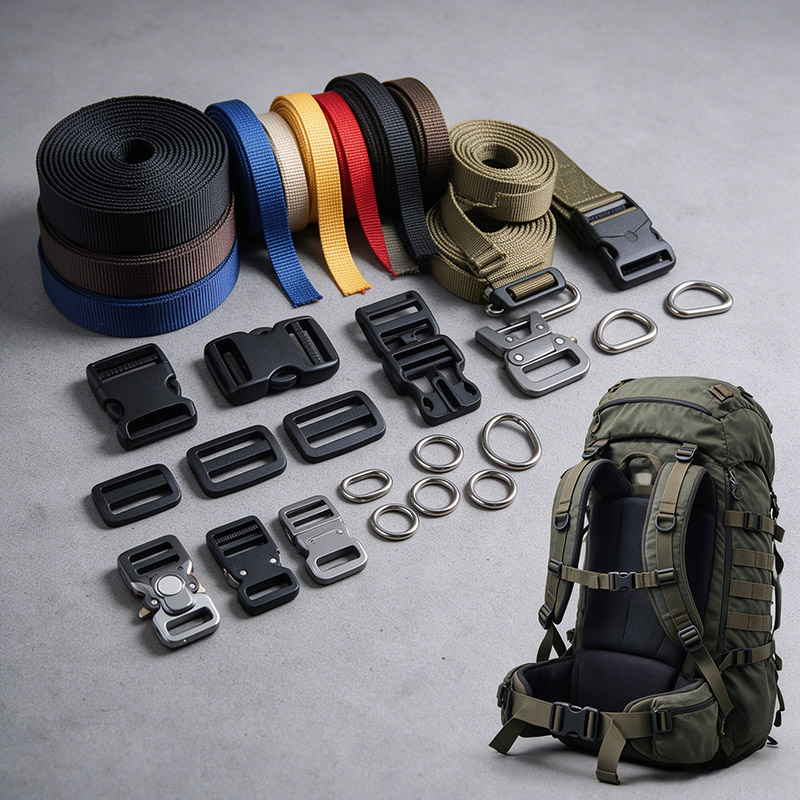
Selecting webbing and buckles for a backpack should follow a step-by-step process, moving from basic specifications to practical application. First, determine the webbing material and dimensions; then select the buckle type and material. Once each component has been selected, verify that the webbing and buckle are compatible, and finally configure the components according to the load-bearing requirements of each backpack area.
Webbing affects a backpack’s load-bearing capacity, carrying comfort, and appearance. Buckles connect webbing sections, adjust strap length, and keep connections secure. The two components must be compatible in width, thickness, strength, and intended operating environment.
This guide explains how to select backpack webbing and buckles across four key areas: webbing selection, buckle selection, component compatibility, and placement by backpack area.
Ⅰ. Selecting Webbing: Materials, Specifications, and Performance
Webbing is a fundamental part of a backpack’s load-bearing system. It carries the tensile loads placed on shoulder straps, grab handles, compression straps, and external attachment systems. Material and specification choices should be based on an overall assessment of the product’s intended use, target retail price, and operating environment.
1. Choose by Material Type
- Polypropylene (PP) webbing: Cost-effective and lightweight, with good resistance to water, acids, and alkalis. Its tensile strength and abrasion resistance are moderate. Without UV stabilizers, it can degrade after prolonged outdoor exposure; suitable UV treatment can improve its weather resistance. Its toughness decreases at low temperatures, and prolonged use may cause it to harden and become brittle. Best suited to lightweight backpacks, promotional bags, and products used infrequently.
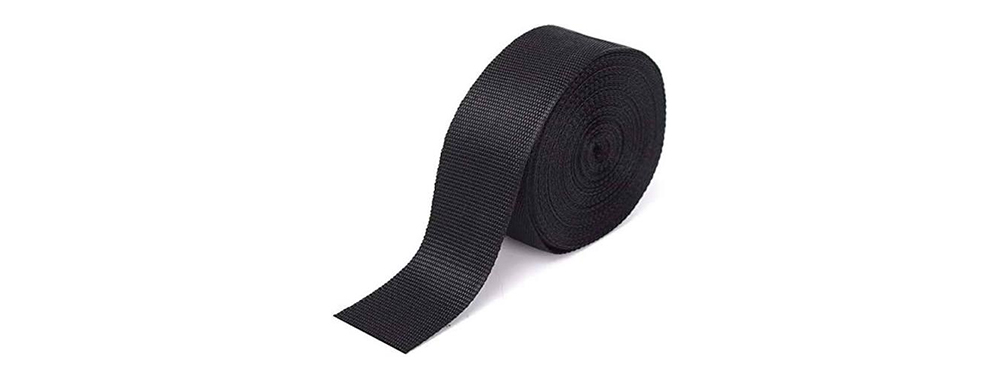
- Polyester webbing: Offers a balanced performance profile, with good abrasion resistance, weather resistance, and UV resistance. It has high colorfastness and low shrinkage, making it one of the most widely used webbing materials for mid-range and premium backpacks. Suitable for products designed for long-term use, including outdoor packs, business backpacks, and school backpacks.

- Nylon webbing: Of the three materials, nylon generally offers the highest tensile strength and elasticity, along with a soft hand feel. It is more expensive, and lightfastness should be considered. For products exposed to the outdoors for extended periods, UV additives are recommended. Suitable for high-load hiking backpacks, tactical packs, and other products with demanding strength requirements.
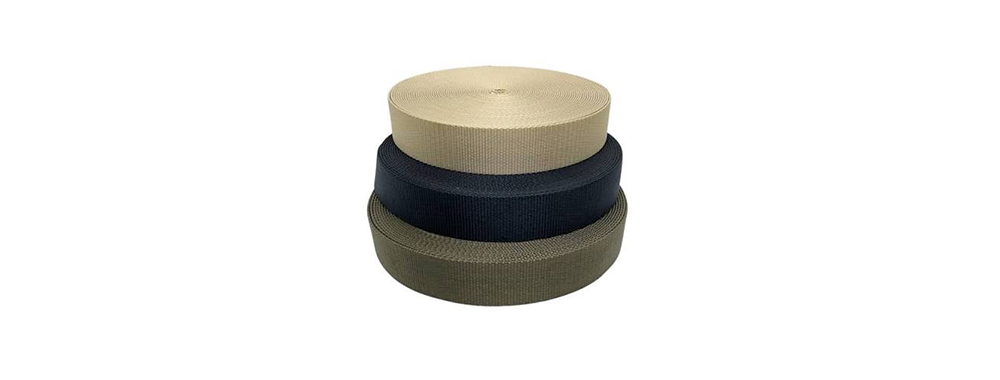
The table below compares key characteristics of three common webbing materials:
| Comparison Factor | PP Webbing | Polyester Webbing | Nylon Webbing |
| Tensile strength | Medium | High | Highest |
| UV resistance | Low | High | Medium |
| Colorfastness | Medium | High | Medium |
| Low-temperature performance | Low | High | High |
| Typical applications | Promotional bags; lightweight packs | Business and outdoor backpacks | Hiking and tactical backpacks |
Note: These are relative comparisons. Refer to the supplier’s technical data for specific values.
2. Choose by Specification
- Width: Common widths include 10 mm, 15 mm, 20 mm, 25 mm, 38 mm, and 50 mm. Shoulder straps and primary load-bearing straps typically use 25–50 mm webbing, while compression straps and decorative webbing often use 10–20 mm.
- Thickness and weave: Plain-weave webbing has a compact structure and distributes loads evenly. Herringbone webbing is soft against the skin and is often used on the inner face of shoulder straps. Jacquard webbing can incorporate brand logos and patterns, making it suitable for customized branding.
- Breaking strength: The webbing’s strength rating should match the backpack’s design load. Assess the required values against the supplier’s technical specifications or test standards agreed upon by both parties.
3. Match Webbing to the Intended Use
- Commuter and business backpacks: Polyester webbing is generally preferred, typically in widths of 20–25 mm, with an emphasis on a smooth appearance and good colorfastness.
- Outdoor and hiking backpacks: Use high-strength nylon or heavier polyester webbing, typically 25–50 mm wide. Pay close attention to consistency between production batches.
- School backpacks: Given their typical use and load profile, polyester webbing at least 25 mm wide is recommended, together with thicker shoulder padding.
Ⅱ. Selecting Buckles: Types, Materials, and Load Requirements
Although small, buckles are critical to backpack safety. When hiking backpacks fail in use, the problem often stems from a broken buckle or webbing slippage rather than damage to the main fabric. Buckle selection should therefore prioritize load requirements, material performance, and suitability for the intended application.
1. Choose by Buckle Type
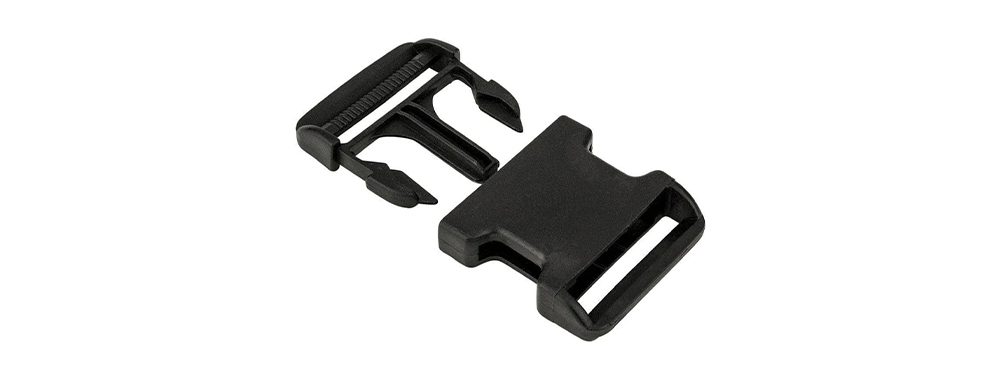
- Side-release buckles: Among the most widely used buckle types, they are commonly used on sternum straps, hip belts, and main-compartment closures. Check insertion and release feel, secure engagement, and the risk of brittle fracture at low temperatures.
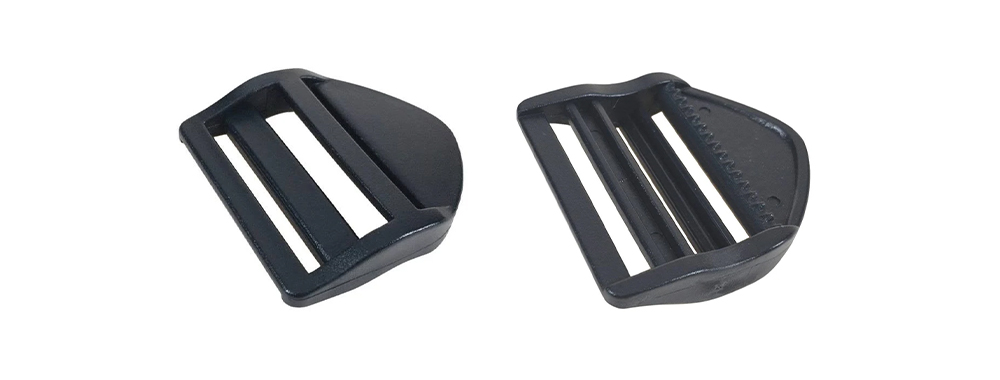
- Adjuster buckles / ladder locks: Used to adjust shoulder-strap length. Tooth depth directly affects resistance to webbing slippage. For high-load applications, choose a design with double rows of teeth or a self-locking mechanism.
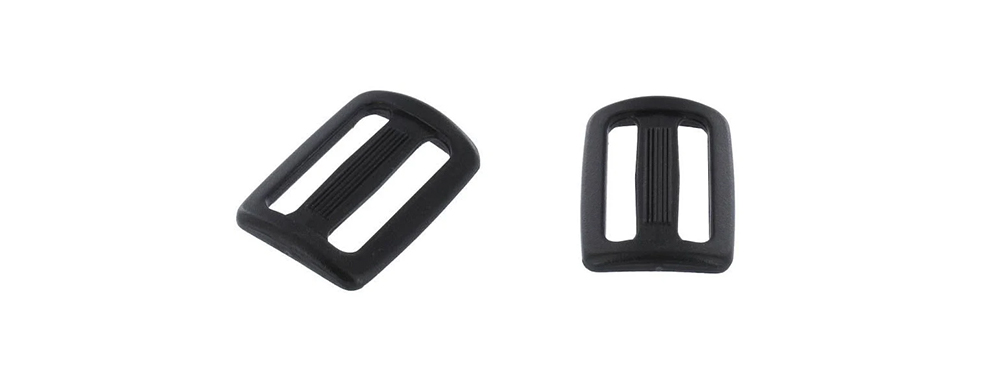
- Tri-glide slide buckle: Used to manage webbing and provide auxiliary fastening. The buckle size must match the webbing width.
- D-rings and O-rings: Used for external gear attachment and grab-handle connections. For metal hardware, check the salt-spray corrosion resistance of the surface plating or finish.

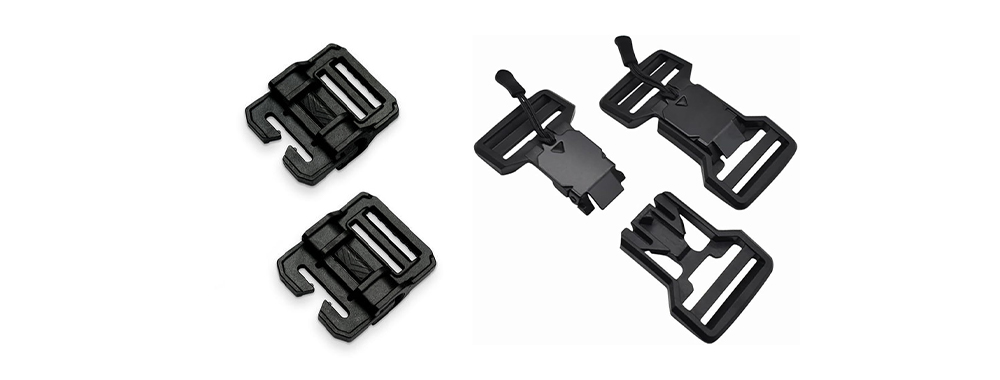
- Four-bar quick-release buckles and magnetic buckles: Common on business backpacks and fashion-forward technical products, these are designed for convenient opening and closing. Balance ease of use with structural strength; do not compromise load-bearing safety for appearance or tactile feel alone. For four-bar quick-release buckles, assess pawl wear life. For magnetic buckles, guard against accidental release under jolts or impact.
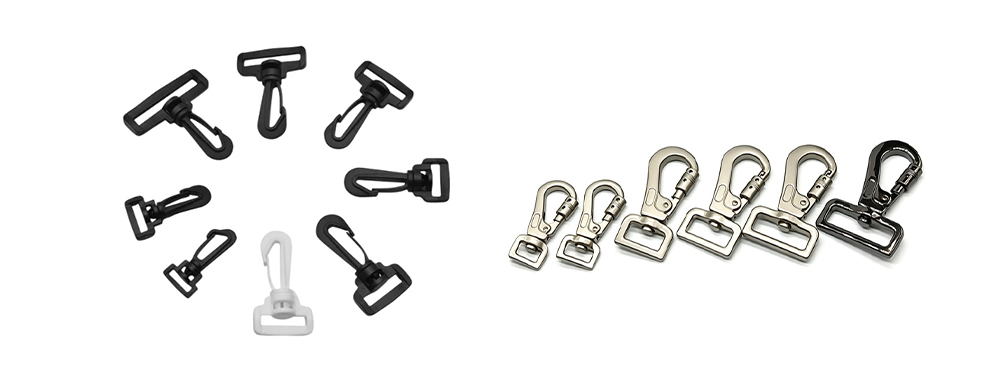
- Hooks: Commonly used on external attachment systems, bottle pockets, and tool attachment points. Check spring-back force and closure security to reduce the risk of accidental opening during movement. Metal hooks need rust protection, while plastic hooks should be assessed for fatigue-related fracture and loss of spring action after repeated use.
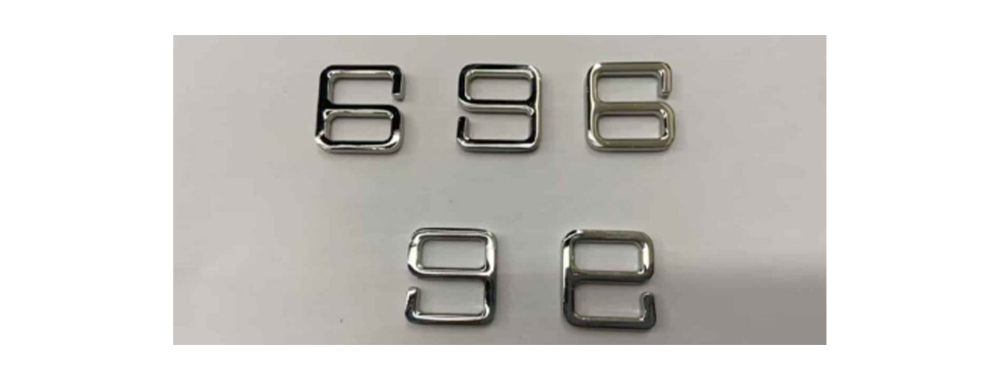
- End-release / webbing-retainer buckles: Primarily used to secure webbing ends or provide simple adjustment. Check the anti-slip teeth inside the buckle to help prevent webbing from slipping under load. Also verify the buckle’s tolerance for webbing thickness: overly thick webbing may be difficult to thread or may prevent secure closure.

2. Choose by Material
2.1 Plastic
- POM (polyoxymethylene/acetal) buckles: Rigid, fatigue-resistant, and dimensionally stable. They are a standard choice for mainstream mid-range and premium backpacks and perform reliably in cold and damp conditions.
- Nylon (PA66) buckles: Tougher than POM in many applications and notable for impact resistance. Suitable for high-load hiking backpacks, although they generally cost more.
- Recycled-plastic buckles: Made from recycled PP or recycled nylon, they support more sustainable sourcing. Validate color consistency and strength consistency between production batches.
2.2 Metal
- Aluminum-alloy and stainless-steel hardware: Offer high strength and good wear resistance, and can perform in demanding environments. Often used on technical hiking packs, tactical equipment, and grab handles or critical load points on premium business bags. Aluminum alloy should be anodized to improve surface hardness and corrosion resistance; stainless steel is commonly used for connecting hardware such as D-rings and O-rings.
- Zinc-alloy buckles: Offer good castability and can accommodate complex shapes, so they are often used on fashion bags with decorative hardware. However, zinc alloy is relatively brittle and less impact-resistant than nylon or POM. It is not recommended for primary load-bearing points or areas subject to high dynamic loads.
3. Match Buckles to Load Ratings
| Application | Suggested Material | Suggested Size | Indicative Static Load |
| Sternum-strap adjustment | POM / zinc alloy | 15–20 mm | 30–50 kg |
| Shoulder-strap adjustment (ladder lock) | POM / PA66 / zinc alloy | 20–25 mm | 50–80 kg |
| Main hip-belt buckle | POM / PA66 | 25–50 mm | 80–150 kg |
| External D-rings / hooks | POM / aluminum alloy | 25–38 mm | Depends on the design |
Note:These figures are typical industry reference ranges. Actual project requirements should be determined through testing.
The static loads shown are reference values from laboratory tensile tests conducted at room temperature. Actual buckle failure loads can drop significantly under dynamic impact or low-temperature conditions. During product development, test samples under the relevant conditions; do not use these reference values alone as product acceptance criteria.
Ⅲ. Compatibility Principles for Webbing and Buckles
Webbing and buckle selection should not be treated as two separate decisions. Webbing width, thickness, weave, and surface finish all affect buckle retention, operating feel, and long-term stability. Matching the components as a system during development can reduce repeated sample revisions and lower the risk of defects during bulk assembly.
1. Match the Width
- Buckle sizes are generally specified according to the webbing width they are designed to accommodate. For example, a 25 mm buckle is intended for 25 mm webbing, a 38 mm buckle for 38 mm webbing, and a 50 mm buckle for 50 mm webbing.
- A width mismatch can cause the webbing to bunch, slip, or carry loads unevenly inside the buckle. Over time, localized stress concentrations may accelerate buckle wear or cause the webbing edges to break.
- For bound-edge, coated, or rubberized webbing, use the effective width after finishing and assembly rather than relying solely on the nominal width listed in the webbing specification.
2. Match Thickness and Weave
- Ladder locks, cam buckles, and side-release buckles each have a defined range of webbing thicknesses that can pass through their slots. Standard plain-weave webbing is typically about 1.2–1.5 mm thick and is compatible with many standard buckles.
- Thick, coated, Jacquard, and herringbone webbing can engage differently with cam buckles and ladder locks because of variations in surface texture and thickness. During sampling, test actual threading and locking performance.
- Weave affects softness and elongation. Herringbone webbing is soft and suitable for the inner face of shoulder straps; plain-weave webbing has a compact structure suited to primary load-bearing straps; Jacquard webbing works well for branding, but its thickness must be compatible with the buckle slot.
3. Match Materials to the Operating Environment
- POM buckles can be paired with both nylon and polyester webbing and are suitable for most commuter, outdoor, and travel backpacks.
- Nylon buckles offer good toughness and suit locations that may experience twisting or impact. However, dimensional changes caused by moisture absorption should be considered during structural design.
- For metal hardware, check compatibility between the webbing coating and the metal finish or plating. Long-term friction can wear away plating and affect both appearance and corrosion resistance.
- For outdoor products, prioritize webbing-and-buckle combinations with UV, water, and abrasion resistance. For business backpacks, prioritize operating feel, color uniformity, and a clean, even appearance.
4. Match Function to Load Direction
- Side-release buckles connect and separate two webbing sections; ladder locks adjust strap length and maintain tension; cam buckles provide quick clamping; D-rings and O-rings transfer loads or provide attachment points.
- Each buckle type has a distinct purpose and should not be substituted indiscriminately. For example, ladder locks are not primarily designed for frequent opening and closing, while side-release buckles are not intended for fine length adjustment.
- Avoid using hardware marketed mainly for decoration, convenience, or magnetic closure at primary load-bearing points. Such hardware may be suitable for sternum straps, top flaps, or accessory connections, but should not replace the main hip-belt buckle or shoulder-strap anchor points.
Quick Compatibility Checklist
| Factor | Common Specification | Selection Check | Common Issues |
| Width | 20 / 25 / 38 / 50 mm | Match the buckle’s nominal size to the webbing width | Webbing bunching or slipping; premature buckle wear |
| Clearance fit | Buckle opening 0.5–1.0 mm wider than webbing; tolerance ±0.3 mm | Allow smooth threading without slippage | Too tight to thread; too loose and prone to slipping |
| Thickness | 1.2–1.5 mm (standard) | Confirm that webbing passes through the slot and locks correctly | Too thick to thread; too thin for adequate grip |
| Weave | Plain, herringbone, Jacquard | Plain for stable load-bearing; herringbone for skin contact; Jacquard for appearance | Uneven Jacquard thickness affects engagement |
| Material | Nylon, polyester, PP | Balance load, environment, and cost | Choosing by material name alone while ignoring weave |
| Function | Connection, adjustment, external attachment | Choose the buckle for the load direction and function | Using decorative hardware in place of load-bearing hardware |
Ⅳ. Selecting Webbing and Buckles by Backpack Area
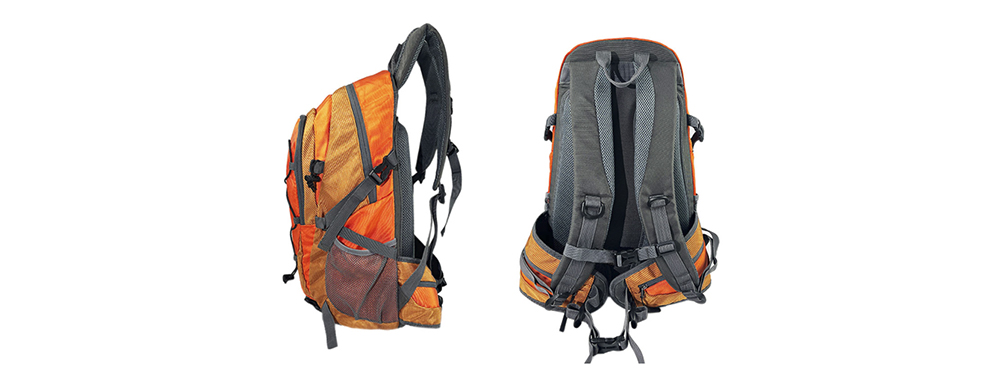
Different backpack areas place different demands on webbing and buckles. Shoulder straps need load-bearing strength and comfort; hip belts transfer loads; sternum straps provide adjustment and stabilization; compression straps need to be quick to operate; and external attachment systems need compatibility and stability.
Selecting components by area helps avoid unnecessary complexity or insufficient strength caused by using the same specifications throughout the pack.
1. Shoulder-Strap System
- Webbing width: Commuter and business backpacks commonly use 20–25 mm; outdoor backpacks use 25–38 mm; heavy-load hiking and tactical backpacks commonly use 38–50 mm.
- Weave: Plain-weave webbing distributes loads evenly and suits primary load-bearing sections. Herringbone webbing is soft against the skin and suits the inner face or contact areas. Jacquard webbing can be used on the outer face of shoulder straps for branding.
- Hardware: Shoulder-strap length is typically adjusted with a center-bar adjuster or ladder lock. End-release buckles can connect shoulder straps and sternum straps. D-rings, hooks, or webbing loops can be used as attachment points.
- Selection tip: The shoulder-strap-to-pack-body connection is a stress-concentration area. Assess webbing width, stitch construction, and buckle strength as a complete system.
2. Hip Belt and Load-Bearing System
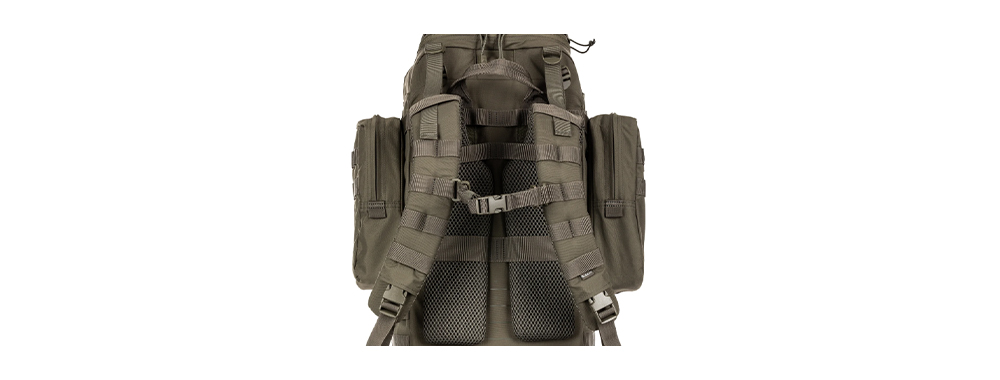
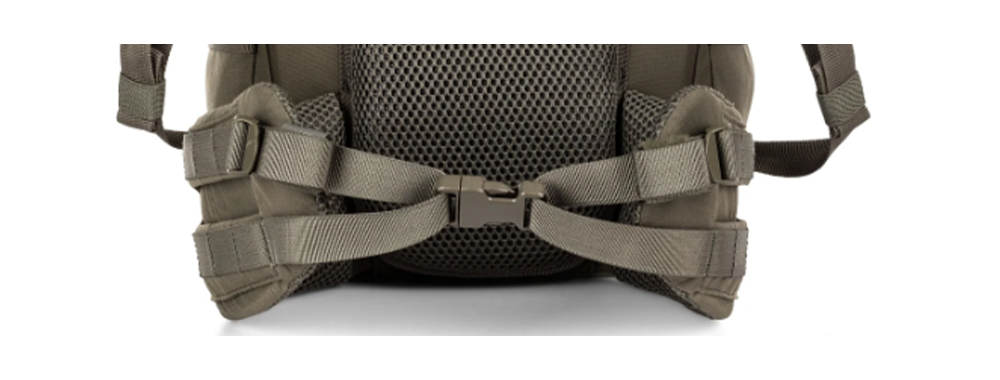
- Hip-belt webbing is typically 38–50 mm wide and should work with the hip padding and back-panel structure to transfer loads efficiently to the hips.
- Side-release buckles are commonly used as the main hip-belt closure. For heavy-load applications, check engagement depth, release feel, and how securely the webbing sits in the buckle.
- For removable hip belts, the fit between the connecting hardware and webbing loops directly affects usability. Confirm assembly and removal feel during the sampling stage.
3. Compression Straps and External Attachment Systems
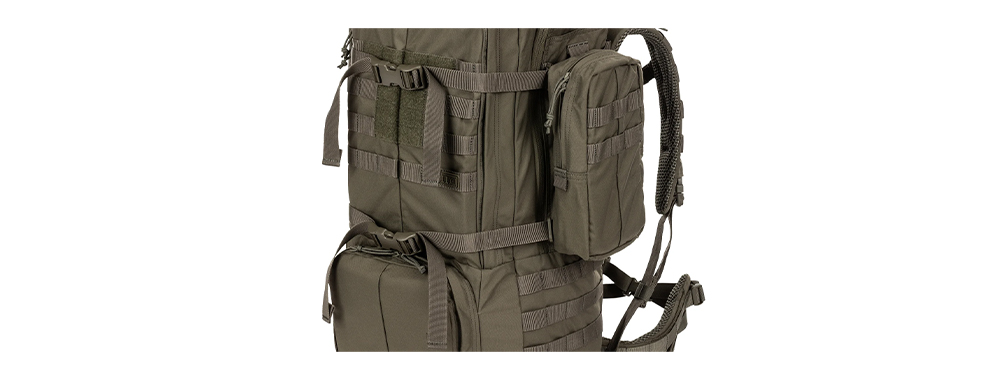
- Compression straps commonly use 20–25 mm webbing with end-release buckles, center-bar adjusters, or side-release buckles to cinch the pack and reduce movement.
- External attachment systems commonly use 25–38 mm webbing with D-rings, O-rings, webbing loops, or MOLLE-style webbing to secure sleeping bags, trekking poles, helmets, and other gear.
- Selection tip: Compression straps are adjusted frequently, so balance buckle opening force with holding strength. For external attachment systems, check compatibility between the webbing and attachment points to ensure gear can be secured reliably.
4. Sternum Straps, Grab Handles, and Top Closures
- Sternum straps typically use 20–25 mm webbing and side-release buckles. Their vertical position can be adjusted to stabilize the shoulder straps and reduce slippage.
- Grab handles are commonly made with 25–38 mm webbing and should be designed in conjunction with the stitching structure to avoid localized stress concentrations. A grab handle can be attached to the pack body with webbing loops, D-rings, or direct stitching.
- For top closures, choose side-release, magnetic, or quick-release buckles according to the opening design. Magnetic and quick-release buckles suit business and technical-style products but should not be placed in the primary load path.

Reference Guide to Hardware by Backpack Area
| Backpack Area | Typical Webbing Width | Common Weave | Typical Hardware | Selection Priority |
| Primary shoulder-strap section | 25–50 mm | Plain weave | Side-release buckles, D-rings, ladder locks | Stable load-bearing performance and reliable stitching |
| Sternum strap | 20–25 mm | Plain weave | Side-release buckles, end-release buckles | Easy adjustment and secure retention |
| Hip belt | 38–50 mm | Plain weave | Side-release buckles, end-release buckles | Stable closure and effective load transfer to the hips |
| Compression strap | 20–25 mm | Plain weave | Side-release buckles, end-release buckles, ladder locks | Quick operation and appropriate holding force |
| External attachment system | 25–38 mm | Plain weave | D-rings, O-rings, hooks | Compatibility and stable attachment points |
| Grab handle | 25–38 mm | Plain weave | Webbing loops, D-rings | Comfortable grip and reduced stress concentration |
Note:These configurations are general references. Final specifications should be determined by considering product positioning, design load, intended use, and sample assembly results.
Ⅴ. Frequently Asked Questions (FAQ)
Q1. How can I quickly decide whether polyester or nylon webbing is better for my product?
A: Base the decision on load rating and operating environment. Nylon’s high strength and elasticity make it advantageous for heavy-load hiking backpacks or products exposed to frequent dynamic tension. For business backpacks, school backpacks, and everyday outdoor packs, polyester generally offers a better balance of weather resistance, colorfastness, and cost.
Q2. Must the webbing width exactly match the buckle size?
A: The two must be matched carefully. For example, 25 mm webbing should be paired with a ladder lock or side-release buckle designed for 25 mm webbing. A mismatch can cause slippage, uneven load distribution, or premature buckle failure.
Q3. What is the difference between a center-bar buckle and a ladder lock?
A: Although they look similar, center-bar buckles and ladder locks differ in structural details and intended use. A ladder lock often has a wider center bar or anti-slip teeth, increasing friction and helping the webbing stay in place under tension. It is suitable for adjustment points such as shoulder straps, where tension must be maintained over time. A center-bar buckle generally has a simpler structure and a narrower center bar, allowing the webbing to slide through more easily with less resistance. It is often used for auxiliary fastening or organizing decorative webbing where easy adjustment is more important and loads are relatively light.
Q4. Should I choose plain-weave or herringbone webbing for shoulder straps?
A: Plain-weave webbing has a compact structure and distributes loads evenly, making it suitable for the primary load-bearing section of a shoulder strap. Herringbone webbing feels softer against the skin and is suitable for the inner face or areas in direct contact with the body. If both strength and comfort are priorities, combine the weaves or use plain weave in the load-bearing section and herringbone on the contact surface.
Q5. Can Jacquard webbing affect buckle retention?
A: Because of its woven-in patterns, Jacquard webbing may differ from standard plain-weave webbing in thickness and surface flatness. If it must pass through a buckle, test threading and retention during sampling. If necessary, adjust the webbing thickness or select a buckle with a wider slot. Jacquard webbing is often best used on the outer face of shoulder straps or on grab handles where branding is a priority.
Q6. How should webbing width be selected for different backpack styles?
A: Shoulder straps on commuter and business backpacks commonly use 20–25 mm webbing, with 15–20 mm for sternum straps. Outdoor backpacks commonly use 25–38 mm shoulder straps and 25–50 mm hip-belt webbing. Heavy-load hiking or tactical backpacks may use 38–50 mm shoulder straps. For school backpacks, shoulder-strap webbing should generally be at least 25 mm wide and paired with thicker padding. Final widths should be based on design load, intended use, and fit-testing results.
Ⅵ. Conclusion
Selecting webbing and buckles is fundamentally a matter of balancing load-bearing performance, functionality, appearance, and cost. Material properties establish the baseline performance; specification compatibility determines the user experience; and component placement determines the backpack’s overall functionality.
For brands and buyers developing a backpack range or optimizing an existing design, defining webbing and buckle specifications early and validating compatibility through sample assembly can reduce late-stage revisions and mass-production risks. Applicable material compliance and environmental requirements should also be considered.
As a bag OEM/ODM manufacturer with decades of production experience, we can support your project with webbing and buckle selection, specification compatibility checks, and sample development based on your product positioning, target market, and design load. Contact us with your design files or specification requirements, and our team will be ready to assist.