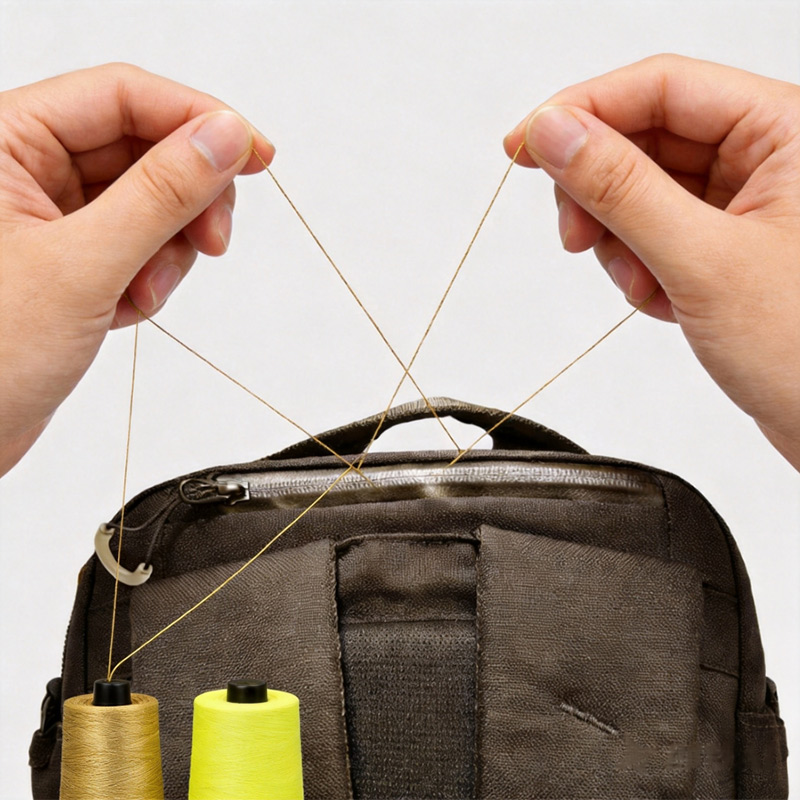
The choice of thread should be determined based on the material, intended use, and load-bearing conditions of the bag. In general, polyester thread, thanks to its high strength, excellent abrasion resistance, and resistance to fading, is the preferred choice for most bags. For natural materials such as genuine leather, waxed thread or waxed cotton or linen thread can better complement the texture of the material while also providing good water resistance and reinforcement. If maximum durability is required, nylon thread or aramid thread is an ideal choice for heavy-duty outdoor bags, as they can withstand high tensile forces and abrasion under extreme conditions. Therefore, matching the thread to the characteristics of the fabric and the intended application is the key to choosing the right thread.
1. Why Is Thread Selection Important?
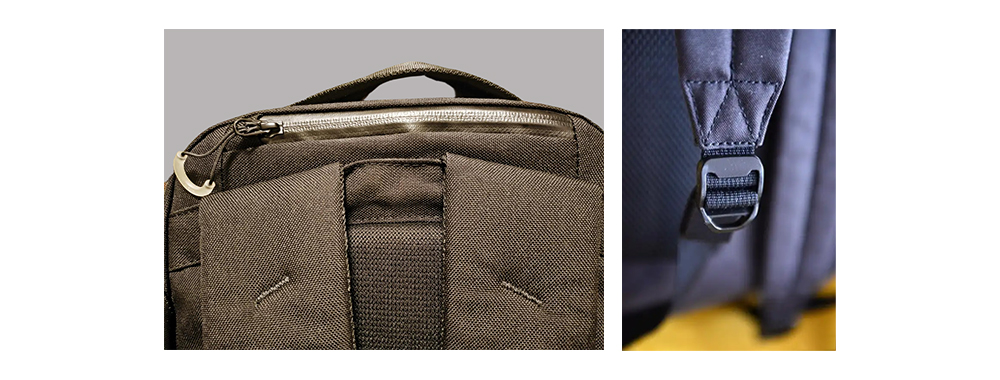
Thread is not only the link that holds fabric pieces together, but also a key factor in determining the structural strength and service life of a bag. During everyday use, handles, shoulder straps, and bottom corners are subjected to continuous dynamic tension and friction. If the thread does not have sufficient strength or abrasion resistance, it can easily break, fray, or even cause the entire bag to come apart, directly resulting in product failure.
In addition, if the thread’s coefficient of thermal expansion and shrinkage rate are incompatible with those of the fabric, changes during washing or fluctuations in environmental temperature and humidity may cause the stitching to shrink or deform, compromising the overall shape and appearance of the bag. Therefore, selecting thread scientifically is not simply a matter of choosing the right accessory material; it is a critical process that affects product safety, durability, and the final look and feel of the finished product.
2. Understanding the Basic Parameters of Thread: Tex and Number of Plies
Before choosing a thread, you must first understand its specification terminology.
2.1 Tex (Linear Density): As an internationally recognized unit of linear density, Tex is defined as the weight in grams of 1,000 meters of fiber. The higher the value, the thicker and stronger the thread. Common ranges used for bags and luggage include:
- Tex 30–45: Zippers, decorative components, and lining fabrics
- Tex 70–90: Main seams of the bag body (most bags and backpacks)
- Tex 100–135: High-stress areas—shoulder straps, handles, and the bottom
2.2 Number of Plies (Ply): Refers to the number of yarn strands twisted together to form a thread. Two-ply or three-ply twisted threads are commonly used in the bags and luggage industry (such as 210D/3). Twisting can significantly improve tensile strength and stitching uniformity.
In addition, there is another common way of expressing thread specifications on the market, abbreviated as “S,” which refers to “count.” Unlike Tex, the higher the S value, the finer the yarn. In the bags and luggage industry, common specifications include 40S and 60S. However, it should be noted that the conversion standards for yarn count vary among different fiber materials (such as cotton and synthetic fibers). Therefore, directly comparing S values between different materials is not rigorous. By comparison, Tex, as a unit based on weight, offers broader applicability and greater accuracy.
3. What Types of Thread Fibers Are Available?
- Polyester Thread
As the most widely used type of sewing thread for bags today, polyester (polyester fiber) dominates the market thanks to its excellent cost-performance ratio. Its greatest advantages are its high strength, low elongation, and excellent light resistance. It is not prone to aging or fading even when exposed to sunlight for extended periods, while also offering good resistance to chemical corrosion. It can maintain stable performance under both machine washing and dry cleaning.
Although polyester has relatively poor moisture absorption, for most bags and luggage made from non-natural materials, this actually helps prevent thread loosening caused by water absorption and expansion. It is therefore a versatile choice for everyday commuter bags, school backpacks, and standard travel bags.
- Nylon Thread:
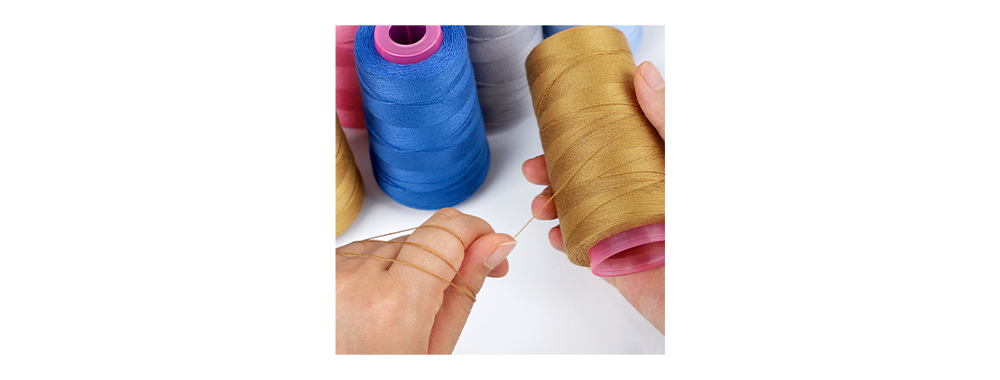
Compared with polyester, nylon (polyamide) has higher breaking strength and better elastic recovery, as well as a higher luster and a softer, smoother hand feel. Its abrasion resistance ranks among the highest of all synthetic fibers, making it particularly suitable for areas that are frequently subjected to friction, such as reinforced stitching at the bottom of backpacks or zipper areas that are frequently opened and closed.
However, nylon is prone to yellowing and strength degradation under ultraviolet (UV) exposure, and its strength may decrease slightly after absorbing moisture. Therefore, it is more suitable for indoor use or for professional equipment that requires extremely high abrasion resistance but is stored away from direct light.

- Aramid Thread:
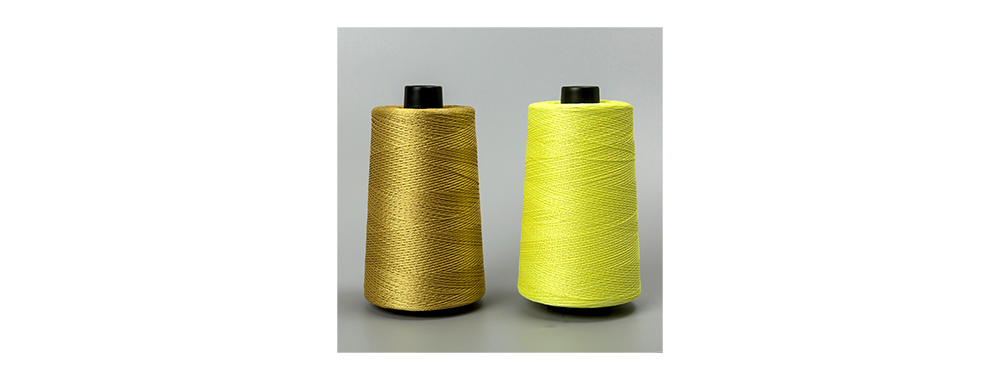
Also known as Kevlar thread, aramid thread is a high-performance specialty fiber. It has an exceptionally high strength-to-weight ratio, with a strength five times that of steel wire, while also offering excellent resistance to high temperatures, cutting, and flame. Due to its high cost and relatively stiff texture, it can cause some wear to sewing machine needles and feed mechanisms. Therefore, it is typically used only for heavy-duty outdoor equipment designed for extreme environments, puncture-resistant tactical bags, or industrial bags that need to withstand tremendous impact forces. It is the ultimate solution for applications that demand the highest levels of durability and safety.
- Cotton Thread:
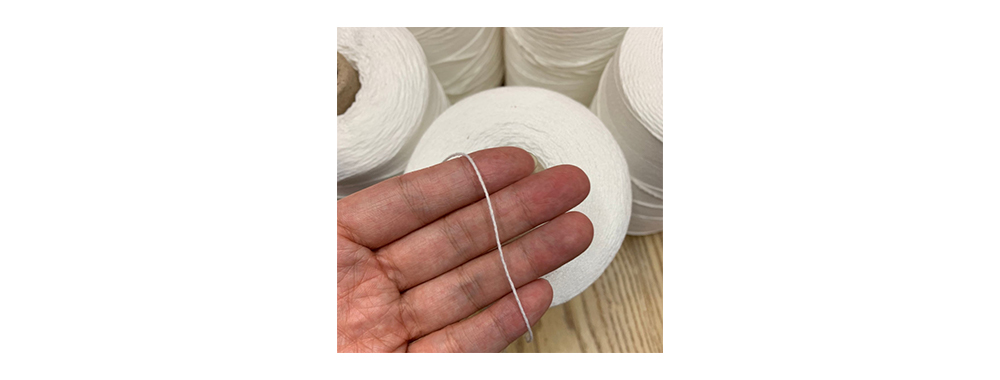
Traditional cotton thread is widely used in canvas or leather products that pursue a rustic aesthetic, thanks to its natural, skin-friendly texture and good dyeability. Untreated cotton thread has strong water absorption, is prone to mold growth, and has relatively low strength. Therefore, modern manufacturing processes often use wax treatment, in which beeswax or synthetic wax is impregnated into the thread to fill the gaps between the fibers, significantly improving its abrasion resistance, water resistance, and resistance to tangling.
This type of thread offers low resistance when passing through leather and can produce tight, neat, and aesthetically pleasing stitches, making it the preferred choice for high-end handmade leather bags.
- Linen Thread:
As another natural plant-based fiber, linen thread has higher strength than cotton thread and a distinctive coarse texture. It is commonly used for vintage leather goods and high-end handmade products. It is particularly valued in the traditional saddle stitching method used for leatherwork: it grips the leather tightly, responds exceptionally well to waxing, and the stitches produced by hand can last longer than the leather itself.
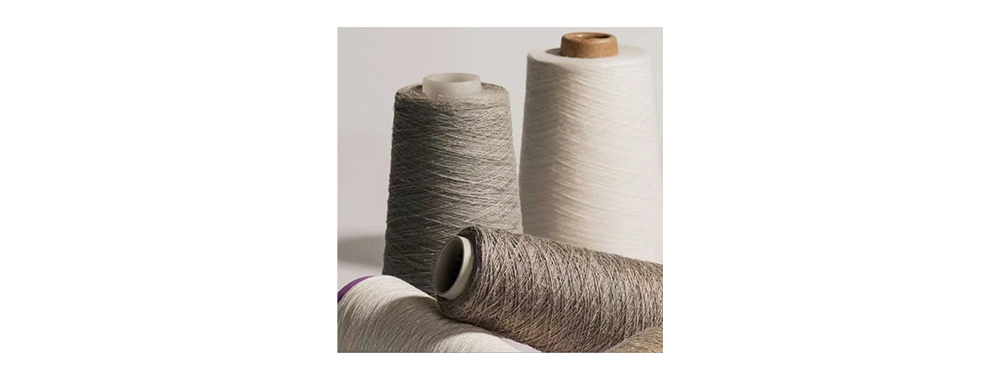
4. How to Match the Best Thread to Different Applications
Theoretical specifications ultimately need to be applied to real-world use. Based on many years of experience in bag manufacturing, the following are our recommendations for matching thread to several typical application scenarios:
| Bag Type | Usage Characteristics | Recommended Thread | Recommended Specification (Tex) | Selection Rationale | Key Performance Focus |
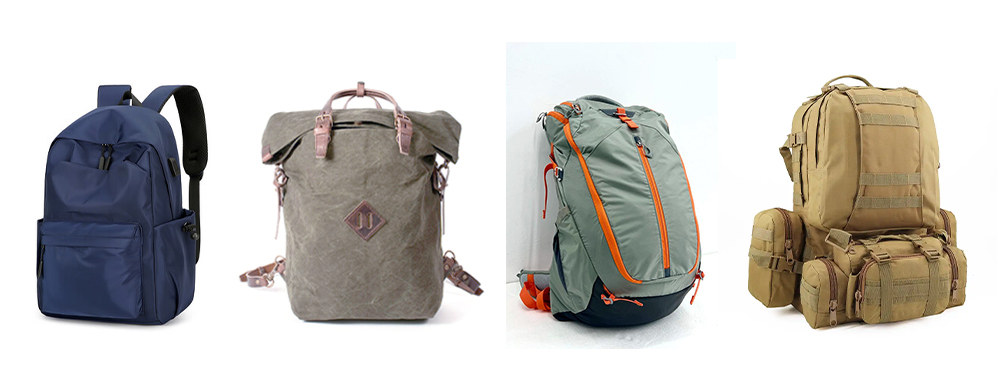
| Everyday Commuter Bags, School Backpacks | Frequent use, moderate load | Polyester Thread | Tex 70–90 (main seams); Tex 30–45 (lining, zippers) | Offers a balanced combination of strength, abrasion resistance, UV resistance, and hydrolysis resistance. It provides excellent cost-effectiveness and is the “all-purpose” choice with little need for hesitation. | Balance, cost, stability in mass production |
| Vintage Canvas Bags | Emphasis on a vintage aesthetic and natural texture; relatively light loads | Waxed Cotton Thread / Linen Thread | 0.45–0.6 mm commonly used for hand stitching; machine sewing requires matching fine needles | The matte texture and “handcrafted warmth” of natural fibers can enhance artistic value. After waxing, the thread passes smoothly through leather without damaging the material. | Texture, brand identity, presentation of hand-stitching craftsmanship |
| Outdoor Hiking Backpacks, Travel Bags | Exposure to sunlight and rain, long-term load-bearing | Polyester Thread | Tex 90–135 (load-bearing areas) | Offers better UV and hydrolysis resistance than nylon, does not develop mold in humid environments, and has low color variation between production batches | UV resistance, hydrolysis resistance, colorfastness |
| Tactical Equipment, Heavy-Duty Tool Bags | High loads, high friction, high risk of tearing | Nylon Thread | Tex 100–135 (U.S. size #138) | Provides the highest strength, excellent abrasion resistance, and good elasticity, allowing it to withstand repeated impact loads | Tensile strength, abrasion resistance, tear resistance |
| Tactical / Industrial Critical Load-Bearing Points | Extreme tensile forces (such as parachute deployment and lifting attachment points) | Aramid Thread (localized use) | Customized according to the required design strength | Extremely high strength-to-weight ratio, high-temperature resistance, and flame resistance. Used at “lifeline” areas such as shoulder-strap attachment points | Ultimate strength, high-temperature resistance, flame resistance |
5. FAQ
Q1: Polyester thread and nylon thread look very similar. How can they be quickly distinguished?
A: The most intuitive method is a burn test. Take a small amount of loose thread and ignite it. When polyester burns, it produces black smoke and an aromatic odor. The ash forms a hard black mass that is difficult to crush. When nylon burns, it produces white smoke and has an irritating odor similar to celery or ammonia. The residue forms brown, glass-like hard beads that become extremely hard after cooling. In addition, nylon generally feels softer and smoother than polyester and has better elastic recovery after being stretched.
Q2: Is a higher Tex value always better?
A: Not necessarily. The Tex value represents linear density. The higher the value, the thicker the thread and the higher its strength, but it also means larger needle holes and more visible stitches. If excessively thick thread is used in areas that do not require high load-bearing capacity, such as lining fabrics or decorative pockets, it not only wastes costs but may also damage the fabric structure due to oversized needle holes or result in a rough and visually uncoordinated appearance. The principle of “matching the thread to the load-bearing requirements” should be strictly followed. As long as the strength requirements are met, choose the finest possible thread to maintain a refined finish.
Q3: Can aramid thread be used for all bags that require high strength?
A: It is not recommended. Although aramid thread has extremely high strength, it is stiff and lacks elasticity, causing significant wear to sewing machine needles and feed dogs. It is also difficult to dye and is usually available in yellow or black. For ordinary high-strength requirements in non-extreme environments, high-tenacity polyester or nylon thread is already more than sufficient and offers better cost-effectiveness.
Q4: If the thread frequently breaks or the machine skips stitches during sewing, is it a problem with the thread quality?
A: Not necessarily. Although poor-quality thread, such as thread with uneven twist or excessive hairiness, can indeed cause thread breakage, the problem is more often caused by an improper “machine-needle-thread” combination. First, check whether the sewing machine needle type and size are compatible with the thread’s Tex value. A needle eye that is too small can compress the thread and cause it to break. Next, confirm the needle point type: a wedge-point needle should be used for sewing leather, while a ball-point needle should be used for sewing textiles. Finally, check the tension settings. Excessive upper-thread or bobbin-thread tension can directly break the sewing thread.
Q5: What should I do if the thread color does not match the fabric?
A: Color differences are a common challenge in mass production. First, natural fibers such as cotton and linen and synthetic fibers such as polyester and nylon have different dyeing mechanisms. Even when the same color code is used, there may still be subtle differences in the final appearance, so it is recommended to make samples for confirmation first. Second, dye lots may vary between different production batches. A professional backpack factory will provide thread from the same production batch during procurement to ensure color consistency.
Q6: Does the thread used on backpack shoulder straps need additional reinforcement?
A: Generally, the thread itself does not require additional reinforcement, because modern high-tenacity polyester or nylon thread in the Tex 100–135 range already has sufficient breaking strength. The actual risk lies in the connection between the “stitching” and the “webbing.” It is recommended to use bar-tack stitching or multiple backstitches at the load-bearing root of the shoulder strap to distribute concentrated stress. At the same time, make sure that the stitching penetrates all layers of the webbing and appropriately increase the stitch density to prevent excessive stress at a single point from causing the webbing to tear or the stitches to pull out. If the load is extremely high, aramid thread can be considered for localized reinforcement at critical points.
Conclusion
Although sewing thread is thin, it plays the critical role of the “skeleton” of a backpack. From understanding Tex specifications and distinguishing fiber characteristics to precisely matching the thread to the application scenario, every choice directly determines the final quality and service life of the product.
There is no absolute “best” thread, only the most “suitable” solution: everyday commuting applications prioritize the balanced durability of polyester; vintage and handmade products favor the natural, warm character of cotton and linen; while extreme outdoor applications rely on the robust protection offered by nylon and aramid. We hope this article can provide you with a clear guide to thread selection when customizing a backpack OEM product, helping you find the optimal balance among strength, aesthetics, and cost, and create an ideal bag that is both strong and reliable and uniquely crafted.