
The European Union is rewriting the rules on packaging—and if your bags, backpacks, or accessories are destined for EU retail shelves, your supply chain needs to be ready. The Packaging and Packaging Waste Regulation (PPWR, EU 2025/40) replaces the 30-year-old Packaging Directive and introduces binding, EU-wide requirements that take full effect on 12 August 2026.
For B2B buyers sourcing custom bags from OEM/ODM manufacturers, PPWR is not just a compliance checkbox. It is a strategic sourcing variable that affects material selection, packaging design, testing budgets, and supplier qualification. Below is a practical guide to what matters—and how to work with your manufacturer to stay ahead of the deadline.
1. What Is PPWR, and Why Does It Matter to Bag Buyers?
PPWR is a directly applicable EU regulation, meaning it enters into force uniformly across all 27 member states without needing national transposition. It covers all packaging placed on the EU market, from industrial shipping cartons down to the polybag that wraps each individual bag.
For bag buyers, the critical distinction is this: your product (the bag itself) is generally classified as a durable good, not packaging. However, everything that ships with it—polybags, inner cartons, master cartons, hangtags, tissue paper, and filling materials—is classified as packaging and falls under PPWR.
If your end customer is an EU retailer, they will increasingly demand that their entire supply chain—including your OEM/ODM partner—can demonstrate PPWR readiness. Being unable to answer their compliance questions is a fast track to losing the account.

2. The Five PPWR Requirements That Directly Impact Bag Sourcing
A. Recyclability by Design (Effective 2030; Scalable Recycling 2035)
From 2030, all packaging placed on the EU market must be designed for recycling. By 2035, it must be scalably recyclable—meaning the EU must have the industrial capacity to collect, sort, and reprocess it at scale.
What this means for bag buyers:
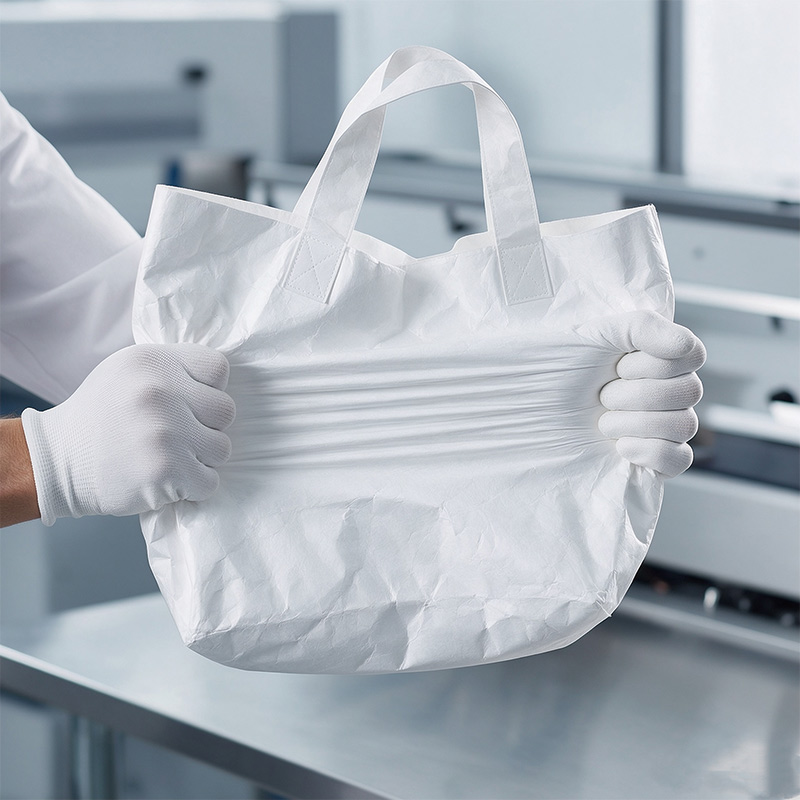
- Polybags must be mono-material (e.g., 100% LDPE or 100% PP) rather than multi-layer laminates that are hard to recycle.
- Cartons should be plain corrugated board without wax coatings, plastic windows, or metallic inks that contaminate recycling streams.
- Bubble wrap and foam fillers should be phased out in favor of molded paper pulp or corrugated inserts.
B. Minimum Recycled Content in Plastic Packaging (PCR Mandate)
PPWR mandates minimum post-consumer recycled (PCR) content in plastic packaging:
| Packaging Type | 2030 Target | 2040 Target |
| PET contact-sensitive | 30% | 50% |
| Non-PET plastic contact-sensitive | 10% | 25% |
| Other plastic packaging | 35% | 65% |
What this means for bag buyers:
- If your bags ship in polybags, those polybags will need to contain PCR plastic by 2030.
- The bag itself is not “packaging,” but many EU brands are voluntarily extending PCR requirements to the product. Expect buyers to ask: “Can you make this backpack from rPET or recycled nylon?”
- Your manufacturer must be able to source GRS-certified (Global Recycled Standard) materials and provide transaction certificates.
C. Packaging Minimization (Effective 2030)
PPWR prohibits packaging that exceeds what is necessary to ensure product safety, hygiene, and consumer acceptance. Specific red flags include:
- Double-walled or false-bottom boxes designed to exaggerate product size.
- Oversized e-commerce cartons with void fill exceeding 50% of the internal volume.
- Excessive layers of wrapping (e.g., polybag + tissue + gift box + mailer for a single tote bag).
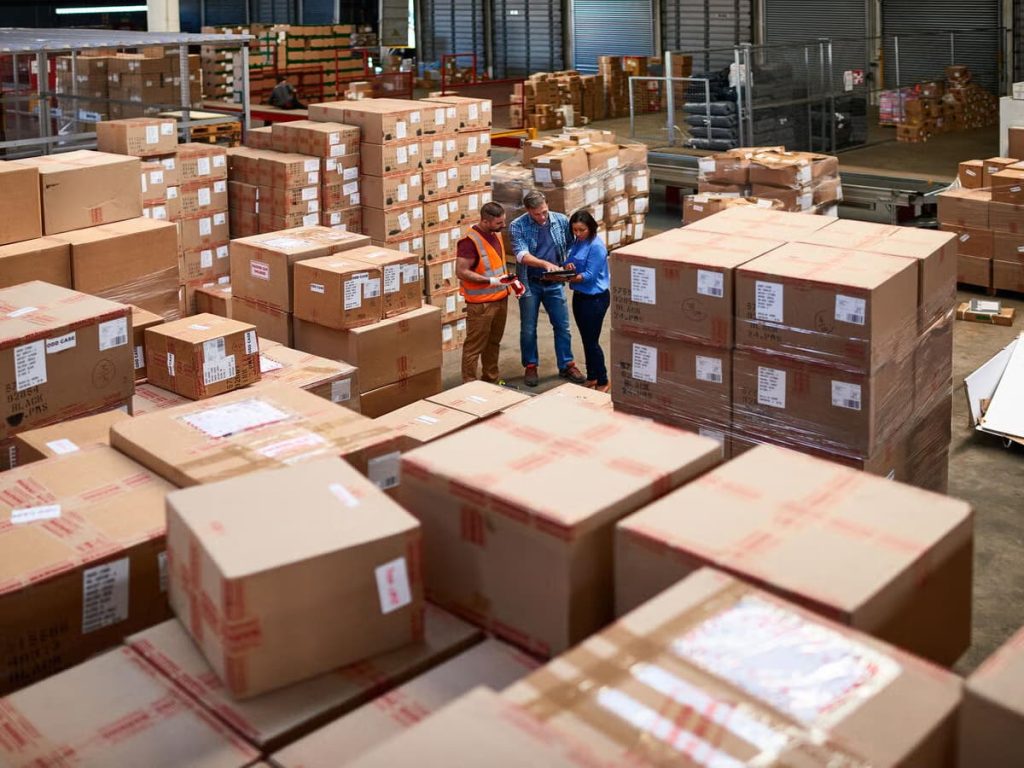
What this means for bag buyers:
- Work with your manufacturer to right-size packaging. A backpack should ship in a carton sized to its dimensions, not a generic oversized box.
- Eliminate non-essential decorative packaging unless the retailer explicitly requires it.
- For e-commerce DTC programs, consider reusable mailers or carton-free designs where feasible.
D. PFAS and Heavy Metals Restrictions (Effective 12 August 2026)
This is the most urgent deadline. From August 2026:
- Heavy metals (lead, cadmium, mercury, hexavalent chromium) in any packaging must not exceed 100 mg/kg combined.
- PFAS (per- and polyfluoroalkyl substances) are severely restricted in food-contact packaging:
- Individual PFAS < 25 ppb
- Total degradable PFAS < 250 ppb
- Total PFAS (including polymers) < 50 ppm
What this means for bag buyers:
- If you produce lunch bags, cooler bags, or food-contact accessories, your inner linings, coatings, and packaging must be PFAS-free.
- Water-resistant coatings (common on outdoor bags) often historically relied on PFAS-based DWR (durable water repellent). You must now specify PFAS-free alternatives such as C0 DWR or silicone-based treatments.
- Request test reports from your manufacturer covering both REACH and PPWR heavy metal limits.
E. Extended Producer Responsibility (EPR) and Labeling
Manufacturers and importers must join EPR schemes in each EU member state where they sell. By 2028, all packaging must carry a material composition label to help consumers sort waste correctly.
What this means for bag buyers:
- If you are the importer of record into the EU, you must register for EPR in each target country.
- If your EU customer is the importer, they will ask you to provide packaging material declarations so they can fulfill their EPR reporting.
- Your manufacturer should be able to specify the exact material composition of every packaging component (e.g., “polybag: 100% LDPE; hangtag: FSC-certified paper; carton: corrugated board, 80% recycled content”).
3. How We Helps Buyers Navigate PPWR Compliance
As an OEM/ODM bag manufacturer with decades of export experience, we integrates PPWR readiness into the product development workflow—not as an afterthought.
Material Sourcing with Compliance Built In We maintain a qualified supplier network for GRS-certified rPET, recycled nylon, organic cotton, and PFAS-free coatings. When buyers specify a target market, we flag material options that satisfy both REACH and PPWR requirements from the quotation stage.
Packaging Design for Minimization Our in-house packaging engineers design right-sized cartons, polybags, and inner packing that protect the product during ocean freight while minimizing void space and material weight. We avoid decorative over-packaging unless the retail channel explicitly requires it.
Testing and Documentation We coordinate third-party lab testing for heavy metals, PFAS, and chemical compliance (REACH, CPSIA, CA Prop 65) through accredited partners. Buyers receive itemized test reports and material declarations suitable for EPR registration and retailer audits.
4. PPWR Pre-Order Checklist for B2B Bag Buyers
Before you place your next purchase order, verify the following with your manufacturer:
- Packaging material list is documented with exact material composition per component.
- Heavy metal test report confirms combined Pb/Cd/Hg/Cr(VI) < 100 mg/kg in all packaging.
- PFAS test report is available for any food-contact bags or water-resistant coatings (deadline: August 2026).
- PCR content is specified for polybags and any plastic packaging components (if targeting 2030+ orders).
- Carton sizing is optimized to minimize void space below 50%.
- Recyclability is confirmed: mono-material polybags, uncoated corrugated cartons, no metallic inks or laminates.
- EPR documentation is available for the importer to register in target EU member states.
- GRS/GOTS/FSC certificates are current and valid if sustainable materials are used.
5. What Happens If You Ignore PPWR?
Non-compliance is not a minor administrative fine. Under PPWR:
- Products can be refused entry at EU customs if packaging is non-compliant.
- Retailers can cancel orders and demand chargebacks if their EPR obligations are jeopardized.
- Market surveillance authorities in each member state have the power to issue penalties, mandate recalls, and publish non-compliance notices that damage brand reputation.
For private-label and white-label bag brands, the importer of record bears legal liability. But in practice, the retailer will hold the brand accountable—and the brand will hold the manufacturer accountable. The compliance chain is only as strong as its weakest link.
Final Thought: Make PPWR a Competitive Advantage
Regulations like PPWR are often viewed as cost centers. The smarter approach is to treat them as market-access credentials. The buyers who ask about PPWR today are the same buyers who will grow into long-term, high-volume accounts tomorrow. Being able to answer their questions with test reports, material certifications, and a clear minimization strategy positions your brand—and your manufacturer—as a strategic partner, not just a vendor.
At DH-Bags, we do not wait for buyers to ask. We build compliance into the first quotation. If your next collection is headed for the EU, let us show you how to meet the August 2026 deadline without compromising design, quality, or margin.
One response to “PPWR Compliance Guide for B2B Bag Buyers: Every OEM/ODM Sourcing Manager Must Know Before 2026”
[…] PPWR Compliance Guide for B2B Bag Buyers: Every OEM/ODM Sourcing Manager Must Know Before 2026 Bag Compliance, CPSIA Compliance, REACH Compliance […]