Tyvek® bags deliver outstanding overall durability, yet their performance is subject to basis weight, fabrication methods and end-use scenarios. “Durability” is a composite metric covering tear resistance, water & moisture resistance, flex fatigue resistance, ageing resistance, puncture resistance and more.
For packaging and bag projects that demand both lightweight properties and structural strength, Tyvek® stands out as a preferred material for numerous brands. Nevertheless, superior raw-material performance does not guarantee finished-product quality, which heavily hinges on the manufacturer’s fabrication techniques. Many procurement teams encounter setbacks during sampling, not due to material defects, but from incomplete understanding of Tyvek®’s strengths, limitations and processing constraints.
This article provides a full-fledged analysis of Tyvek® bags, covering material fundamentals, lab-verified performance, cross-material comparison, process-related drawbacks and material-selection guidance.
Ⅰ. What Exactly Is Tyvek®?
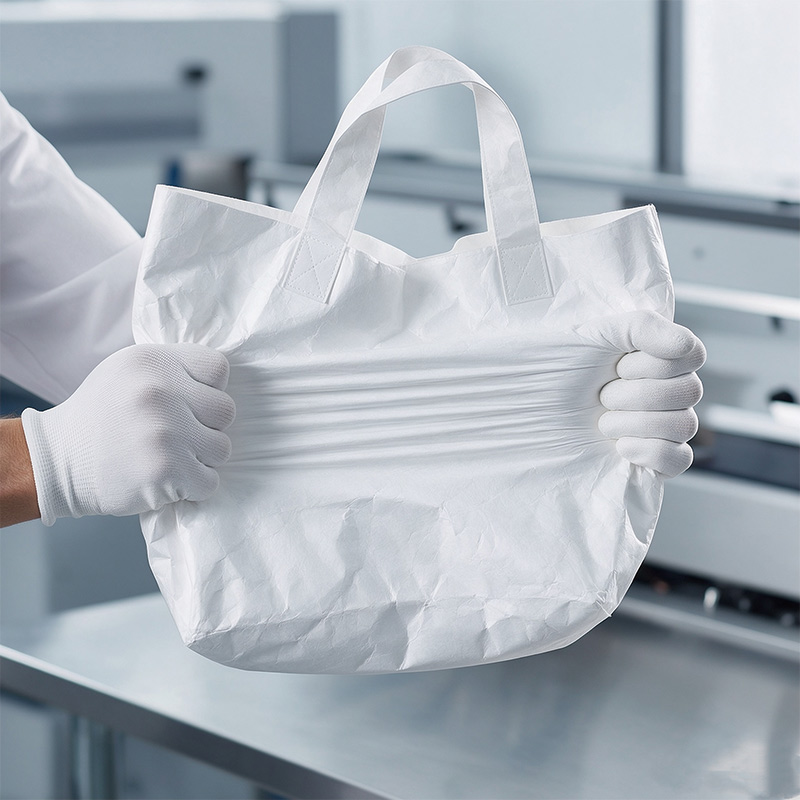
Tyvek® is a high-performance nonwoven material developed by DuPont in the 1950s, manufactured from 100% high-density polyethylene (HDPE) via flash-spun bonding technology.
It is neither paper nor conventional plastic film. It combines partial characteristics of paper, plastic film and woven textiles. Featuring a paper-like appearance and textile-like tactile feel, its mechanical properties differ drastically from paper and generic nonwovens.
Ⅱ. Core Durability Performance Breakdown
1. Tear Resistance: High Strength From Continuous Fibrous Network
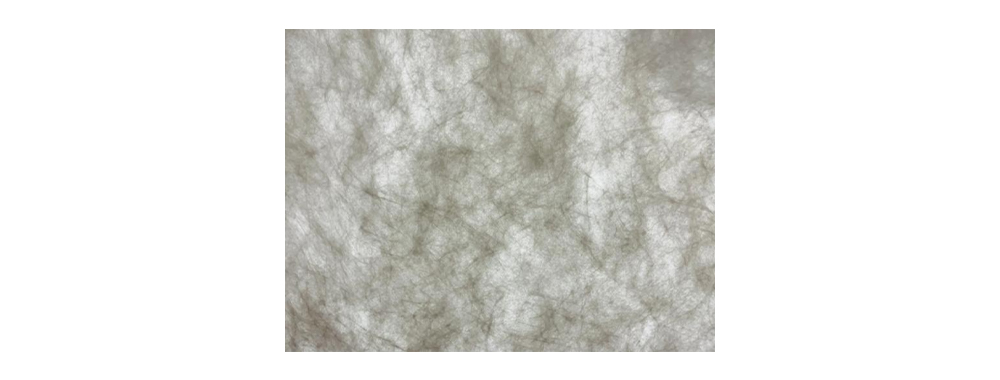
Tyvek® gains mechanical strength from its randomly interlaced continuous 3D fibrous network formed by flash-spun polyethylene fibres. This mechanism differs fundamentally from the warp-and-weft weaving principle of traditional fabrics. When subjected to tearing forces, stress disperses across multi-directional fibres, preventing cracks from propagating rapidly — this is the root cause of its exceptional tear-proof performance.
💡Further reading: Fabric denier directly impacts tear-resistance performance. For trade-offs among different basis weights for custom bag production, refer to the feature article: What is Denier? A Fabric Denier Guide for backpack manufacturing.
Performance reference data sourced from DuPont official product documentation:
• At equivalent basis weights, its strength is significantly higher than paper. DuPont’s official specification notes it can be up to ~10 times stronger than paper of the same weight.
• Its network fibre structure halts crack propagation when fractures meet fibre bundles, stopping tears from spreading in straight lines.
• It also delivers decent puncture resistance and abrasion resistance, mitigating corner wear and scuffs caused by sharp objects such as keys.
Real-world project implication: Significantly lower risk of damage from bag-corner abrasion, punctures by sharp items like keys, and scuffs during transit.
2. Water & Moisture Resistance: Hydrophobic Fibre Structure With No Strength Loss When Wetted
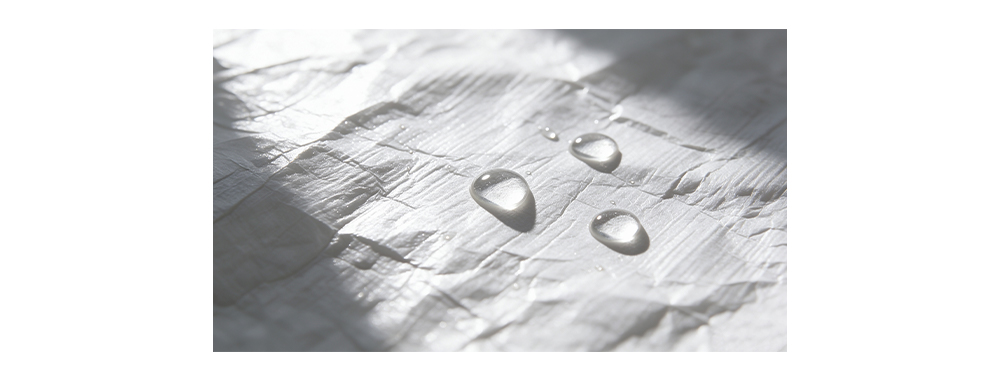
Ordinary paper bags rapidly lose mechanical strength upon contact with water; conventional plastic bags are waterproof yet poor in tear resistance. Tyvek® operates on a distinct principle. It achieves water repellency not via surface coatings, but through the inherent hydrophobic nature of HDPE fibres. Liquid water cannot easily permeate its surface, generating a lotus-leaf-like water-beading effect.
One key property: its mechanical strength does not degrade upon water immersion; its wet tensile strength even sees a slight increase. This accounts for its long-term adoption as exterior building wrap in the construction industry.
Test conditions: 95% relative humidity at 30°C. Tyvek® retains >98% of its tensile strength; cotton fabric loses around 40% strength under identical conditions.
💡 Critical distinction: Tyvek® blocks liquid water while permitting water-vapour transmission. It is water-repellent and breathable, not fully gas-impermeable.
3. Flex Fatigue & Ageing Resistance: Resists Fracture After Repeated Folding
Tyvek® can withstand tens of thousands of reciprocating flex cycles without rupture.
• For high-frequency small goods such as wallets: functional service life can exceed 5 years under normal use.
• For shopping bag light-duty applications: service life ranges from 2 to 5 years.
• After 50 cycles of industrial-standard washing, tensile-strength retention remains between 90-92%.
Repeated folding generates natural creases, an aesthetic well-received by end-consumers. For Tyvek® backpack OEM orders, note that irreversible creases may form during stacked warehousing. Aesthetic risks must be addressed in early-stage product design and outer-packaging planning.
4. Temperature & Weathering Resistance: Tolerates Harsh Outdoor Conditions
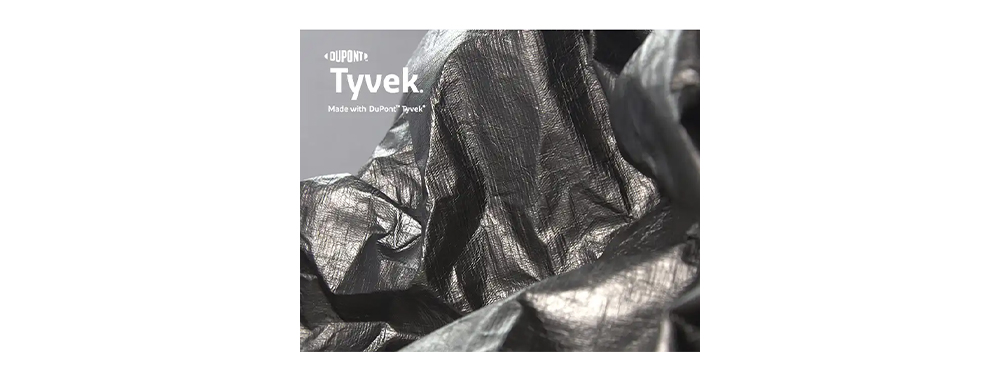
Operating temperature range: -70°C ~ +118°C. It resists most acids, alkalis and salt corrosion, and is mould- and rot-resistant.
In construction applications, Tyvek® building wrap can withstand years to decades of outdoor exposure under diverse climatic conditions.
Ⅲ. Cross-Material Performance Comparison
| Performance | Tyvek® | Kraft Paper | Conventional Plastic Bag | Canvas / Nylon |
| Tear Resistance | ★★★★★ | ★★ | ★★ | ★★★★ |
| Water Resistance | ★★★★★ | ★ | ★★★★ | ★★ (coating-dependent) |
| Lightweight Property | ★★★★★ | ★★★ | ★★★★ | ★★★ |
| Flex Fatigue Resistance | ★★★★★ | ★★ | ★★★ | ★★★★ |
| Breathability | ★★★★ | ★★★★ | ★ | ★★★ |
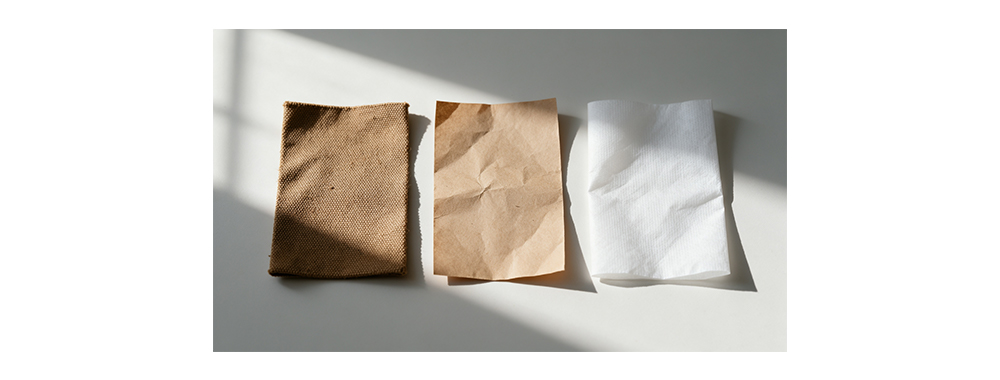
Tyvek® exhibits minimal strength disparity between warp and weft directions, reducing breakage risks during bulk packaging and transportation. It outperforms kraft paper in puncture resistance and surpasses paper-based materials substantially in water-moisture protection.
Note: Tyvek® breathability denotes water-vapour permeability, not resistance to prolonged liquid submersion. Joint-sealing or coated waterproof treatments are mandatory if full liquid-water impermeability is required for finished goods.
Ⅳ. Application of Tyvek® in Bag Manufacturing
Leveraging its unique material properties, Tyvek® shows broad application potential in bag production.
From fast-fashion retail totes to high-end brand accessory pouches, it has emerged as an innovative addition to bag-material libraries, creating differentiated alternatives to traditional paper and plastic materials. It is particularly favoured for use cases prioritising lightweight construction, water resistance, durability and distinctive texture.
Below is a practical overview covering bag categories, fabrication processes and design capabilities.
1. Common Bag Categories By End-Use
• Shopping Bags: 60-75 g/m² is the typical basis-weight range, balancing light weight and load-bearing capacity for custom retail-brand merchandise. Its water-repellent property eliminates the need for extra outer sleeves in rainy conditions. It can be hand-washed gently and air-dried for repeated use, lowering per-use costs.
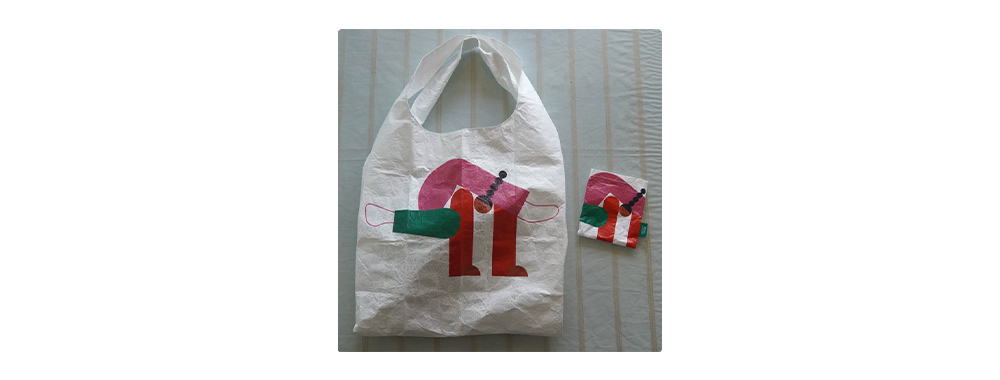
• Gift Bags: Light-weight 42-55 g/m² grades suit gift-packaging applications. The smooth, fine surface delivers excellent printability for high-resolution graphics and subtle colour gradations, meeting premium gift-packaging texture requirements.

• Document Pouches & Notebook Sleeves: Tyvek® maintains good rigidity and structural integrity even after repeated bending, making it ideal for document holders, passport sleeves and notebook covers.
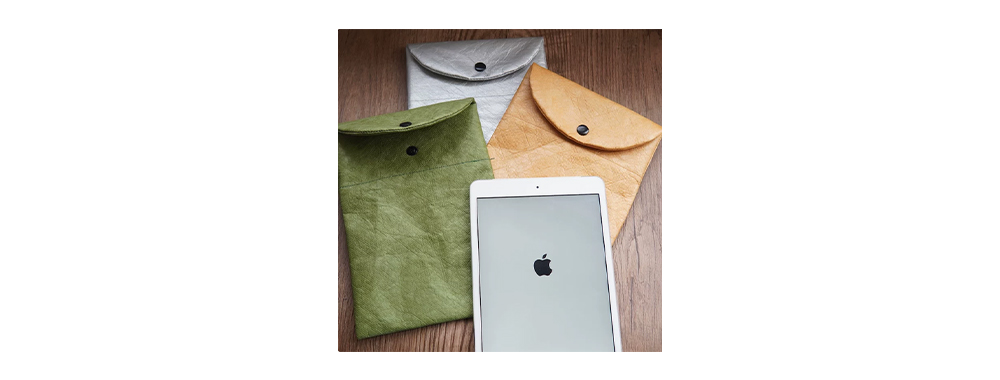
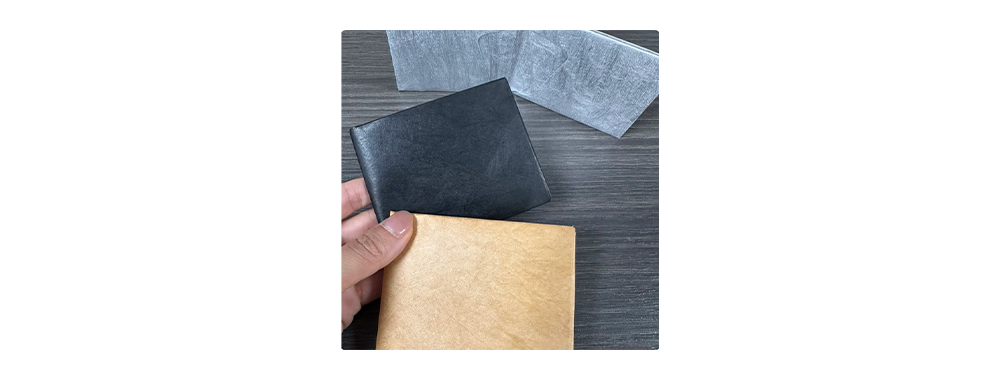
• Accessory Pouches & Wallets: Able to survive tens of thousands of flex cycles without cracking, Tyvek® fits frequently-opened small leather goods such as wallets and card holders.
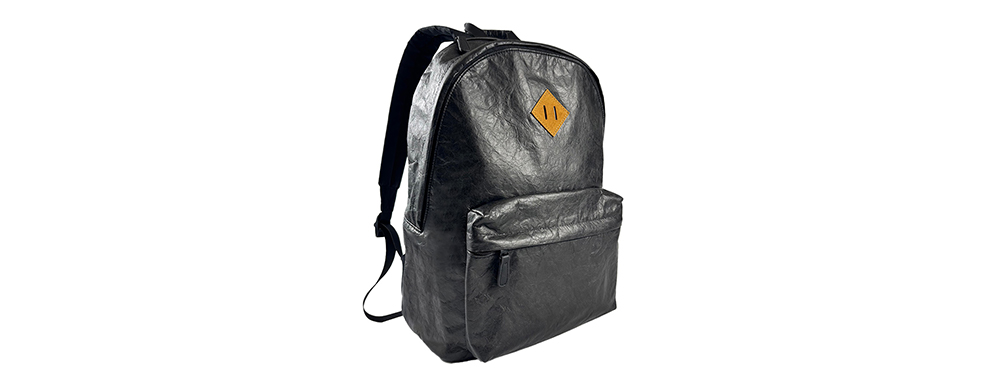
• Lightweight Backpacks: Higher basis-weight grades (85-105 g/m²), paired with reinforced stitching, are used for daily-commute backpacks and lightweight hiking packs. Note load-bearing limits: it is unsuitable for heavy-payload carrying.
2. Fabrication Processes
Fabrication procedures directly govern finished bags’ aesthetics, waterproof performance and durability. Main processing options are listed below:
• Sewing: The most basic and cost-effective production method. Tyvek® is compatible with standard sewing equipment for mass-volume manufacturing. However, sewing creates needle holes that allow liquid-water penetration. For water-resistant products, stitched seams must be supplemented with heat-press sealing.
• Ultrasonic Welding: High-frequency vibration generates heat to fuse two Tyvek® layers at seams. This technique produces no needle holes, preserves seam waterproofness and delivers smooth visual quality. It applies to waterproof pouches and outdoor gear requiring high sealing performance, yet requires dedicated ultrasonic-welding equipment with higher capital expenditure.
• Heat Sealing: Heated tooling thermally bonds Tyvek® seam interfaces. Process barriers are lower than ultrasonic welding. Seam strength is governed by precise control over temperature, pressure and dwell time during production.
• High-Frequency Welding: High-frequency electric fields induce molecular friction to achieve fusion. It yields high-strength seams for heavier-basis-weight Tyvek®, commonly deployed for heavy-duty industrial packaging and outdoor equipment demanding robust sealing.
Fabrication-method selection determines waterproof rating, visual texture and production cost. Procurement teams should clarify waterproof-performance requirements at project initiation and align with manufacturers to select appropriate joining techniques.
3. Design Capabilities
Tyvek® offers substantial creative latitude for bag design:
• Print Compatibility: Its dense, smooth surface works well with flexographic and UV printing. Flexo printing handles large solid-colour blocks and gradients; UV printing excels for fine-detailed graphics and micro-text. Ink adhesion varies across different ink formulations on Tyvek®, so ink-compatibility validation is required during sampling.
• Hot-Stamping (Foil Stamping): Hot-stamping is feasible for premium surface finishing. Processing temperature must be strictly kept below 80°C; higher temperatures cause material warping and wrinkling.
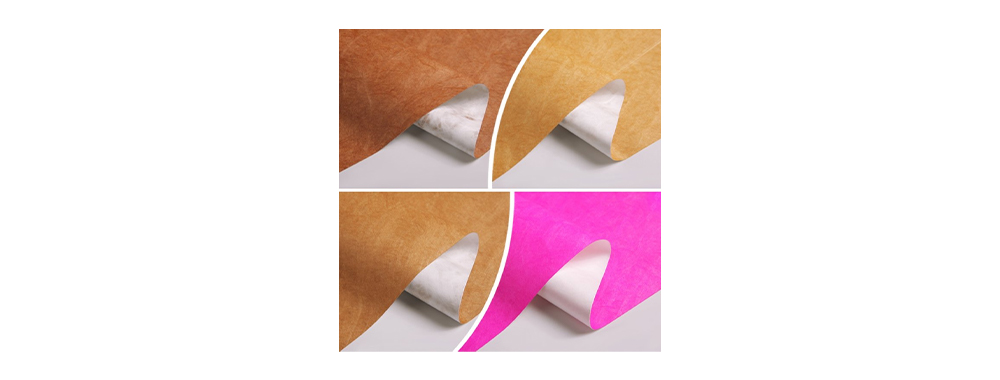
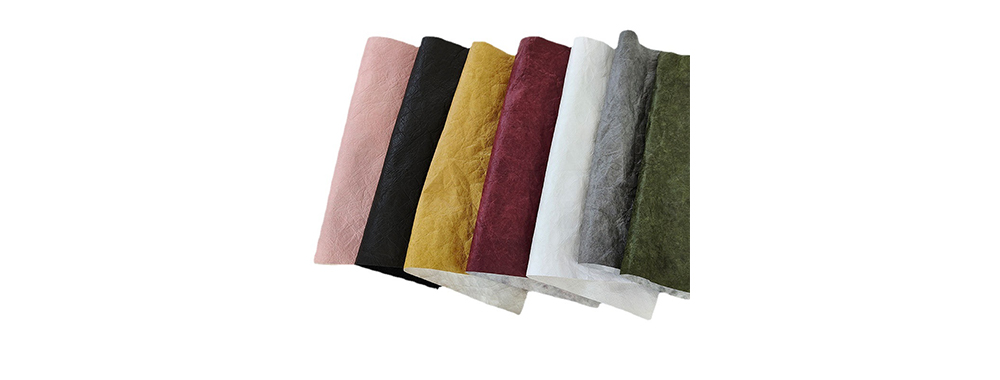
• Colour Rendering: Tyvek® can be dyed in diverse hues. Due to intrinsic HDPE characteristics, colour saturation is generally lower than conventional woven textiles, yielding unique matte or semi-matte finishes that enhance product premiumness and brand distinctiveness.
• Surface Treatments: Tyvek® features inherent paper-like tactility without extra coating. Embossing is implemented in select projects to add surface texture depth.
4. Material-Selection Guidelines
Evaluate multiple dimensions when specifying Tyvek® for bag manufacturing:
• Define end-use scenarios: Select 42-55 g/m² for gift bags and document storage; 60-75 g/m² for shopping bags and daily-use accessories; specify 85-105 g/m² with reinforced stitching for higher-load-bearing requirements.
• Confirm waterproof rating: No extra treatment needed for everyday water-repellent performance. For full liquid-water impermeability, adopt ultrasonic welding or heat-sealing, plus heat-press sealing for stitched seams.
• Conduct sampling validation: Different Tyvek® grades vary in tear strength, flex properties and print performance. Complete sampling before mass production to verify compatibility between raw material and fabrication workflows.
• Cost assessment: Tyvek® raw-material costs exceed ordinary nonwovens and kraft paper. Nevertheless, considering durability-driven brand premium and reusability, it delivers cost-competitiveness for mid-to-high-end bag projects.
Ⅴ. Frequently Asked Questions
Q1: How do you clean Tyvek® bags? Are they washable?
Gentle hand-washing or damp-cloth wiping is acceptable. Machine-washing or heavy rubbing should be avoided, as these accelerate surface creasing and fibre fuzzing. Air-dry only; do not tumble-dry or iron. Mild stains can be removed with neutral detergent and soft cloth. Oil-based stains are difficult to eliminate; stain-resistance testing is recommended during sampling.
Q2: Is Tyvek® eco-friendly? Can it be recycled?
Tyvek® consists of 100% high-density polyethylene and qualifies as recyclable plastic, though dedicated recycling streams are less established than for PET. Some recyclers granulate post-consumer Tyvek® for injection-moulding feedstock.
From a sustainability perspective, it degrades slower than laminated paper but outperforms single-use plastic bags via reusability. If circular-economy credentials are top priority, RPET or recycled nylon represent better alternatives rather than Tyvek®.
Q3: Why do some Tyvek® products feel soft while others feel stiff?
Basis weight partially drives softness (lower basis weights produce softer material). Post-treatment finishing also plays a major role. Procurement should specify exact material grades to suppliers, since tear strength, flex performance and printability differ across variants. Always confirm specifications prior to sampling.
Q4: What differentiates Tyvek® from regular PP spun-bond nonwovens, and why is there a large price gap?
Core differences lie in raw material and forming technology. Tyvek® uses 100% HDPE and DuPont proprietary flash-spun-bond technology to create a continuous 3D interlocked fibrous network. Conventional nonwovens are mostly polypropylene (PP), formed by short-fibres bonded via mechanical entanglement or thermal compression.
Performance gaps are pronounced: at equal basis weight, Tyvek® delivers far superior tear- and puncture-resistance, plus native hydrophobicity with strength retention when wet. Ordinary PP nonwovens lose significant strength upon wetting; low-weight variants can be torn easily by hand.
The price premium originates from DuPont’s patented flash-spinning technology. Only DuPont achieves large-scale production, underpinned by high equipment and technical barriers, alongside brand equity built from demanding medical and construction-material applications. In contrast, PP spun-bond nonwovens benefit from mature processes and massive global capacity that drive down unit costs.
Selection guidance: Standard nonwovens offer an economical option for projects with low durability requirements and tight budgets. Choose Tyvek® when lightweight construction, water repellency, tear resistance and distinctive texture are key priorities.
Q5: Can Tyvek® bags be folded for storage? Are there long-term-storage concerns?
Yes, its lightweight nature makes it convenient for folding and compact stowage, which explains its popularity for travel- and storage-oriented goods.
Bear in mind that folding leaves permanent creases. Repeatedly folded zones may develop whitening (micro-surface cracking from bending that lightens visual colour). This does not impair functional performance but influences aesthetics.
For long-term storage, avoid heavy stacked compression; lay flat or hang the goods to preserve appearance. For premium-positioned products, insert consumer-guidance cards informing buyers that creasing is an inherent material characteristic rather than a manufacturing defect.
Ⅵ. Conclusion
Tyvek® bags exhibit compelling comprehensive durability. Instead of relying on heavy basis weight for mechanical performance, this lightweight substrate combines excellent tear resistance, water-moisture protection, flex-fatigue resistance and weathering stability. Its reliability has been proven across industries ranging from building house wraps and medical-sterile packaging to consumer-market totes and storage accessories.
Material specifications alone cannot guarantee project success; its inherent limitations must be managed: low heat tolerance, unsuitability for heavy-load-bearing applications, stitch-hole water-penetration risks and warehousing-induced creasing.
✅ Well-suited use-cases: Light-duty shopping totes, document pouches, gift packaging, lightweight accessory goods.
❌ Not-recommended scenarios: High-payload bags, sustained high-temperature environments, continuous full-water immersion.
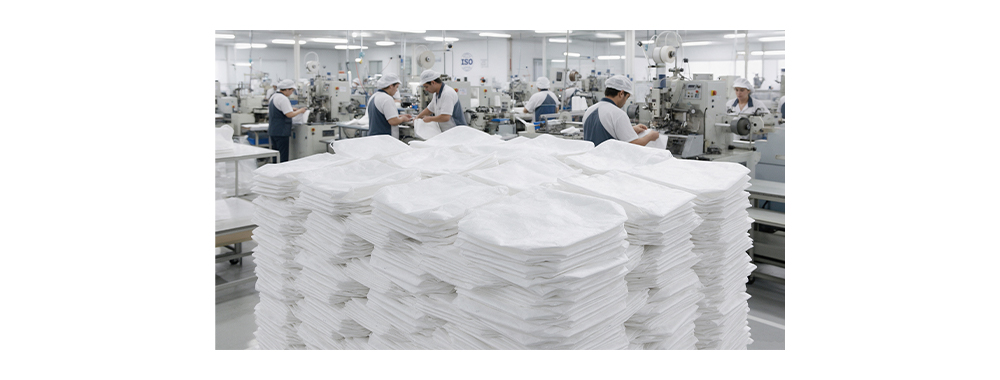
Consistent, high-quality Tyvek® finished goods depend on more than raw-material inputs; process-control capability determines final yield rates. DH Bags brings over 20 years of OEM bag-manufacturing experience with ISO-certified production facilities, delivering impartial material-selection and process-evaluation support for your projects.
Whether you intend to adopt innovative Tyvek® fabric or conventional materials such as nylon and canvas, we provide full-scope OEM / ODM services covering material sourcing, sampling and mass-volume production. Small-batch orders are accommodated, and prototype sampling is available.
Disclaimer: Tyvek® is a registered trademark of DuPont.
Partial performance metrics are excerpted from DuPont official Tyvek® datasheets; other data are factory-lab test results. Actual finished-product performance varies with basis weight, fabrication workflow and operating environment.