A zipper is the lifeline of a bag. Its smooth operation, durability, and water resistance directly determine the user experience and are key factors influencing brand reputation and customer repurchase rates.
This guide is designed for procurement managers and product development professionals, helping you go beyond generic specifications. We will break down the three most common zipper options in soft bag manufacturing—water-resistant zippers, concealed zippers, and branded zippers—so you can specify your zipper requirements accurately when requesting quotations, avoiding production risks and after-sales issues caused by improper selection.
Next, we’ll start with the most fundamental core parameters to help you build a solid framework for zipper selection.
I. Zipper Basics: Three Key Parameters Every B2B Buyer Should Know Before Specifying a Zipper
Before comparing zipper types, it’s important to understand the three core parameters that determine a zipper’s performance in soft bags.
1. Zipper Size (# Gauge)
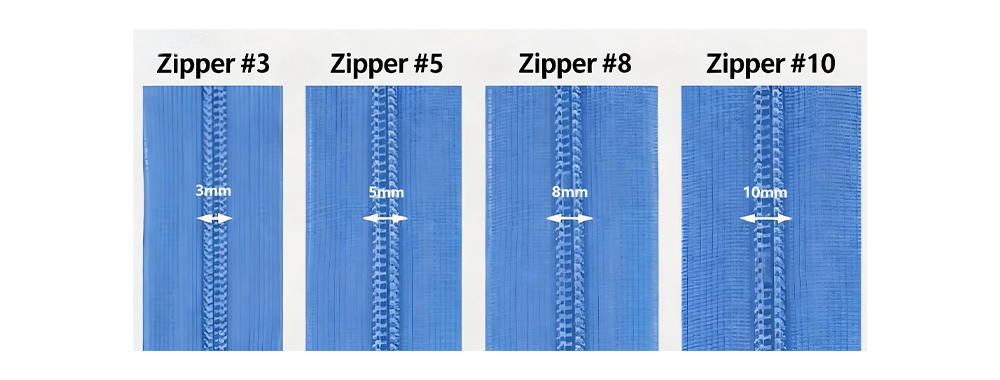
The larger the zipper size number, the wider the zipper teeth, resulting in greater strength and load-bearing capacity.
| Size | Tooth Width | Typical Soft Bag Applications |
| #3 | 3 mm | Cosmetic bags, pencil cases, lightweight organizers, interior pockets |
| #5 | 5 mm | Standard backpacks, tote bags, travel bags, packing cubes |
| #8 | 8 mm | Heavy-duty sports bags, tool bags, luggage, load-bearing compartments |
| #10 | 10 mm | Extra-large duffel bags, industrial bags, and extreme heavy-load applications |
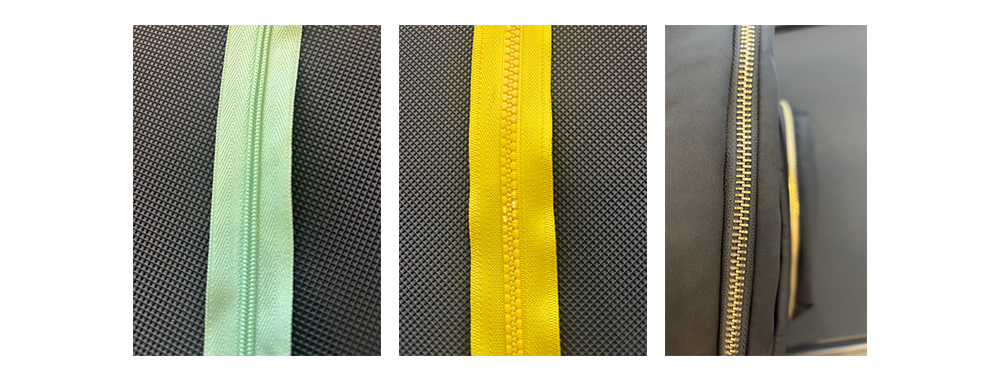
2. Zipper Teeth Material
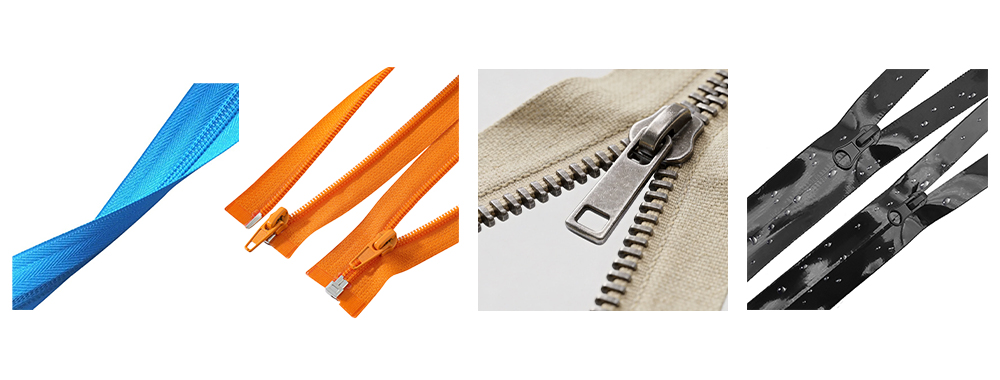
- Nylon Coil: Flexible, lightweight, and self-repairing if the coil becomes misaligned. This is the standard choice for most soft bags.
- Molded Plastic (Delrin®/Vislon®): Rigid, corrosion-resistant, and well-suited for outdoor bags. Heavier and stiffer than nylon coil zippers.
- Metal (Brass, Aluminum, or Nickel): Offers a premium appearance and feel, but is heavier and may be susceptible to oxidation in humid environments.
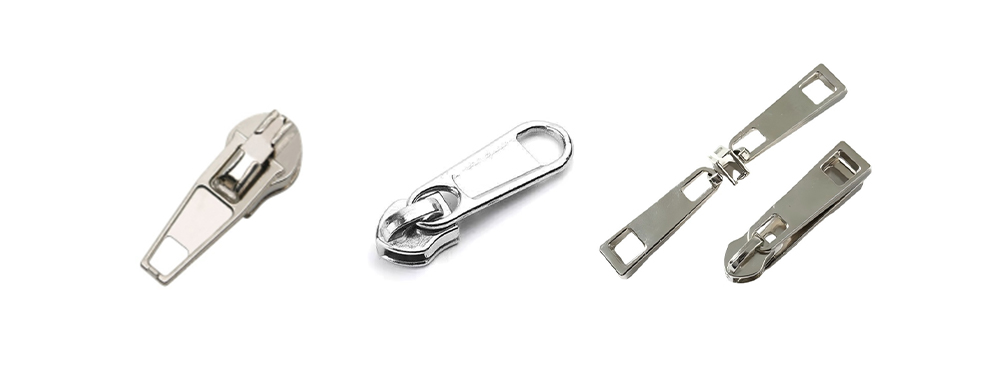
3. Zipper Slider Types
- Auto-Lock Slider: Equipped with a spring-loaded locking mechanism that automatically locks the slider in place when the pull tab is released. Ideal for bags carried on the move, such as backpacks and crossbody bags.
- Non-Lock Slider: Slides freely without a locking mechanism, allowing for quick and easy opening and closing. Best suited for stationary-use bags such as cosmetic bags and storage pouches.
- Pin-Lock / Reversible Slider: Designed for two-way zipper systems or anti-theft applications, allowing operation from both directions or enhanced security depending on the zipper configuration.
4. Zipper Tape Materials
- Polyester Tape: The most commonly used zipper tape for soft bags. It offers stable tensile strength, cost-effectiveness, and is suitable for the majority of standard bag applications.
- Nylon Tape: Stronger and more flexible than standard polyester tape, making it ideal for large bags that are frequently opened, closed, and subjected to heavy loads.
- Cotton Tape: Softer to the touch and commonly used in premium leather bags. However, it is more expensive and prone to shrinkage and mildew, making it unsuitable for outdoor bag applications.
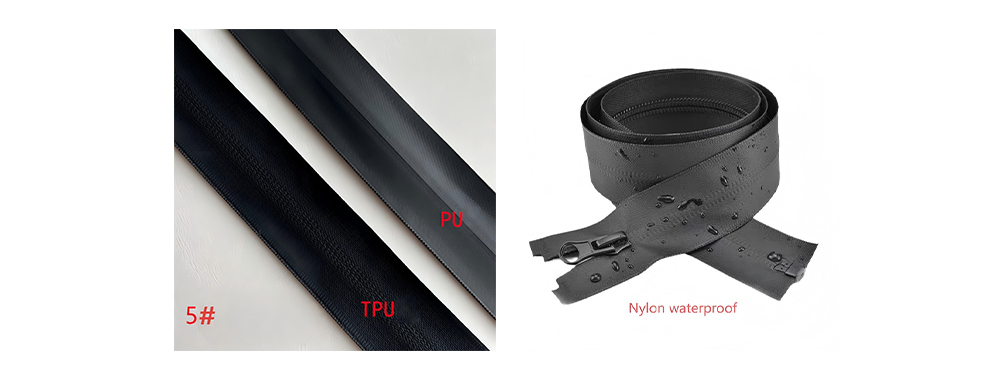
- Other Specialized Tape Materials: Waterproof tape materials such as coated fabric and TPU-laminated tape are primarily used in combination with waterproof zippers to provide enhanced water resistance.
II. Three Common Zipper Choices in Soft Bag Manufacturing: Waterproof, Concealed, and Branded Zippers
1. Waterproof Zippers: When Standard Water-Repellent Zippers Aren’t Enough
What Is a Waterproof Zipper?
A waterproof zipper features a PU or TPU-coated zipper tape or a rubberized sealing layer that covers the interlocking zipper teeth when the zipper is closed. While the teeth themselves are typically standard nylon coil teeth, the combination of the coated tape and slider design creates an effective barrier against water penetration.
Types of Waterproof Zippers
| Type | Construction | Water Resistance | Appearance & Feel |
| TPU-Coated (Gloss Finish) | Transparent or colored TPU film laminated over the nylon coil | IPX3–IPX4 (Rain and water spray protection) | High-gloss finish with a modern, technical look |
| Matte PU-Coated | Matte PU film laminated over the zipper | IPX3 (Light rain protection) | Subtle, stylish, and contemporary appearance |
| Water-Repellent (DWR-Treated Tape) | Standard zipper tape treated with a Durable Water Repellent (DWR) finish | Protects against light splashes only | Looks and feels the same as a standard zipper |
When to Specify a Waterproof Zipper
A waterproof zipper is recommended for the following applications:
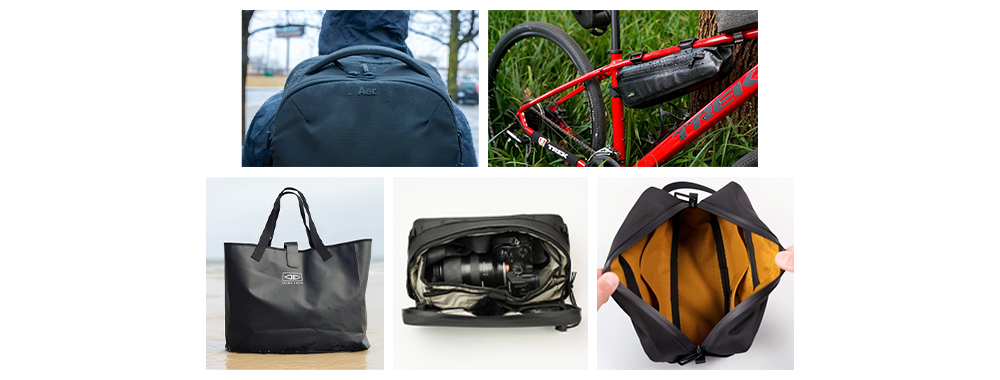
- Outdoor backpacks and cycling bags that are regularly exposed to rain.
- Beach bags and water sports accessories where protection from moisture is essential.
- Medical and electronics organizer bags that require protection against accidental splashes.
- Water-resistant toiletry bags for travel and everyday use.
B2B Buyer’s Considerations
- Waterproof zippers are stiffer. They require greater pulling force than standard zippers. Without an ergonomic zipper pull, end users may find them difficult to operate. Be sure to specify larger, textured pull tabs or cord pull extensions to improve usability.
- Color matching is more challenging. TPU films offer a more limited color range than dyed polyester zipper tape. If your bag requires a custom Pantone color, expect tighter color-matching tolerances and potentially longer lead times for custom dyeing.
- Long-term aging should be considered. TPU coatings may yellow or crack after 2–3 years of prolonged UV exposure. For products intended for tropical or high-UV markets, specify UV-stabilized TPU or consider using a matte PU-coated zipper for better long-term durability.
2. Concealed Zippers
What Is a Concealed Zipper?
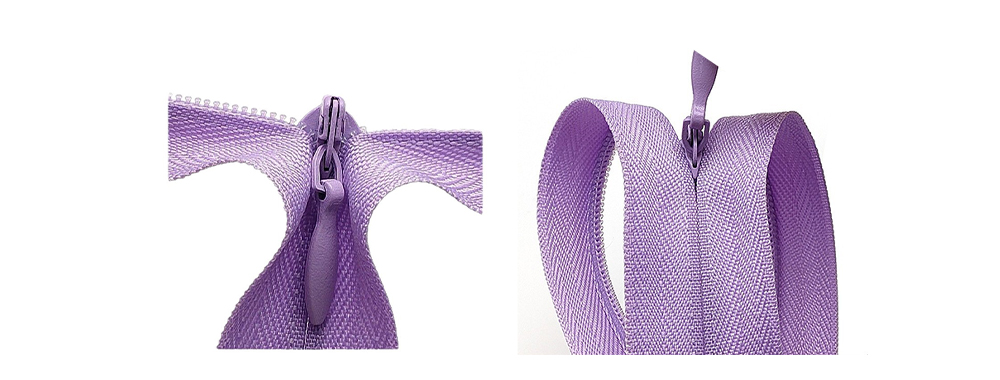
In a standard coil zipper, the zipper teeth are visible from the outside. In a concealed zipper, the coil is reversed so that the teeth face inward—toward the inside of the bag. As a result, the exterior shows only a smooth, flat zipper tape, creating a clean and minimalist appearance.
Why Concealed Zippers Matter for Soft Bags
| Feature | Standard Coil Zipper | Concealed Zipper |
| Appearance | Visible zipper teeth | Smooth zipper tape for a cleaner, more refined look |
| Snag Resistance | Teeth may catch on fabric or skin | Teeth are protected, providing smoother contact and reduced snagging |
| Printability | Limited printable area | Zipper tape can be custom printed with logos or graphics |
| Water Resistance | Standard | Slightly better, as the concealed teeth are shielded from direct water spray |
| Slider Compatibility | Uses standard sliders | Requires specially designed reverse-mount sliders |
When to Specify a Concealed Zipper
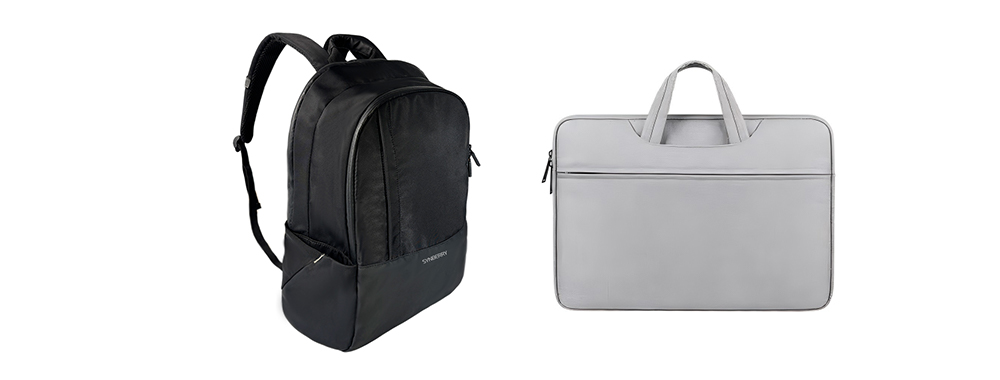
- Minimalist business backpacks / crossbody bags — where a clean, streamlined appearance is critical to the product design.
- Laptop bags / tablet sleeves — to reduce the risk of zipper teeth scratching or damaging electronic devices.
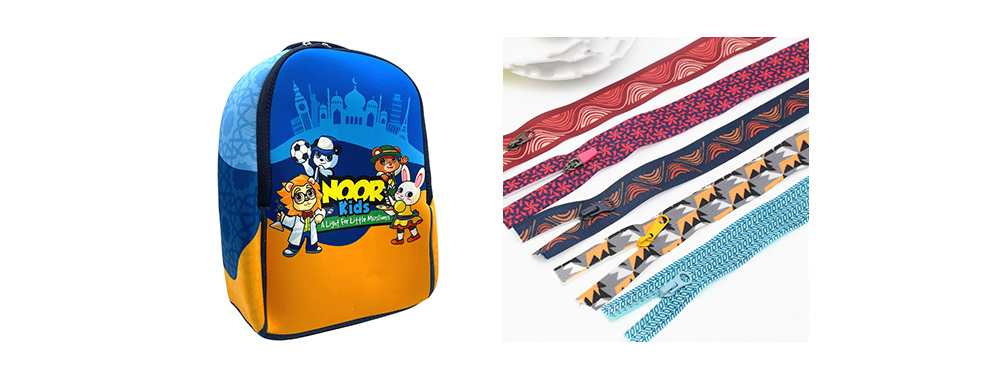
- Children’s bags — to minimize snagging risks and improve overall safety during use.
- Bags requiring logo printing along the zipper line — the flat zipper tape provides an ideal, uninterrupted surface for brand visibility and decoration.
3. Branded Zippers: YKK vs. SBS
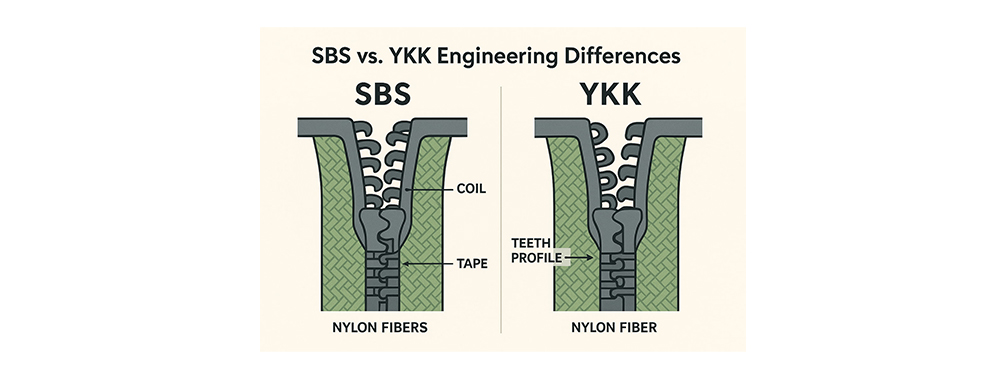
YKK and SBS Zipper are two of the most widely specified zipper brands in the bag manufacturing industry. They are also among the most commonly requested brand choices in B2B procurement, with clear differences in positioning, performance, and cost structur
| Attribute | YKK (Japan) | SBS Zipper (China) |
| Global Recognition | A century-old Japanese brand with strong global recognition. It carries a premium quality reputation and is commonly used by mid-to-high-end bag brands to enhance product positioning. | A leading domestic Chinese zipper manufacturer and the world’s second-largest zipper producer. It focuses on high cost-performance and covers multiple tiers from mass-market to mid-to-high-end, making it suitable for cost-sensitive bulk orders. |
| Smoothness of Operation | Excellent; consistent pull performance across batches. | Very good; slight variation may occur in economy-grade lines. |
| Color Range | 500+ standard colors; custom dyeing available. | 300+ standard colors; custom dyeing available. |
| Waterproof Options | Full range including AquaGuard zipper and Proseal zipper technologies (TPU/PU systems). | Full TPU/PU waterproof offerings with strong price competitiveness. |
| Concealed Zipper Series | Comprehensive and widely used across product lines. | Comprehensive product range as well. |
| MOQ (Minimum Order Quantity) | Stock colors available with no MOQ; custom orders available but with longer lead times (typically 10–15 days). | Usually requires a minimum order of 1000 yards. |
| Best Suited For | Premium brands, technical outdoor gear, and warranty-driven products. | Mid-range to high-volume mass production with cost optimization focus. |
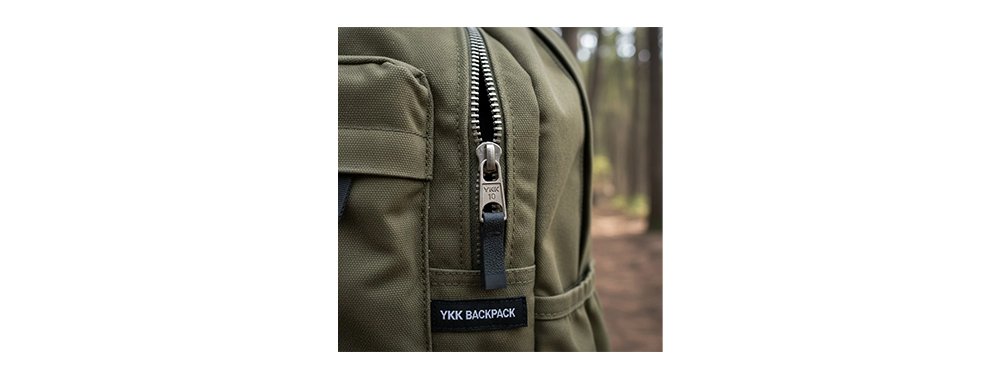
When to Upgrade to YKK
- Your brand promises “lifetime warranty” or “10-year guarantee” — In this case, zipper reliability becomes part of your brand promise, and YKK’s consistency helps reduce long-term failure risk.
- Your bag is positioned in a higher retail price segment — Premium pricing expectations usually require premium component recognition, where YKK serves as a visible quality signal.
- Your target markets associate YKK with quality assurance — Especially in regions like Japan, Germany, and U.S. outdoor niche markets, YKK is widely recognized as a benchmark for durability and reliability.
- The zipper is part of the design language or brand storytelling — For exposed zippers, color-blocking designs, or branding-focused products, YKK often functions as both a functional component and a perceived design element.
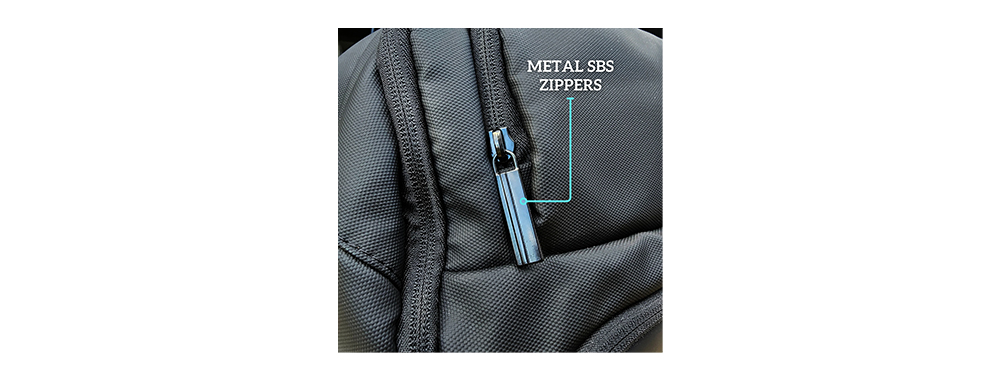
When Choosing SBS Zipper Is a Smarter Decision
- Mid-to-high volume orders (5,000+ units) where cost optimization is critical — SBS offers strong price competitiveness while still maintaining reliable performance, making it suitable for large-scale production where margin control matters.
- Seasonal product lines — For collections with short market lifecycles, SBS provides a practical balance between quality and cost without over-investing in long-term durability components.
- Projects with tight lead times and fast color development requirements — SBS is often better suited for shorter color matching and production cycles, helping brands respond quickly to market or seasonal demands.
III. B2B Procurement Checklist: 5 Key Parameters to Specify in RFQs
To reduce sampling iterations and avoid quotation misunderstandings, every zipper RFQ should clearly include the following five specifications:
- Brand and Grade
e.g., “YKK #5 nylon coil zipper” - Size (# Gauge)
#3, #5, #8, or #10 - Teeth / Tape Type
Standard coil / concealed zipper / waterproof zipper (TPU or PU coated) - Slider (Puller) Specification
Clearly define puller shape, material, and style - Color Specification
Pantone code or physical color swatch reference
IV. FAQ (Frequently Asked Questions)
A: Yes, but expectations must be managed. When a waterproof zipper is used on a standard stitched bag, it can provide protection against splashes and light rain. However, water may still penetrate through needle holes and uncoated fabrics. True waterproof performance requires a combination of a waterproof zipper, seam sealing (tape-taped seams), and waterproof fabric.
A: Reverse-mounted sliders engage the zipper teeth from the inside, creating a slightly different friction profile. If the slider is not specifically designed for concealed (reverse coil) zippers, misalignment can lead to stiffness and premature wear. Always ensure slider compatibility with the zipper orientation.
A: For standard #5 nylon coil zippers, SBS can be considered functionally equivalent in most soft bag applications. Differences become more noticeable under extreme conditions—such as sub-zero temperatures, prolonged saltwater exposure, or requirements exceeding 10,000 open-close cycles—as well as in large-scale production where color consistency is critical. For premium positioning, YKK still holds a stronger brand equity advantage.
A: Ranked by frequency:
Slider wear — broken pull tabs or loss of locking function
Tape separation — detachment of zipper tape from the bag seam
Tooth misalignment — caused by overloading or lateral stress
Corrosion — especially in metal zippers exposed to humidity or salt spray
A: Yes, but TPU or PU coatings have inherent limitations in dyeability. Color matching accuracy is typically lower than that of standard polyester zipper tape. It is important to confirm color swatches with the supplier in advance and allow sufficient lead time for sampling and production adjustments.