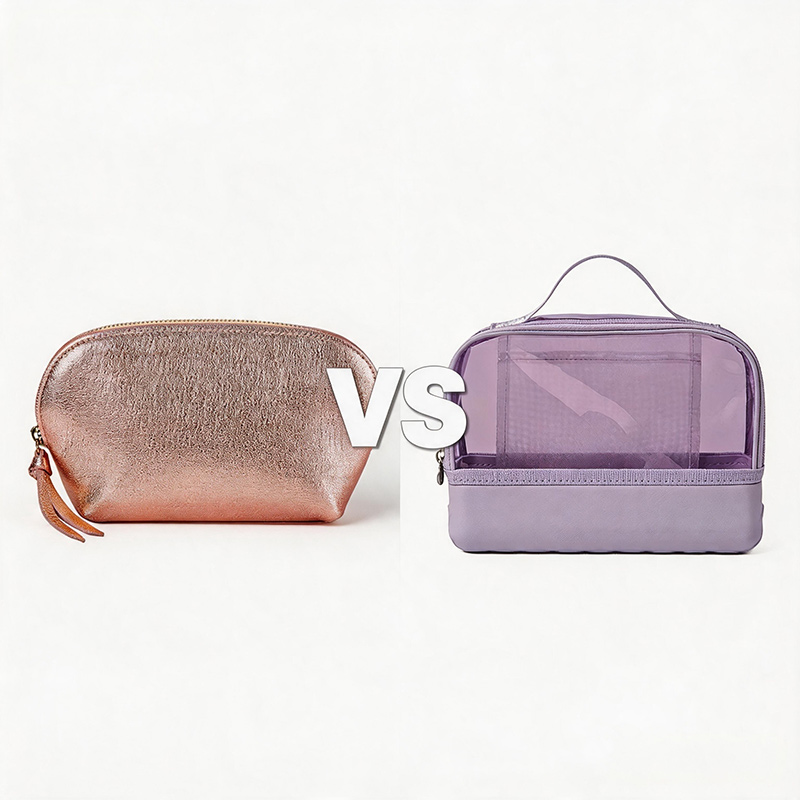
Many people often confuse cosmetic bags with toiletry bags. As a professional bag manufacturer, today we will help clarify the differences between them. This article analyzes these two types of bags from four perspectives: functional purpose, design and material differences, usage scenarios, and comparisons of search trends and platform data. Our aim is to help you quickly gain a clear understanding and avoid confusion during communication or procurement.
I. Different Core Functional Positions
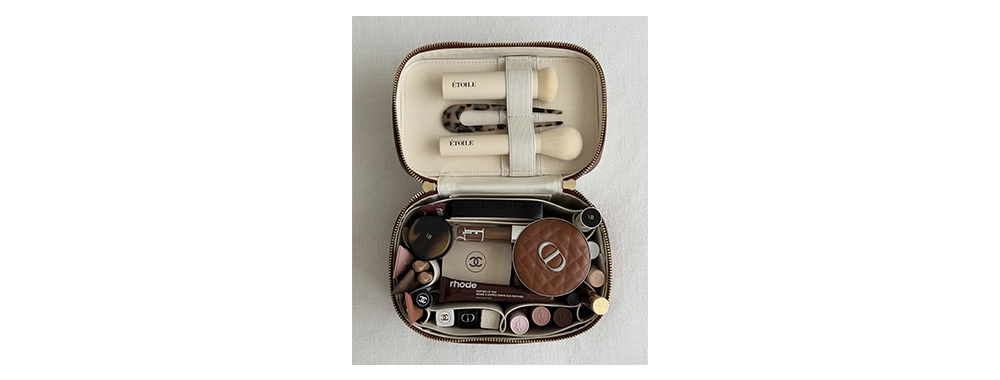
Cosmetic Bag: The core function of a cosmetic bag is to store makeup and skincare tools. It mainly accommodates:
- Makeup products: Lipsticks, eyeshadow palettes, foundation, blush, concealer, etc.
- Makeup tools: Brushes, beauty sponges, eyelash curlers, eyebrow pencils, etc.
- Auxiliary items: Small mirrors, cotton pads, cotton swabs, hair clips, etc.
Cosmetic bags are designed with a focus on detailed organization and easy access, as makeup products come in various types, are small in size, and can easily get scattered.
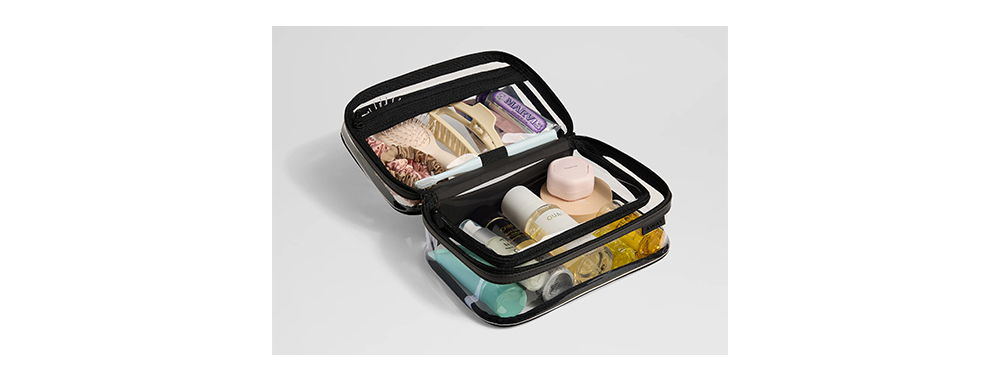
Toiletry Bag: The core function of a toiletry bag is to carry daily hygiene and basic care products. It typically includes:
- Cleansing items: Toothbrush, toothpaste, facial cleanser, body wash, shampoo
- Basic skincare: Face cream, lotion, sunscreen (travel-size)
- Hygiene essentials: Towels, razors, combs, dental floss, etc.
Toiletry bags emphasize waterproofing and leak-proof design, as many items contain liquids and are often used in humid environments such as bathrooms.
II . Differences in Design and Materials
| Comparison Dimension | Cosmetic Bag | Toiletry Bag |
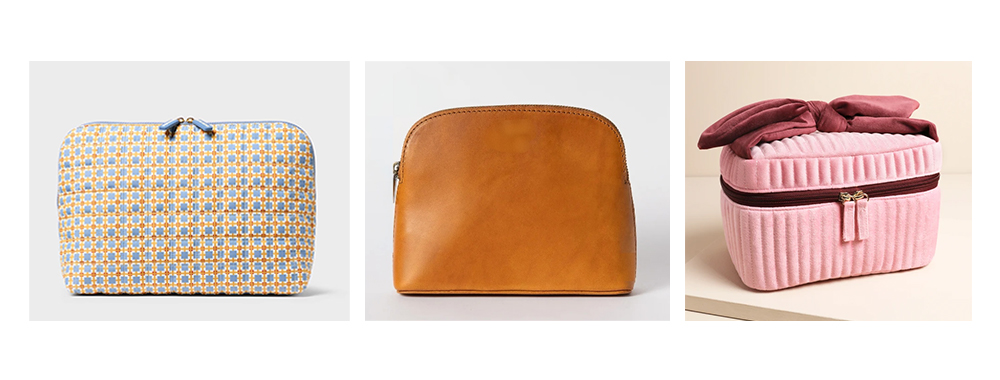
| Material Characteristics | Often made of aesthetically pleasing materials such as canvas, PU leather, velvet, etc. | Typically made of practical, waterproof materials such as nylon, PVC, polyester, etc. |
| Internal Structure | Multiple compartments, pockets, brush slots; emphasizes organization | Large main compartment + waterproof divider; emphasizes leak prevention |
| Exterior Design | Diverse styles; focuses on appearance and fashion | Simple and practical; usually solid colors or basic designs |
| Closure Type | Zippers, magnetic snaps, drawstrings, etc.; designed for quick access | Waterproof zippers, flap closures; designed for sealing and leak prevention |
| Size Characteristics | Generally compact; easy to fit into handbags | Relatively larger; accommodates bottles and containers |
Key Difference: Cosmetic bags prioritize “looking good and easy to find”, while toiletry bags prioritize “high capacity and leak-proof functionality.”

III. Comparison of Usage Scenarios
Cosmetic Bag Usage Scenarios:
- Daily commuting: Placed in a handbag or backpack for quick touch-ups anytime.
- Office backup: Stores commonly used makeup for unexpected meetings or appointments.
- Short trips: Ideal for 1–3 day trips, carrying a streamlined set of makeup.
- Professional makeup artists: Multiple cosmetic bags used to organize different types of makeup tools.
Toiletry Bag Usage Scenarios:
- Business trips or travel: Carries a full set of toiletries for hotel stays.
- Gym or swimming pool: Used for post-workout or post-swim cleansing.
- Outdoor camping: Organizes personal hygiene items in outdoor environments.
- Student dormitories: Keeps hygiene and grooming items neatly arranged in shared living spaces.
IV. Search Trends and Platform Data
1. Google Search Trends (Past 24 Months):
| Signal | Toiletry Bag | Cosmetic Bag |
| Search Volume Trend | Stable, slightly declining | Gradually increasing |
| Peak Season | October to December | February to April, October to December |
| Fastest Growth | Men’s toiletry bags | “Aesthetic cosmetic bags” |
| Emerging Subcategories | Hybrid gym-to-office style | Refillable / sustainable products |
2. TikTok and Instagram Data:
Content related to “beauty cosmetic bags” is growing rapidly. The visually-driven nature of beauty content makes cosmetic bags more popular than toiletry bags in the social e-commerce space. If your channel involves influencer marketing or social-driven DTC (direct-to-consumer) strategies, cosmetic bags currently offer higher potential for organic traffic growth.
3. Amazon Best Sellers Rank Observations (Past 12 Months):
- Top 20 Toiletry Bags: Almost all priced between $18–$32, with heavy discounts and very thin profit margins. Private-label competition is intense, making price wars fierce.
- Top 20 Cosmetic Bags: The market is more fragmented. Branded bags are priced between $35–$65, while private-label options range from $15–$22. A gap between mid-low and high-end markets still exists and has not been eliminated.
Summary of Future Trends (Suggestions for Brand Owners)
| Strategic Direction | Market Status | Core Opportunity | Product Entry Point |
| Male/Unisex Market Blue Ocean | Brands like Estée Lauder have launched rugged designs for men, but the market is still early-stage | Develop neutral colors (black/gray/army green), minimalist lines, and gender-neutral marketing | Men’s travel toiletry bag + basic skincare storage 2-in-1 |
| Premium for Sustainable Materials | GRS-certified recycled nylon and rPET are mandatory for B2B procurement | OEKO-TEX standards + carbon-neutral certified products can command a 20–30% premium | Transparent toiletry bag made with recycled TPU; cosmetic bag liners using replaceable antibacterial organic cotton |
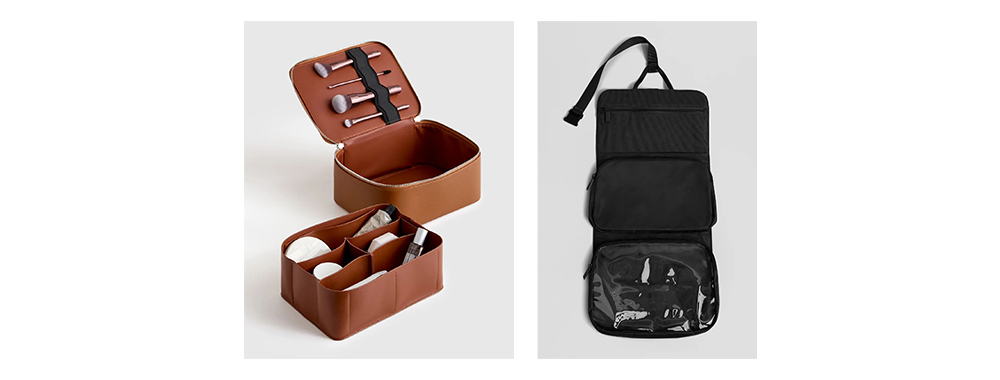
| Modular System to Reduce Costs & Improve Efficiency | Core bag body + detachable small bags reduce SKU complexity and increase AOV | Produce 3–5 variants per series to reduce inventory pressure | Hanging toiletry bag + detachable cosmetic pouch + TSA transparent bag 3-piece set |
Ⅴ. Frequently Asked Questions (FAQ)
Q1: Are cosmetic bags and toiletry bags distinguished under the customs HS code system?
A: According to customs classification rules, cosmetic bags and toiletry bags are generally not strictly distinguished under the HS code system. Both types fall under Chapter 42 — specifically, 4202.12 (textile outer surface) or 4202.92 (PU/PVC outer surface). These tariff codes do not differentiate between “toiletries” and “cosmetics.” Customs primarily focus on material composition rather than end use. Detailed definitions are as follows:
| HS Code | Outer Surface | U.S. Most-Favored-Nation Tariff |
| 4202.12 | Textile (nylon, polyester) | 17.6% |
| 4202.92 | PU, PVC, others | 20% |
Q2: Can cosmetic bags and toiletry bags be used interchangeably?
A: Short-term use is possible, but long-term use is not recommended.
- Using a toiletry bag for cosmetics: Due to fewer internal compartments, cosmetics may collide, causing pressed powders to break or lipsticks to melt and stain other items. Retrieving specific products can also be inefficient.
- Using a cosmetic bag for toiletries: Capacity is usually insufficient, and waterproofing is limited. Spills from shampoo or body wash could damage other items and even leak into your handbag.
Q3: Do clear cosmetic bags comply with TSA carry-on regulations?
A: Yes. TSA requires liquids and gels to be placed in a transparent, resealable bag of no more than 1 quart (≈946 ml). Our TSA Approved Clear Toiletry Bag is made of transparent PVC or TPU, equipped with a waterproof zipper, and strictly sized according to airline standards. This design also allows quick access to items, making it ideal for business trips and vacation travel.
Q4: As a backpack manufacturer, do you also offer OEM/ODM for cosmetic bags and toiletry bags?
A: Yes. We provide OEM and custom production services for cosmetic bags, toiletry bags, and travel storage sets. As an experienced bag manufacturer, we offer a full-service solution from design and prototyping to mass production. We support OEM/ODM models. Whether it’s PU leather cosmetic bags, waterproof nylon toiletry bags, or TSA-compliant clear travel pouches, we can customize materials, sizes, and logos according to your brand requirements.
Conclusion:
Choosing between a toiletry bag and a cosmetic bag is not just a matter of personal preference—it is a core decision affecting brand positioning, target customers, and sales profitability. Understanding the functional, design, and market differences between the two types of bags helps you select products that fit your channels and customer needs, avoid price wars, and seize market growth opportunities.
For further inquiries about custom sourcing, feel free to contact DH Bags: