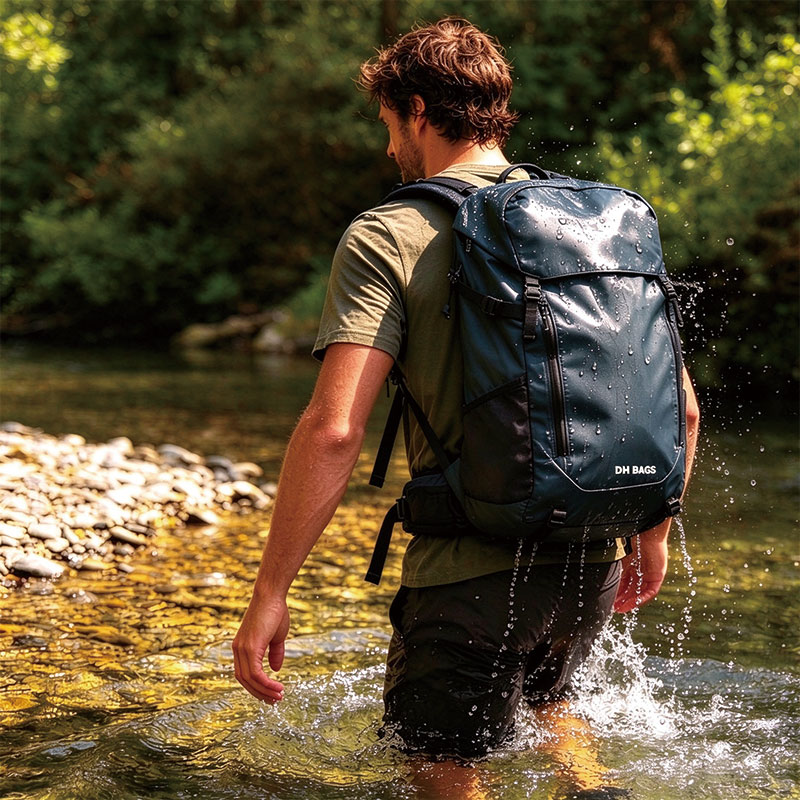
A good waterproof backpack should have the following characteristics:
- Fabric that does not let water through. This is the most fundamental layer. A truly reliable waterproof fabric usually uses a coating or lamination process that blocks water penetration under a certain level of water pressure for extended periods, while also offering abrasion and tear resistance to withstand the scraping and friction of outdoor environments. To judge whether a fabric is up to standard, check its waterproof rating, or observe its performance with a simple splash or shower test.
- Zippers and seams that keep water out. Zippers and seams are often the weakest points where water enters a backpack. The tooth gaps and tapes of ordinary zippers form seepage channels; a good waterproof backpack usually uses water-resistant zippers, or adds storm flaps and rain canopies over the zipper so that water runs off the flap instead of pouring in. Seams need to be taped one by one to form a continuous, complete sealing layer, preventing needle holes from becoming seepage channels.
- An opening that keeps water out. Backpack openings typically use flap, roll-top, or zippered closures. A flap closure must ensure the flap fits tightly against the body with generous overlap; a roll-top relies on multiple folds secured by buckles to form a physical seal. Whatever the form, the opening edges should be bound or taped to prevent water from wicking in along the fabric edges.
- Reliable durability: whether the coating hydrolyzes and whether the seam tape peels off directly determine how long the waterproof performance lasts. Under long-term moisture, sun exposure, and repeated flexing, coatings may hydrolyze, blister, or peel; once the fabric loses its coating protection, waterproof performance drops sharply. Seam tape is equally vulnerable to aging — if the bonding process is substandard, lifting and delamination appear after a period of use, and the sealing layer fails.
1. How to Choose a Waterproof Fabric: DWR vs. PU vs. TPU
1.1 DWR
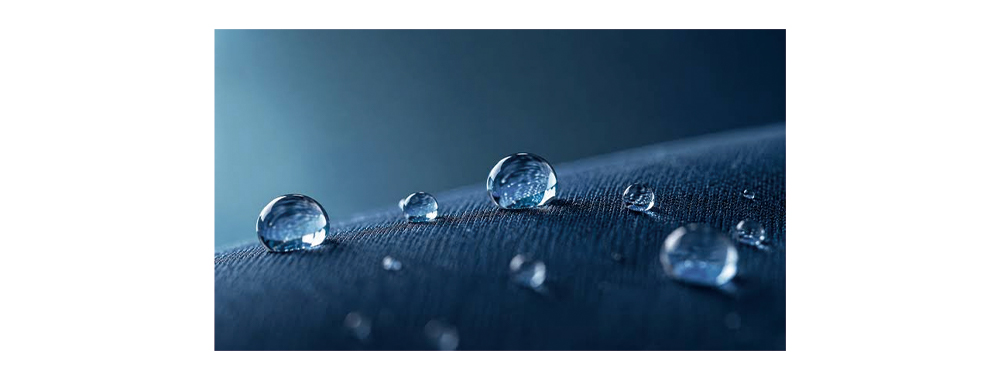
DWR (durable water repellent) is a water-repellent agent applied to the fabric surface by padding or spraying. It causes water droplets to bead up and roll off on contact with the fabric, rather than spreading out and soaking in. Its role is closer to “channeling” than “blocking,” so in waterproof backpack OEM production practice it is often used as the first line of defense in a waterproof system, working together with an inner coating or membrane.
To judge whether a DWR is still effective, watch whether droplets roll off smoothly when water is splashed on, and whether the fabric shows obvious damp patches; if droplets start to spread and the fabric darkens, the repellency is decaying.
- Advantages: the advantage of DWR is that it does not change the fabric’s breathability or hand feel.
- Disadvantages: limited durability — everyday friction, sweat, dirt, and detergent residues all accelerate its failure, and after a period of use it usually needs to be restored with a dedicated re-proofing agent.
- Environmental profile: the environmental profile of DWR has drawn increasing attention from the industry and consumers in recent years. Traditional DWR formulations are mostly based on fluorinated compounds (PFAS), such as C8 or C6 fluorocarbon chains. These substances are extremely chemically stable, are known as “forever chemicals,” and accumulate in the environment and in living organisms, raising ecological and health concerns.
Many countries have therefore imposed strict restrictions on their use. The bag industry is now actively driving the transition of DWR from fluorinated to fluorine-free formulations (C0 or PFAS-free). Fluorine-free DWRs are based on hydrocarbons or siloxanes; although slightly weaker than traditional fluorinated products in oil resistance and long-term durability, they already meet the needs of most bag applications.
1.2 PU (Polyurethane) Waterproofing
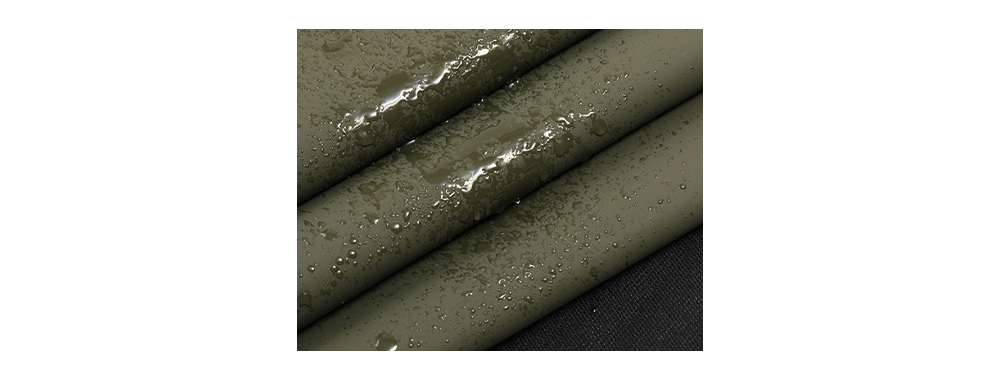
PU (polyurethane) waterproofing is currently the most widely used waterproof solution on backpacks. Polyurethane paste is evenly coated onto the face or back of the fabric and, after drying and curing, forms a continuous, dense film that gives the fabric its water-blocking ability. Unlike DWR, which channels droplets away via surface tension, PU coating takes the “physical blocking” route: water molecules can hardly penetrate the film, so its waterproof performance is more direct and stable, maintaining a reliable barrier even under moderate-to-high water pressure.
- Advantages: strong waterproofing, mature processes, controllable cost, good adhesion to the base fabric, and better flex resistance than some laminated film structures.
- Disadvantages: the drawbacks are equally worth noting. First, breathability is generally weaker than microporous membranes, so the back tends to accumulate sweat during long carries; second, polyurethane itself hydrolyzes under humidity, heat, and UV exposure — the coating gradually turns sticky, blisters, or even peels, which is exactly why the durability checks emphasized earlier matter; third, the coating adds noticeable weight, which constrains lightweight design.
- Environmental profile: environmentally, PU coating presents a mixed picture. Traditional solvent-based PU coatings release organic solvents during production and curing, affecting workshop air quality and operator health, so the industry has been shifting toward water-based PU systems in recent years, using water instead of organic solvents as the dispersion medium and significantly reducing volatile organic compound (VOC) emissions. However, water-based PU is usually slightly inferior to solvent-based products in film density and hydrolysis resistance, placing higher demands on formulation and process.
In addition, PU coating is a thermoset material that is difficult to separate from the base fabric for recycling once laminated; most of it can only be downcycled together with the whole backpack — a real weakness in environmental assessments. Some manufacturers have begun experimenting with bio-based polyols to replace petroleum-based raw materials, or developing recyclable thermoplastic polyurethane (TPU) film solutions, to reduce dependence on fossil resources and improve end-of-life recyclability.
1.3 TPU Film Lamination
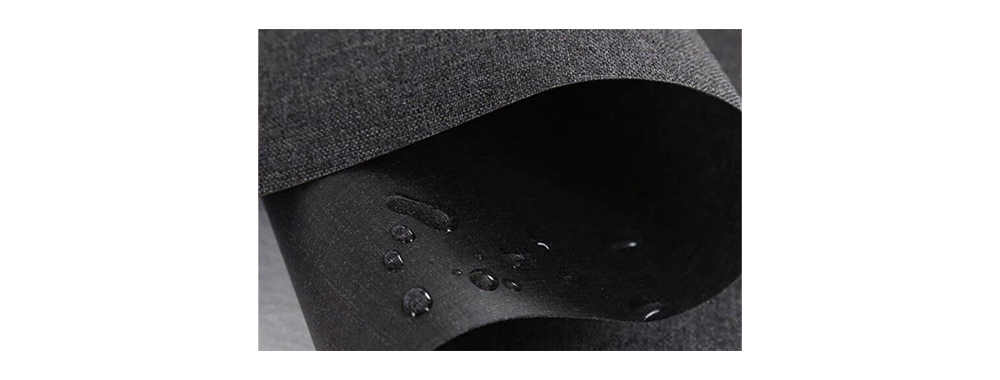
TPU lamination — the thermoplastic polyurethane film bonding process — is a solution that has been adopted ever more widely in mid- to high-end waterproof backpacks in recent years. TPU resin is first processed into a film of a given thickness, then bonded to the fabric by heat pressing or adhesive to form an independent waterproof functional layer. Unlike PU coating applied directly onto the base fabric, TPU exists as a film: the film thickness is easier to control precisely, and waterproof consistency and hydrostatic-head performance are more stable, making it the first choice for many premium waterproof dry bags.
- Advantages: TPU is a thermoplastic elastomer whose molecular structure alternates soft and hard segments, giving it both rubber-like flexibility and plastic-like processability. Its main strengths are: first, outstanding flex resistance — repeated folding rarely produces cracks, making it suitable for roll-top and flap structures that open and close frequently; second, it does not harden or become brittle at low temperatures, keeping good flexibility even in cold regions.
- Disadvantages: the drawbacks are mainly cost and process barriers — TPU film and lamination equipment require higher investment, and product prices rise accordingly. The film also adds noticeable weight, constraining lightweight design, and surface scratch resistance needs to be improved with an additional wear-resistant layer.
- Environmental profile: as a thermoplastic, TPU has recycling advantages over thermoset PU; edge trim and waste film can be shredded, re-pelletized, and reprocessed, which aligns with circular-economy principles. That said, once laminated to fabric, TPU film faces the same separation-and-recycling challenge, and the energy and solvent use of film production varies by process, so it needs to be evaluated product by product.
2. How Structural Waterproofing Works: Zippers, Seams, and Opening Design
2.1 Zippers
An ordinary zipper consists of teeth, tapes, and a slider. The tapes are woven structures with abundant capillary pores between fibers, through which water wicks inward; even when the teeth are engaged, fine gaps remain between them, which likewise become seepage channels under water impact or prolonged soaking.
There are three common approaches.
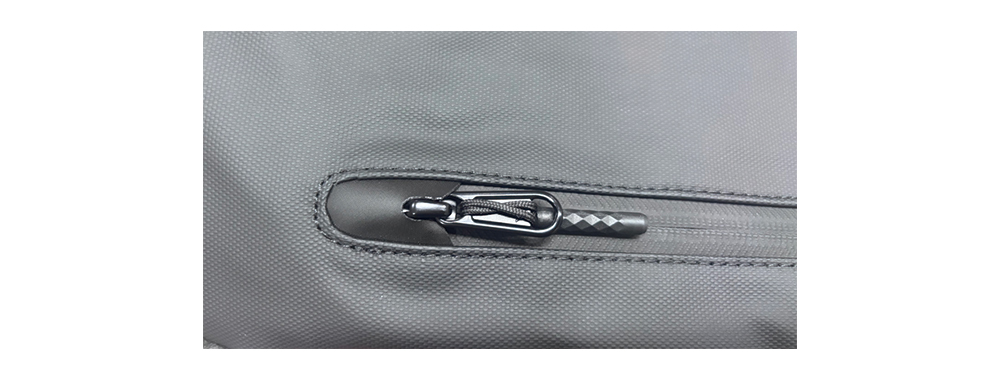
- The first is the water-resistant tape zipper: the zipper tape is given a PU or TPU coating to seal the woven pores so that water cannot travel along the tape into the bag. This approach keeps costs relatively manageable and is common in mid-range products, but the coating gradually wears under repeated flexing and friction, and the waterproof effect decays over time.
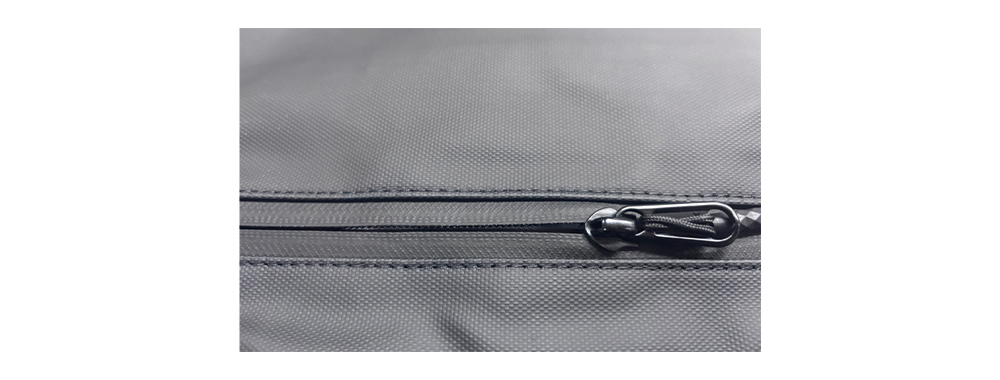
- The second is the waterproof zipper: a continuous TPU or PVC sealing film is applied over the teeth so that the engaged teeth form an integral seal. Waterproof performance is more reliable, and these zippers are often used on dry bags and other products with demanding sealing requirements. The trade-off is a marked increase in pull resistance, requiring a larger slider and puller for easy operation.
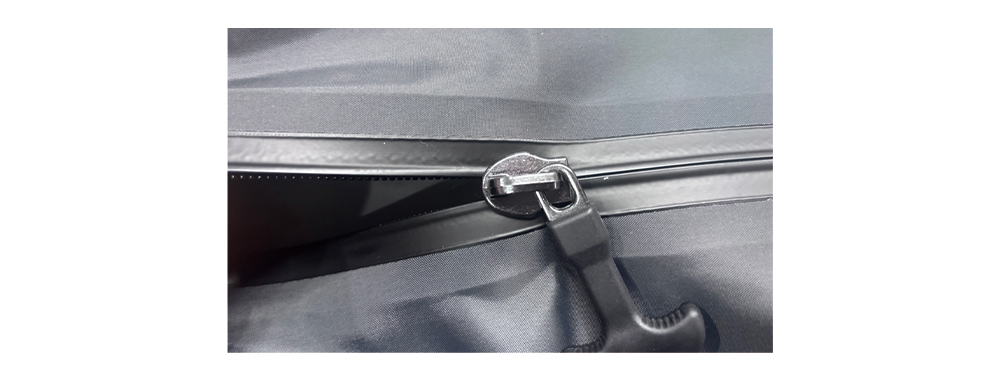
- The third approach skips zipper waterproofing altogether and relies on external structures instead — for example, adding a storm flap, rain canopy, or folded cover over the zipper so that water runs off the flap rather than striking the teeth directly. This approach is simple in construction and smooth to operate, but it places high demands on the flap’s overlap length and tightness of fit, and its reliability is limited under strong water flow or prolonged rain.
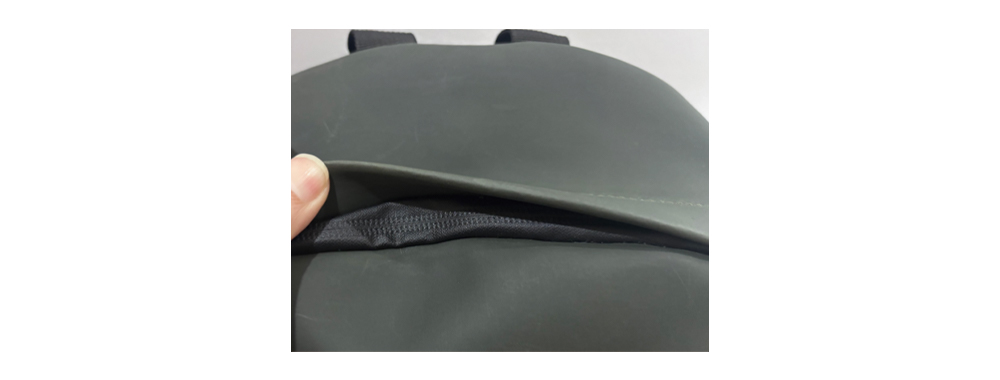
Beyond the zipper itself, the slider and the two end stops are details that cannot be ignored. Typically, flaps and rain canopies serve as external water channeling, while taping at the end stops closes the ends; only the combination of all three forms a complete waterproof loop.
2.2 Seams
Even if the fabric itself meets the waterproof standard, once it is cut and sewn, needle holes form dense micro-channels along both sides of the stitching, and water can wick straight into the bag through the pores between the sewing threads. The essence of seam waterproofing, therefore, is to rebuild a continuous, complete sealing layer that flexes with the fabric after sewing is finished.
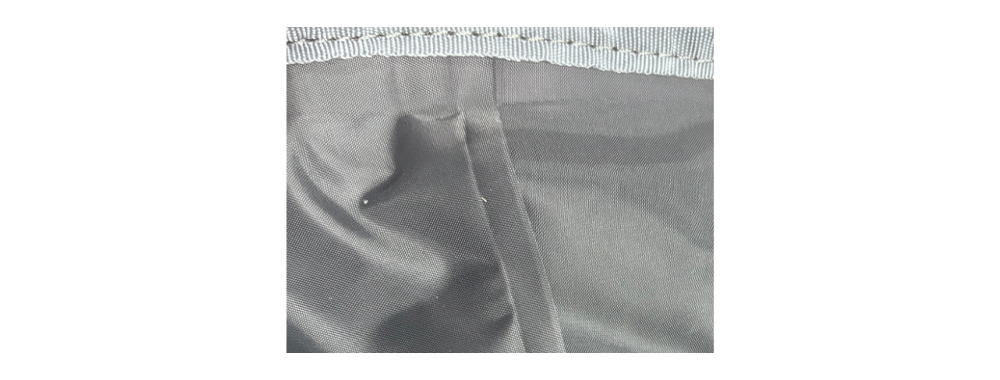
The current mainstream solution is seam-tape sealing: a tape of a given width and elasticity is heat-pressed onto the inside of the seam, where heat and pressure fuse it with the coating or film, completely covering the needle holes. Tape performance depends mainly on three factors:
- First, material — the common options are PU tape and TPU tape. The former is soft, conformable, and lower in cost; the latter offers better hydrolysis and low-temperature resistance and better compatibility with TPU films;
- Second, width — the tape must leave enough overlap on both sides of the seam; too narrow and coverage is incomplete, too wide and it adds weight and bending resistance;
- Third, bonding process — temperature, pressure, and feed speed must be precisely matched to the fabric’s coating type. Insufficient temperature leads to weak bonding and easy lifting; excessive temperature can scorch the coating or locally damage the film. To judge tape quality, repeatedly flex the seam by hand and watch the tape edges for lifting, bubbles, or delamination; you can also splash water on the inside of the seam to see whether moisture seeps through the needle holes.
2.3 Backpack Openings
By closure type, waterproof backpack openings fall roughly into three categories — flap, roll-top, and zippered — whose waterproofing logic and suitable scenarios differ significantly.
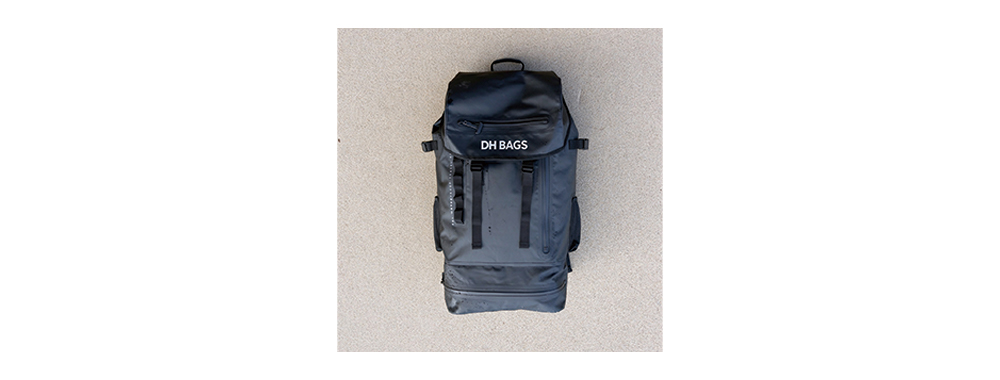
- Flap: a flap opening relies on the overlap between the flap and the body to shield the interior; its waterproof effectiveness depends mainly on the overlap length and the tightness of fit.
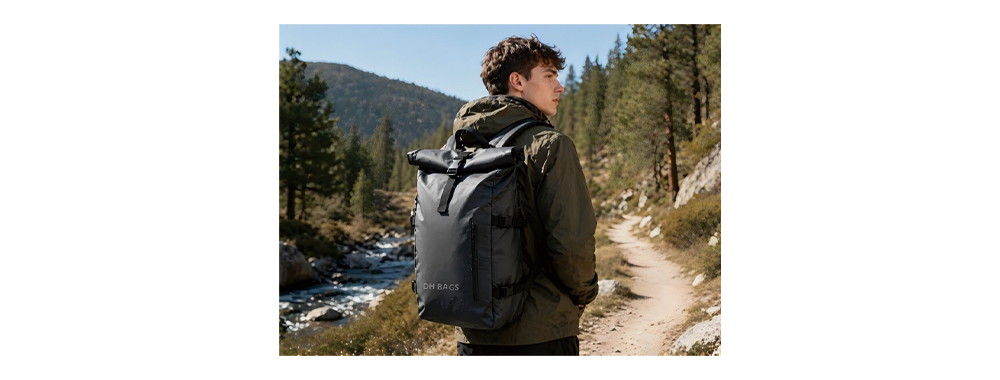
- Roll-top: a roll-top opening achieves a physical seal through multiple folds secured by buckles. The fabric at the opening edge is rolled repeatedly so that water cannot follow a straight path into the compartment, and the rolled section is then locked in place with buckles or webbing. The advantages of the roll-top structure are excellent sealing, simple construction, and a low failure rate, making it a common choice for products with high waterproofing requirements such as waterproof bags.
- Zippered: a zippered opening sits between the two; its waterproof performance depends mainly on the sealing grade of the zipper itself and on how well it works with the external flaps and rain canopies.

In actual outdoor backpack OEM practice, the three opening structures are often combined — for example, a flap opening with a zipper inside, or a roll-top opening with an added flap outside — building multiple layers of defense to improve overall waterproof reliability.
When customizing, brands should weigh the options against the use scenario: for daily commuting, the convenient flap opening is worth prioritizing; for long-distance hiking and water activities, the reliably sealed roll-top is more suitable; and for scenarios that demand both quick access and waterproofing, a zipper-plus-flap combination can be adopted.
3. How to Improve Coating Durability?
From the material characteristics of the coating itself, the key to improving durability is to slow the process of hydrolysis and aging. Translated into production practice, we recommend that waterproof backpack buyers consider the following approaches:
- Introduce anti-hydrolysis agents at the formulation design stage;
- Replace polyester polyols with polyether polyols, which significantly improves the coating’s hydrolysis resistance;
- Increase the coating’s crosslink density with crosslinking agents, which also blocks the penetration of water molecules into the coating to a certain extent;
- Upgrade to TPU film waterproofing. TPU films resist hydrolysis better than PU coatings: the soft segments of TPU commonly use polyether polyols, and ether bonds are far less susceptible to hydrolysis than ester bonds, so the molecular chain breaks down noticeably more slowly even with long-term use in humid, hot environments.
4. Scenario-Based Recommendations for Bag Brands
| Use case | Core threat | Fabric requirements | Structural requirements |
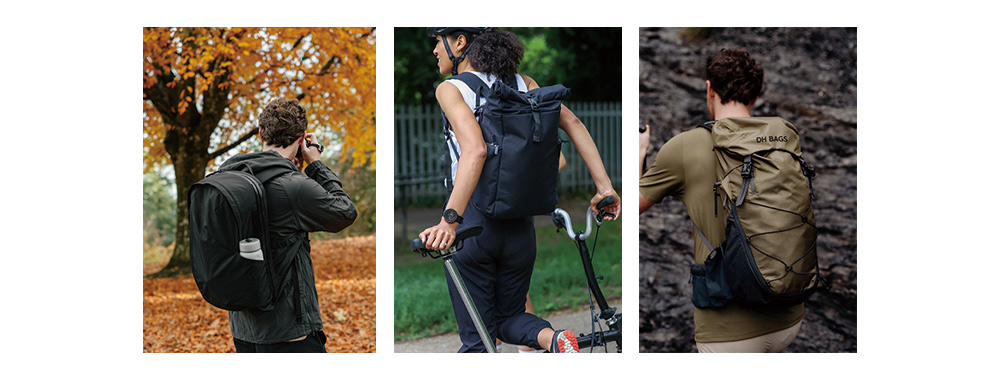
| Daily commute / school | Sudden rain, splashes | PU coating + DWR | Zippered opening with storm flap |
| Cycling / motorcycling | High-speed wind-driven rain, mud spray | PU coating + DWR, or TPU lamination | Roll-top main compartment or large storm-flap design |
| Hiking / mountaineering | Prolonged rain, wet gear | Lightweight PU is sufficient, or water-repellent fabric | Large storm flap / rain cover + waterproof inner liner bag |
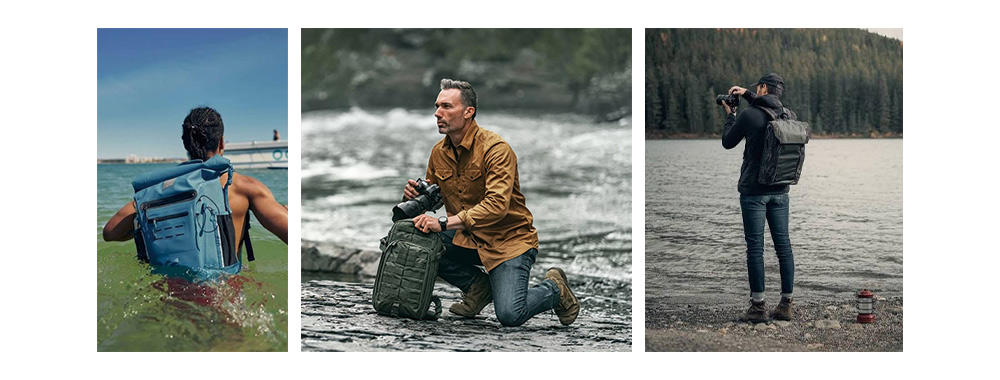
| Water sports (canyoning / kayaking / SUP) | Immersion, falling overboard | TPU-laminated fabric (the only choice) | Fully HF-welded + roll-top |
| Travel photography | Sudden downpours, prolonged dampness | PU coating + DWR, or TPU lamination | Rain-cover pocket, reinforced padded base |
5. FAQ
Q1: Can a waterproof backpack be customized with fluorine-free water repellency?
Yes. Traditional DWR mostly contains fluorocarbon compounds (PFC/PFAS). With environmental regulations tightening, many brands have switched to fluorine-free options: first, fluorine-free DWR finishes (silicone- or hydrocarbon-based), whose water repellency approaches fluorinated versions but with weaker oil and stain resistance, requiring more frequent maintenance; second, TPU-laminated fabrics, where waterproofing comes from the film itself rather than a surface coating.
Q2: Can a bag labeled “waterproof” go into the water?
In most cases, no. A “waterproof backpack” by default means rain-proof grade; products that can be submerged are explicitly labeled with features such as full welding, a roll-top closure, or watertight zippers.
Q3: How should I read IPX waterproof ratings?
IPX4 protects against splashes, IPX6 against powerful water jets, and IPX7 allows immersion in 1 meter of water for 30 minutes. Backpack brands more often rate fabrics by hydrostatic head (millimeters of water column).
Q4: What should I do when the DWR wears off?
Wash it first — oil and dirt are the main causes of DWR failure; low-temperature tumble drying or low-temperature ironing through a cloth can partially restore it.
Q5: Can waterproofing spray replace a coating?
No. Sprays only restore the surface water-repellent layer — the equivalent of reapplying DWR — and cannot repair damage to the inner coating.
Q6: How do I choose between PU and TPU?
Choose PU if price and fabric hand are the priorities; choose TPU if you want durability and true waterproofing. Storage habits actually matter even more — a PU bag stored in a dry, cool, shaded place may outlast a TPU bag kept in a humid environment.
6. Conclusion
Beyond the range of waterproof combinations discussed above, a good waterproof backpack cannot ignore comfort and sensible compartmentalization. The breathability of the carrying system directly determines how the pack feels during long use, while a well-designed compartment layout affects both access efficiency and layers of protection: storing electronics, clothing, and wet items in separate compartments avoids cross-contamination and reduces the chance of water entering the main compartment during frequent opening and closing.
Ultimately, waterproof performance is never the credit of a single material or a single structure, but the result of layer upon layer of defense — fabric, coating, seams, zippers, and opening design working together. When communicating with a waterproof backpack factory, brands should weigh the product’s use scenario, frequency of use, and care conditions together, finding the balance among waterproof reliability, weight, cost, and environmental impact that fits their own product positioning.