Introduction: A Shared Pain Point for Travelers and Brands
“Please take the liquids out of your bag for separate inspection”—this sentence flusters over 230 million travelers at U.S. airports every year. For beauty brands, purchasing non-compliant custom cosmetic bags not only carries the risk of returns but may also damage brand reputation due to security disputes.
This article adopts a dual-perspective approach: the first part provides travelers with the latest 2026 compliance guidelines, while the second part deeply analyzes how brands can select the right cosmetic bag factory. Through OEM cosmetic pouch and ODM cosmetic pouch services, brands can create products that meet TSA standards while remaining market-competitive.
Part One: A Must-Read for Travelers – 2026 TSA Policies and Practical Selection Tips
1. Current Status of the 3-1-1 Rule: Rule Evolution and Execution in the Era of CT Scanners
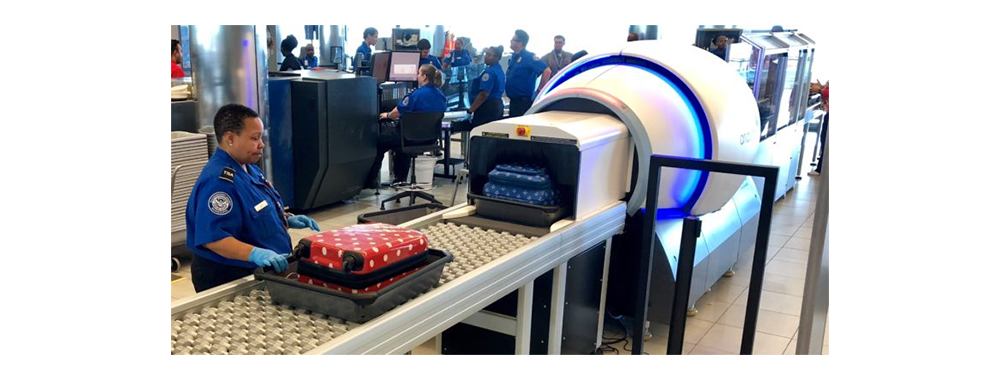
The use of CT scanners for airport luggage has optimized TSA security procedures. The 3D imaging technology of CT scanners can identify the density, shape, and material of liquids inside bags, theoretically allowing liquids to remain in the bag without being removed separately.
However, this is only an optimization of the inspection process; the 3-1-1 rule (3.4 oz container limit, 1-quart clear bag, 1 bag per person) remains in effect. Unless there is a clear sign indicating otherwise, it is still recommended to proactively remove liquid bags for inspection.
The main benefit of CT scanners is optimizing the security process by reducing bag openings and manual rechecks due to liquid inspection. Nevertheless, liquids that exceed container size or packaging requirements will still trigger security alerts and may be confiscated. For example, a 150 ml shampoo bottle will be prohibited even if placed in a clear cosmetic bag, just as it would have been before CT scanner deployment.
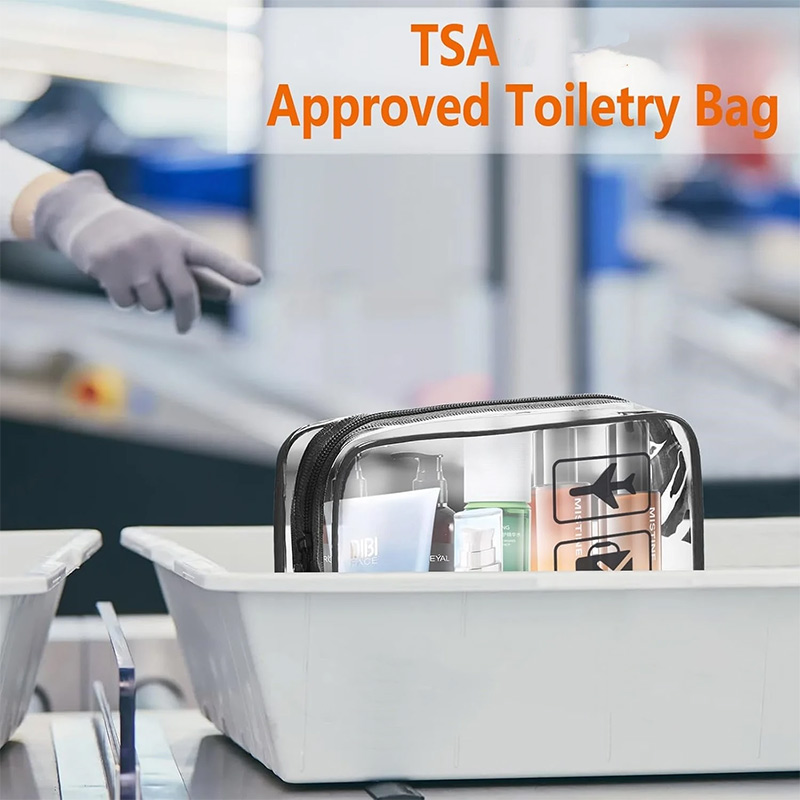
Additionally, TSA emphasizes that transparent plastic bags must be resealable, such as with a zipper or clasp. Bags that are merely transparent but cannot seal, such as ordinary plastic wrap, may occasionally be allowed at some airports but are not fully compliant and may be subject to replacement.
| Rule Element | 2026 Enforcement Standard | Common Traveler Mistakes |
| 3.4 oz Limit | Single container capacity ≤100 ml (regardless of remaining liquid) | Using large bottles thinking “actual liquid is small” makes it compliant |
| 1 Quart Bag | All containers must fit into one transparent bag (≈0.95 L) | Using gallon bags or double bags, forcibly discarded |
| 1 Bag Limit | 1 bag per person; family members cannot combine quota | Parents carrying extra for children considered violation |
2. Five Mandatory Indicators for Identifying TSA-Compliant Cosmetic Bags
Based on TSA official guidelines, compliant products must meet:
2.1. Transparency Standard (Visual Compliance)
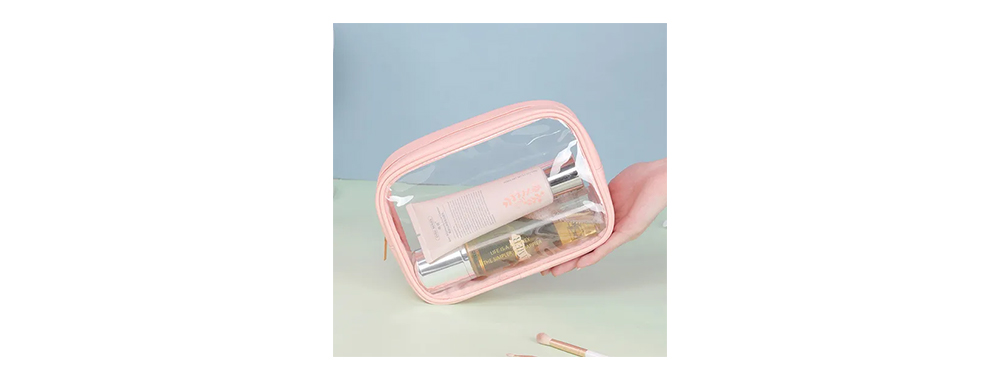
- Transparent surface ≥70%, ensuring X-ray/visual inspection
- Edges, zippers, handles may have brand colors, but main body must be fully transparent
2.2. Dimensional Flexibility (Practical Compliance)
- Recommended size: 7–8 in × 8–9 in (≈18×23 cm), thickness 2–3 in
- Acceptable range: sizes close to 7.5×8.5 in usually pass visual inspection
- Absolute prohibited zone: gallon bags exceeding 1 quart (≈1.1 L)
2.3. Sealing Integrity
- Must have fully closable zipper or snap
- High-frequency heat-sealed seams + waterproof zipper to prevent leakage
2.4. Material Durability
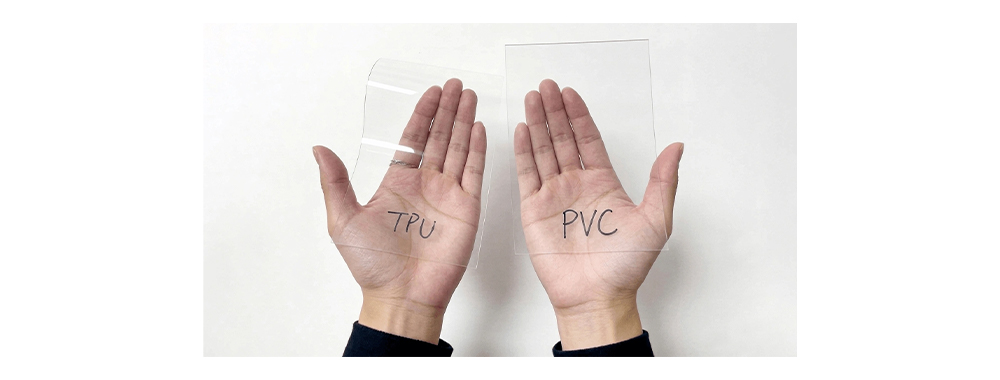
- PVC: highest transparency, lowest cost, hardens at low temperature
- TPU: eco-friendly, chlorine-free, soft in low temperatures, suitable for premium lines
2.5. Functional Design
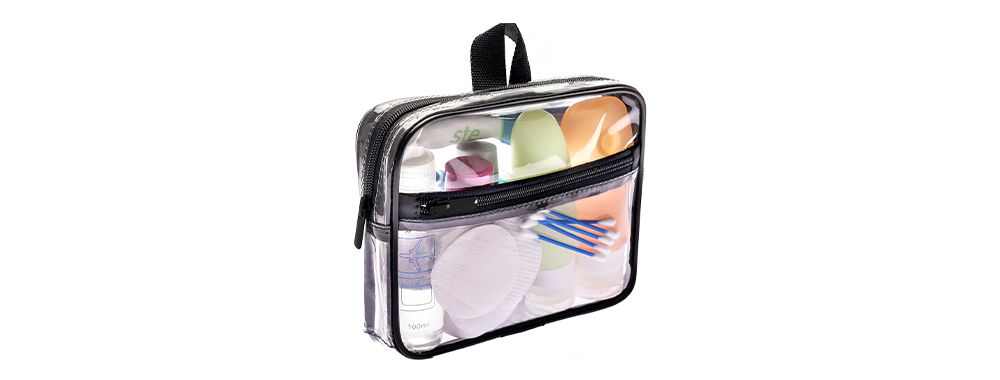
- Hanging hook (for hotel use)
- Modular inner compartments (for quick security removal)
- Easy-to-clean surfaces (for cosmetic residue)
Part Two: Brand Procurement Decisions – In-Depth OEM/ODM Analysis
1. Why TSA-Compliant Cosmetic Bags Are a Blue Ocean Category in 2026
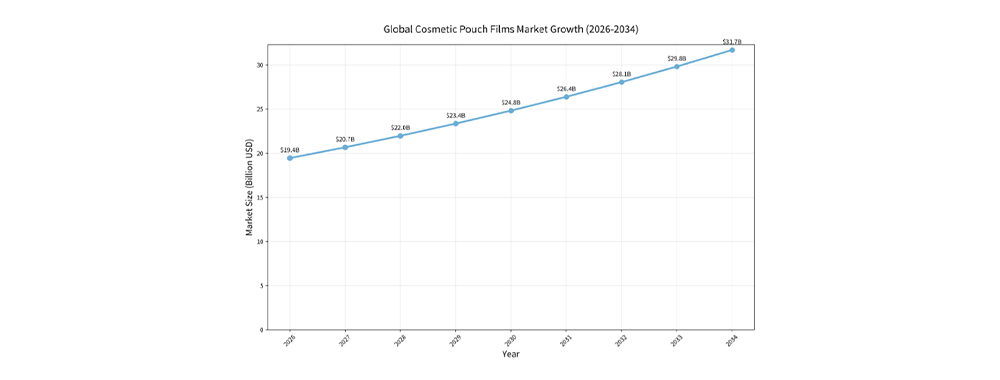
According to the 2025 Global Makeup Bag Film Market Report, this category is expected to grow at a 6.3% CAGR from 2026 to $3.17 billion by 2034. The driving factors include:
- Full recovery of air travel, with stricter security standards
- Surge in sustainable packaging demand (refill systems reduce plastic use by 50–70%)
- Cross-border e-commerce demand gap for “travel-friendly” beauty accessories
For brands seeking private-label cosmetic bags, this is a low-MOQ, high-turnover entry point. Market data shows flexible supply chains with 100–500 piece minimum orders are becoming the preferred choice for small and medium brands.
2. OEM vs. ODM: Which Model Fits Your Brand?
| Decision Dimension | OEM Cosmetic Pouch | ODM Cosmetic Pouch |
| Design Control | Brand provides full design; factory executes production | Factory provides ready designs; brand selects and customizes |
| Minimum Order Quantity | Usually higher (500–1000 pcs) due to mold setup | Usually lower (300–500 pcs) using existing molds/styles |
| Development Cycle | 25–40 days (includes sampling, mold making, trial production) | 15–25 days (direct mass production) |
| Cost Structure | High upfront; unit cost decreases with volume | Low upfront; unit cost slightly higher |
| Suitable Brands | Mature brands with design teams seeking uniqueness | Startups, quick market testing, budget-limited sellers |
| Intellectual Property | Brand fully owns design patents | Design belongs to factory; brand owns only label rights |
Hybrid Strategy Suggestion: Initially choose ODM cosmetic pouch to quickly test the market; after a hit product, switch to OEM cosmetic pouch and establish patent barriers.
3. Six Key Evaluation Criteria for Cosmetic Pouch Factory
Based on analysis of China’s top 5 cosmetic bag suppliers, high-quality cosmetic pouch factories should have:
3.1. Certification System (Compliance Baseline)
- ISO 9001: Quality management
- ISO 14001: Environmental management
- BSCI/SEDEX: Social responsibility audit (entry requirement for EU/US retailers)
- GRS (Global Recycled Standard) for recycled materials
3.2. Material Supply Chain Transparency
- Eco-friendly material options (RPET recycled polyester)
- Material test reports (REACH, RoHS, FDA food contact grade)
3.3. Flexible Production Capability
- MOQ flexibility: 100–500 pcs small batch trial production
- Quick sampling: 3–7 days, supporting design iteration
- Production scaling: 500 pcs trial to 100,000 pcs monthly capacity
3.4. Customization Depth: A high-quality custom cosmetic bag supplier should support:
- Structural customization: wet/dry separation, removable liner, standing base
- Process customization: screen printing, heat transfer, embossing, embroidery, metal tags
- Packaging customization: biodegradable bags, paper gift boxes, FSC-certified packaging
3.5. Quality Control Process
- Standard flow: Design confirmation (3–5 days) → Pre-production sample (3–7 days) → Mass production (10–20 days) → Full/spot inspection (1–3 days) → Logistics (10–20 days)
- Key checkpoints: incoming material inspection, in-line inspection, finished product full inspection, third-party inspection support
4. 2026 TSA Cosmetic Bag Product Development Trends
Trend 1: CT Scanner-Friendly Materials
- Factories are developing low-interference transparent materials to optimize X-ray penetration and reduce false alarms while maintaining TSA visual compliance.
Trend 2: Modular Compliance Systems
- Leading brands offer “1+1” sets:
- Main bag: standard quart-sized bag (TSA compliant)
- Sub-bag: medical liquid bag (exempt from 3-1-1, requires declaration)
Trend 3: Sustainable Material Premium
- Bio-based TPU: reduces carbon footprint by 40%
- Ocean-plastic recycled PVC: storytelling value, cleans up ocean waste
- Compostable PEVA: degrades in 180 days under home compost conditions
Trend 4: Smart Feature Integration
- Antimicrobial lining: silver ion coating to inhibit bacteria (for beauty tools)
- RFID-blocking side pocket: protects passport and credit card data
- LED inner liner: helps locate items in dim hotel rooms
Part Three: Practical Suggestions for Manufacturing
7 things that must be confirmed before customizing TSA makeup bags
| Category | Confirmation Items | Risk Level |
| Compliance | Transparency ≥70%? Size ≤1 quart? Fully resealable? | High |
| Material | REACH/FDA tested? Low-temperature performance? | High |
| Design | Any patent infringement risk? Structural practicality test? | Medium |
| Production | Does the factory have similar experience? Is production capacity sufficient? | Medium |
| Cost | How is upfront development cost allocated? Critical points for tiered pricing? | Medium |
| Logistics | Supports DDP terms? Completeness of customs clearance documents? | Medium |
| After-Sales | Quality dispute handling process? Rework/refund policy? | Low |
Part Four: FAQ
l Common Traveler Questions
Q1: Can I bring two quart-sized bags, one for cosmetics and one for skincare?
A: No. Each person is limited to one bag, regardless of purpose. Family members’ quotas cannot be combined.
Q2: Do solid powders or lipsticks need to go in a clear bag?
A: No. Solid cosmetics are not subject to the 3-1-1 rule and can be carried in any quantity.
Q3: Will the 3-1-1 rule be canceled by the end of 2026?
A: The Department of Homeland Security is piloting changes, but “no major change will be announced in the next few weeks.” Travelers in 2026 should still strictly follow the current rules.
l Common Brand Procurement Questions
Q4: How can I verify a factory’s TSA compliance experience?
A: Request: case studies of aviation/travel brands served and material transparency test videos.
Q5: Is small-batch customization (under 100 pieces) feasible?
A: Some factories support light customization with digital printing and in-stock bags, but unit costs are high. It is recommended to place at least 500 pieces for first-time cooperation to balance cost and flexibility.
Q6: Do eco-friendly materials affect TSA compliance?
A: No. TSA only focuses on transparency and size. Eco-friendly materials are a bonus, not a compliance requirement. However, ensure that eco-friendly materials do not contain fillers that affect X-ray identification.
Conclusion: From Compliance to Competitiveness
For travelers, a high-quality TSA clear cosmetic bag is an insurance policy for a smooth journey. For brands, leveraging OEM/ODM cosmetic pouch services from a cosmetic pouch factory to create compliant products is a strategic lever to access the $3.17 billion global market.